In December 2023, Mattel approached Breakthrough T1D with a partnership opportunity for the first Barbie with type 1 diabetes (T1D).
Less than two years later, in July 2025, Barbie with T1D was launched.
The collaboration reflects our commitment to ensuring that the millions of people living with T1D are seen, heard, and empowered.
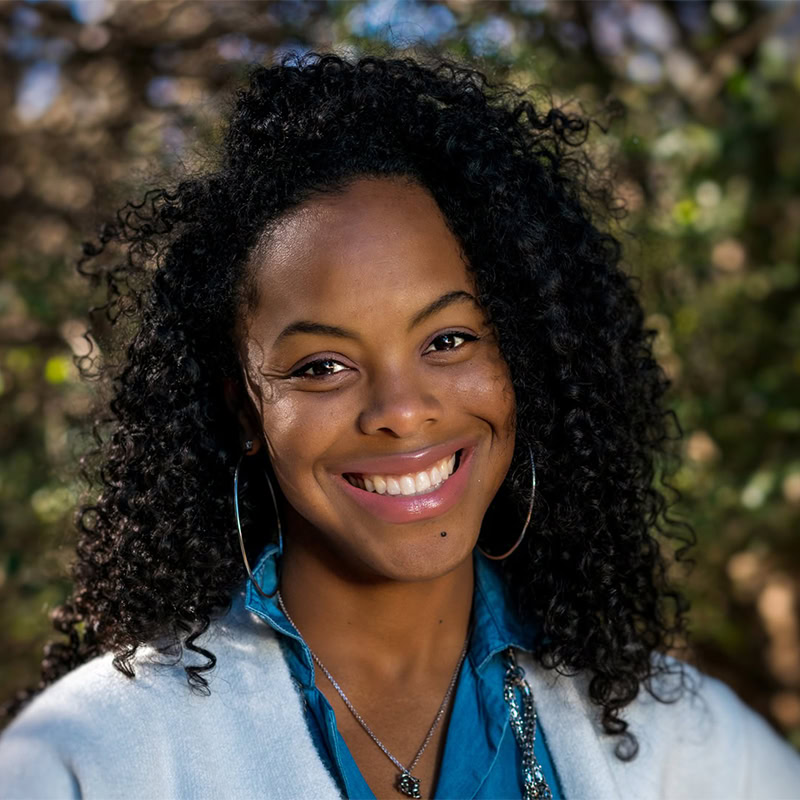
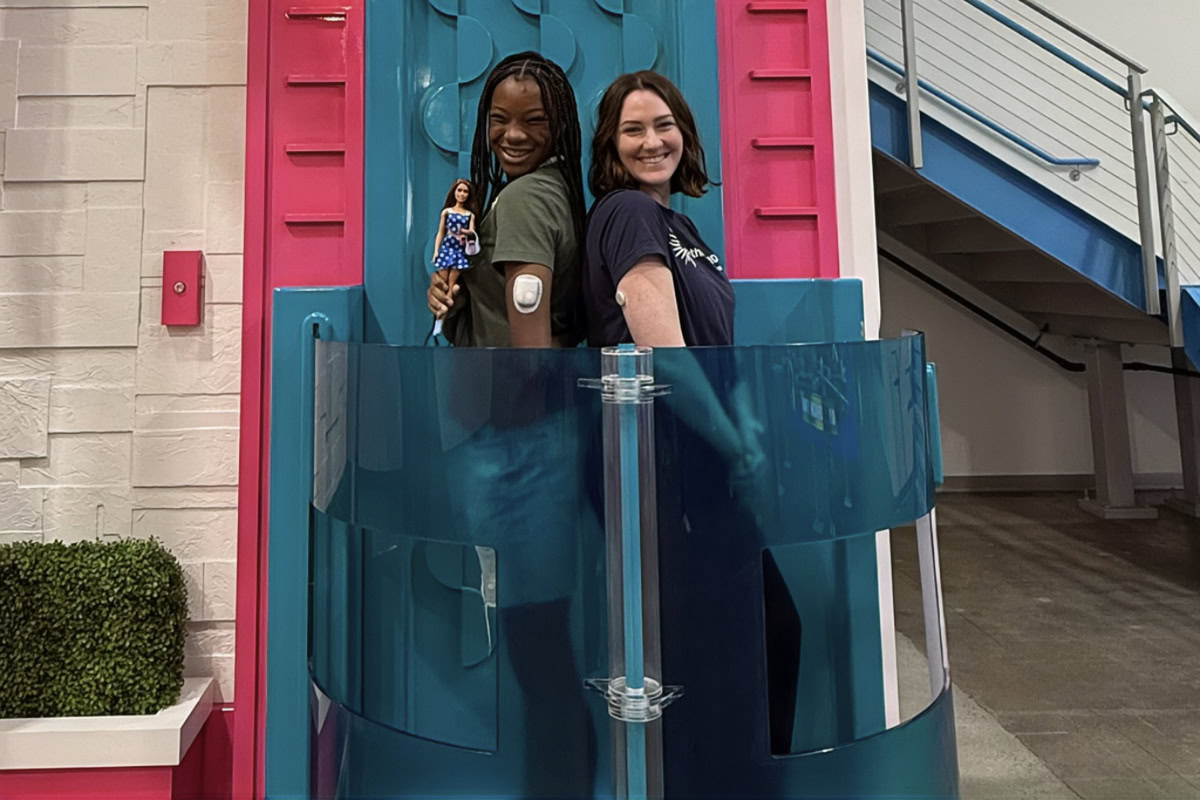
Barbie with T1D was thoughtfully created with input from Breakthrough T1D employees who live with T1D, including Emily Mazreku, Director of Marketing Strategy, and members of our T1D community, including volunteers Natalie and Nadia Stanback. Here, we talk to them about their experience.
Q: What was it like being part of the creation of Barbie with T1D?
Natalie: “As a mom, it was a full-circle moment. I’m raising a daughter who is changing the narrative on what a T1D diagnosis means, not just for our family, but for the entire T1D community. And, as a sister to a brother who lost his battle with T1D, it’s a bittersweet moment. I wish, with all my heart, that he could have had examples of what it looks like to thrive with T1D instead of feeling the need to hide, and sometimes ignore, it.”
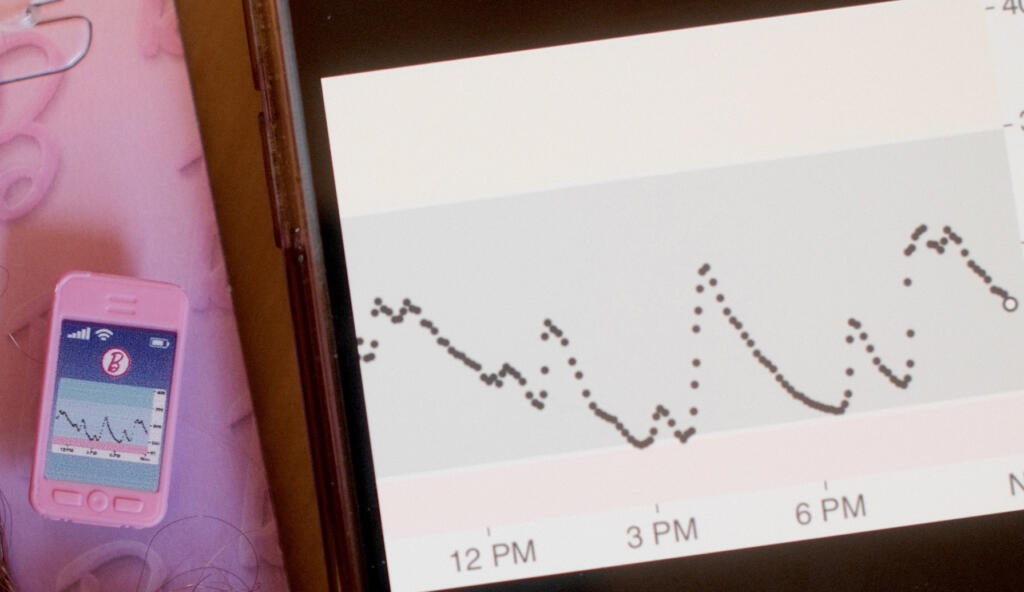
Barbie’s CGM reading, inspired by Emily Mazreku’s actual CGM reading
Nadia: “When I worked with Mattel, I told them that there should be a CGM trend line that was up and down because that happens a lot to people with T1D. I also thought she should have a fun overpatch for her CGM. I thought it was really cool that they listened to me!”
Emily: “As an adult living with T1D, being part of creating Barbie with T1D with Mattel, our team at Breakthrough T1D, and the T1D community was a dream come true. When Mattel asked what a day with T1D could look like, I shared a photo of my CGM graph, and now that same photo is on Barbie’s phone. Seeing my own (very real!) CGM reading on Barbie’s phone is something that will always feel surreal.”
“Barbie with T1D show[s] that all types of people can be cool and powerful.”
Nadia Stanback
Q: What does a Barbie with T1D mean to you?
Emily: “Barbie with T1D means seeing T1D—the highs, the lows, and everything in between—and most of all, celebrating the resilient people who face it. It means showing my 3-year-old daughter, Ellie, that Barbie confidently wears her diabetes devices for everyone to see, and as she says, ‘just like mommy.'”
Natalie: “When Nadia was diagnosed with type 1 diabetes, I was focused on making sure she wouldn’t be defined by it. But she has shown me that she can—and will—do great things with T1D, and Barbie is a beautiful reflection of that; she is bold and powerful AND has T1D.”
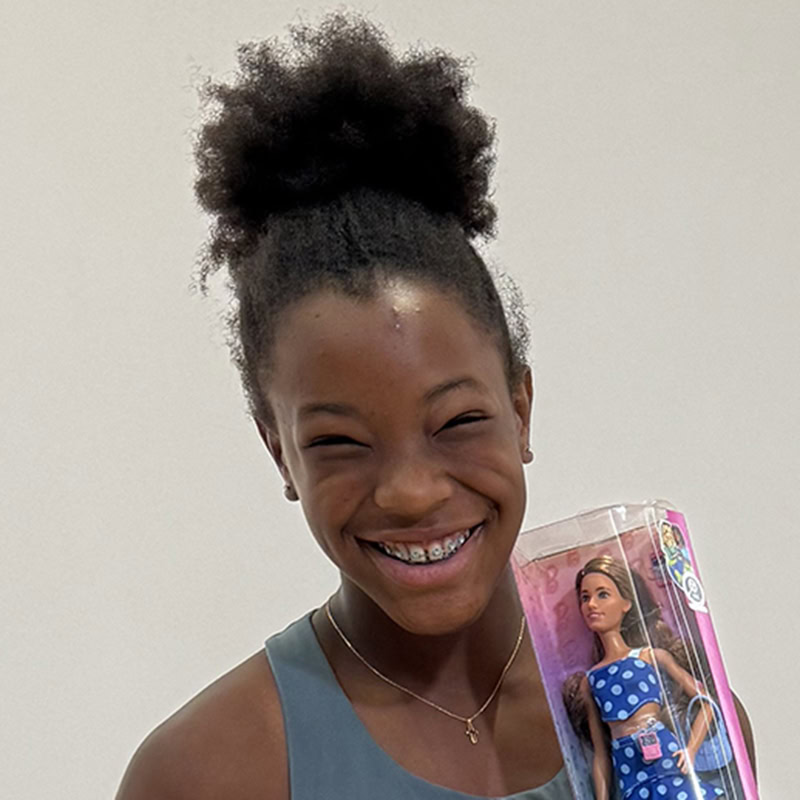
Nadia: “I think that the different types of Barbies, including Barbie with T1D, show that all types of people can be cool and powerful.”
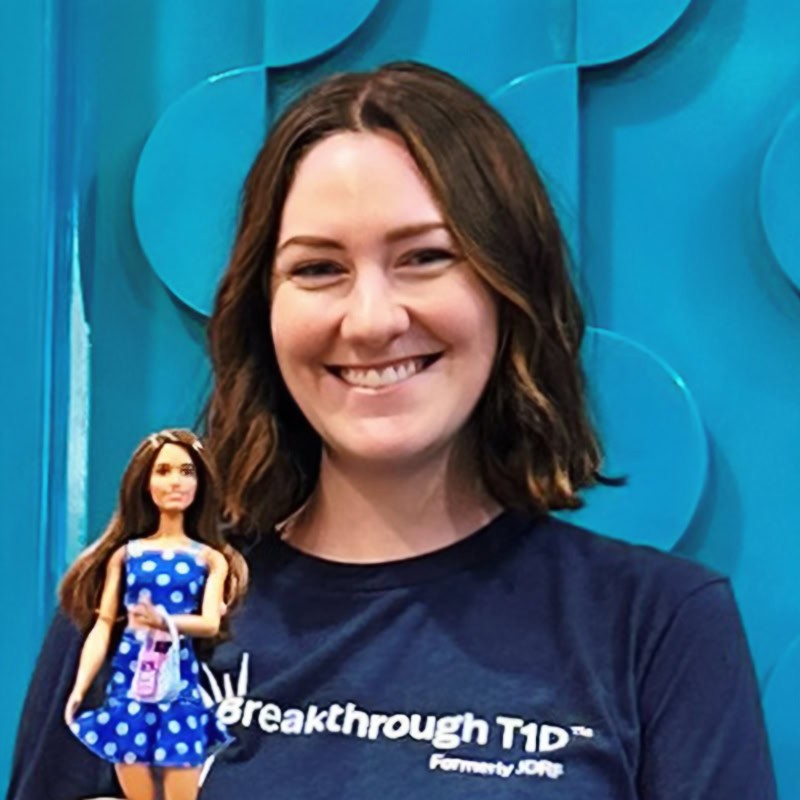
“Barbie with T1D is showing everyone with T1D that their experiences matter.”
Emily Mazreku
Director, Marketing Strategy, Breakthrough T1D
Q: Why does representation matter for conditions like T1D?
Emily: “T1D is a 24/7 condition that feels invisible and is often misunderstood, so when people with T1D see themselves, it’s powerful. Visibility not only helps people with T1D feel seen, it also builds confidence, starts a conversation, and raises awareness of what it really means to live with T1D. That’s what Barbie with T1D is doing—showing everyone with T1D that their experiences matter.”
Natalie: “Giving visibility to an often-invisible condition like T1D has opened dialogue. It’s a conversation that isn’t always comfortable, but when minds are open and voices are heard, there is so much learning to be had.”
“Nadia has shown me that she can—and will—do great things with T1D, and Barbie is a beautiful reflection of that.”
Natalie Stanback