
Newly diagnosed with type 1 diabetes
Newly diagnosed with type 1 diabetes? We have the information you need to understand and manage the condition.
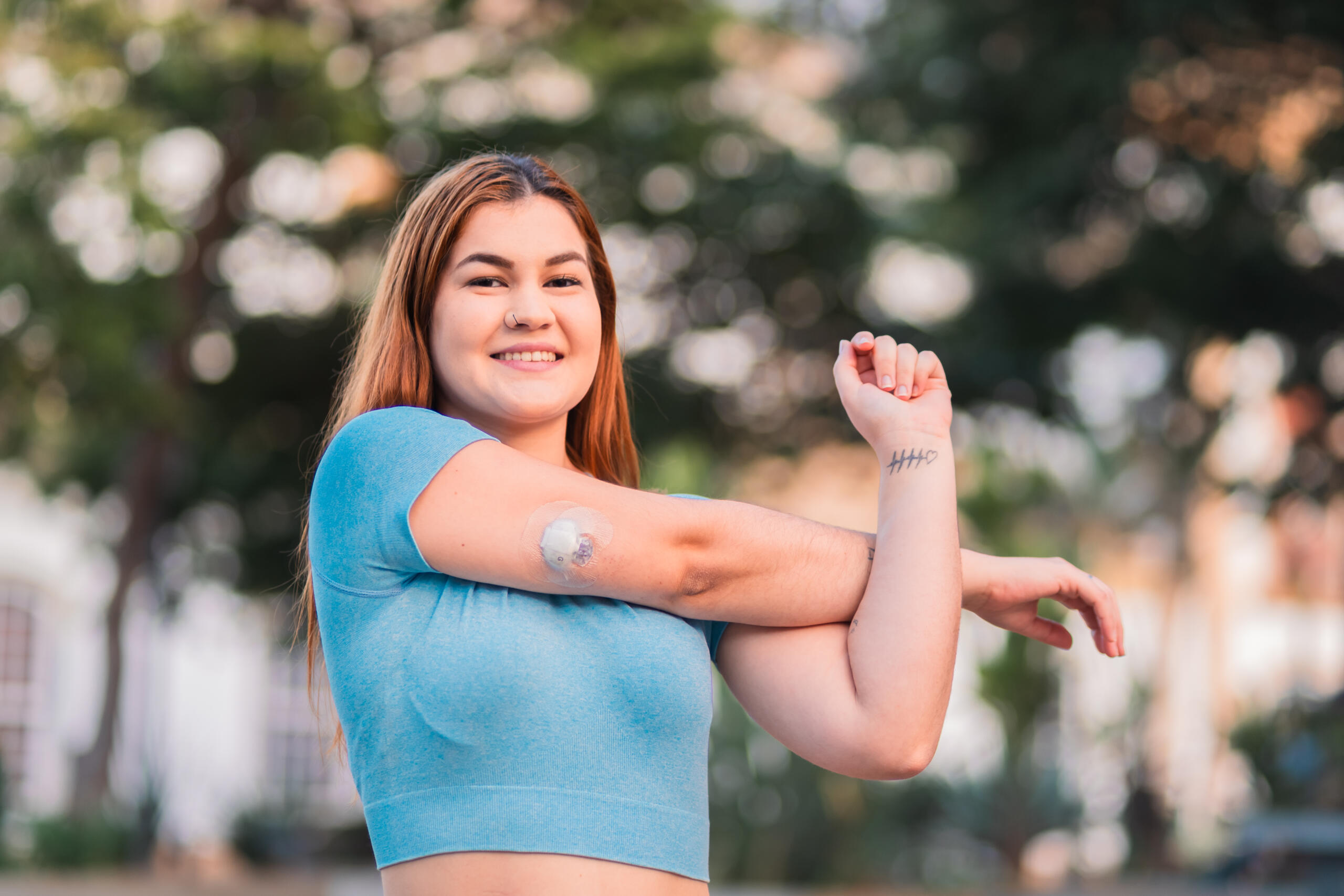
Start your journey with confidence
When you are newly diagnosed with type 1 diabetes (T1D), you may at times feel scared or overwhelmed. We are here to support you and your family during this time of transition.
Education and guidance
Your starting point for understanding type 1 diabetes.
In-depth guides for pregnancy, parenting, health insurance, and more.
Resources to help you manage your mental health with T1D.
Navigate prior authorizations, applying for an exception, and more.


Begin With Hope Guide
A helpful introduction to navigating life with type 1 diabetes created by people living with T1D and medical experts.
Daily T1D management
Managing type 1 diabetes involves three main steps: checking blood sugar, administering insulin, and counting carbohydrates.
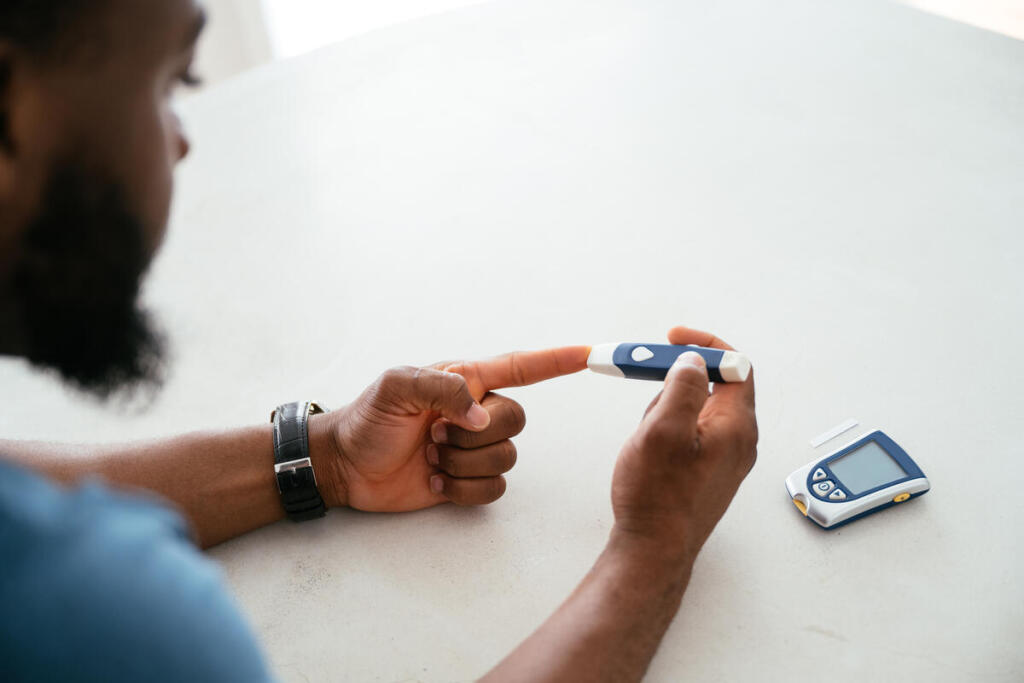
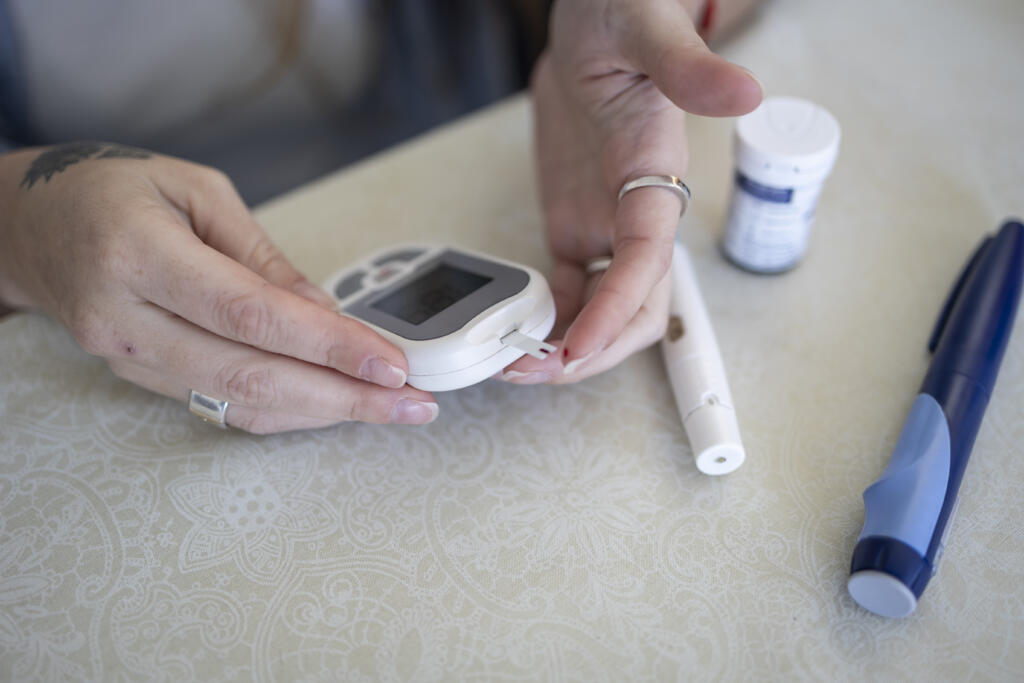
Monitoring blood sugar, or blood glucose, is a vital part of life with T1D, and can be done via glucometer or continuous glucose monitor (CGM).
There are four primary methods for administering insulin: injections with syringe or pen, inhaler, insulin pump, or artificial pancreas system/automated insulin delivery system.
People with T1D must balance the amount of carbs they consume with the right dose of insulin.
Request a free Care Pack
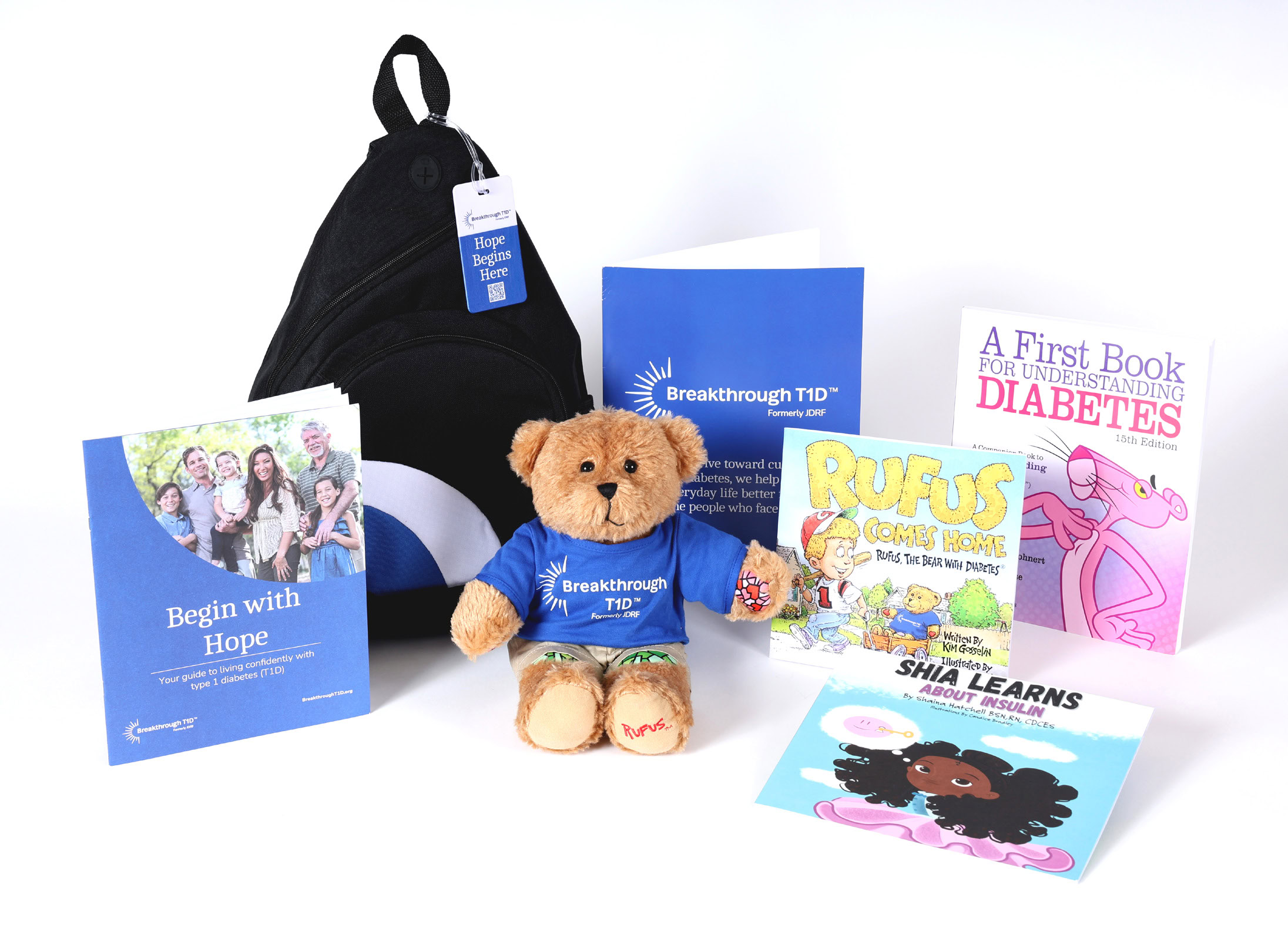
The Breakthrough T1D Bag of Hope™ is filled with resources for both children with type 1 diabetes and their caregivers.
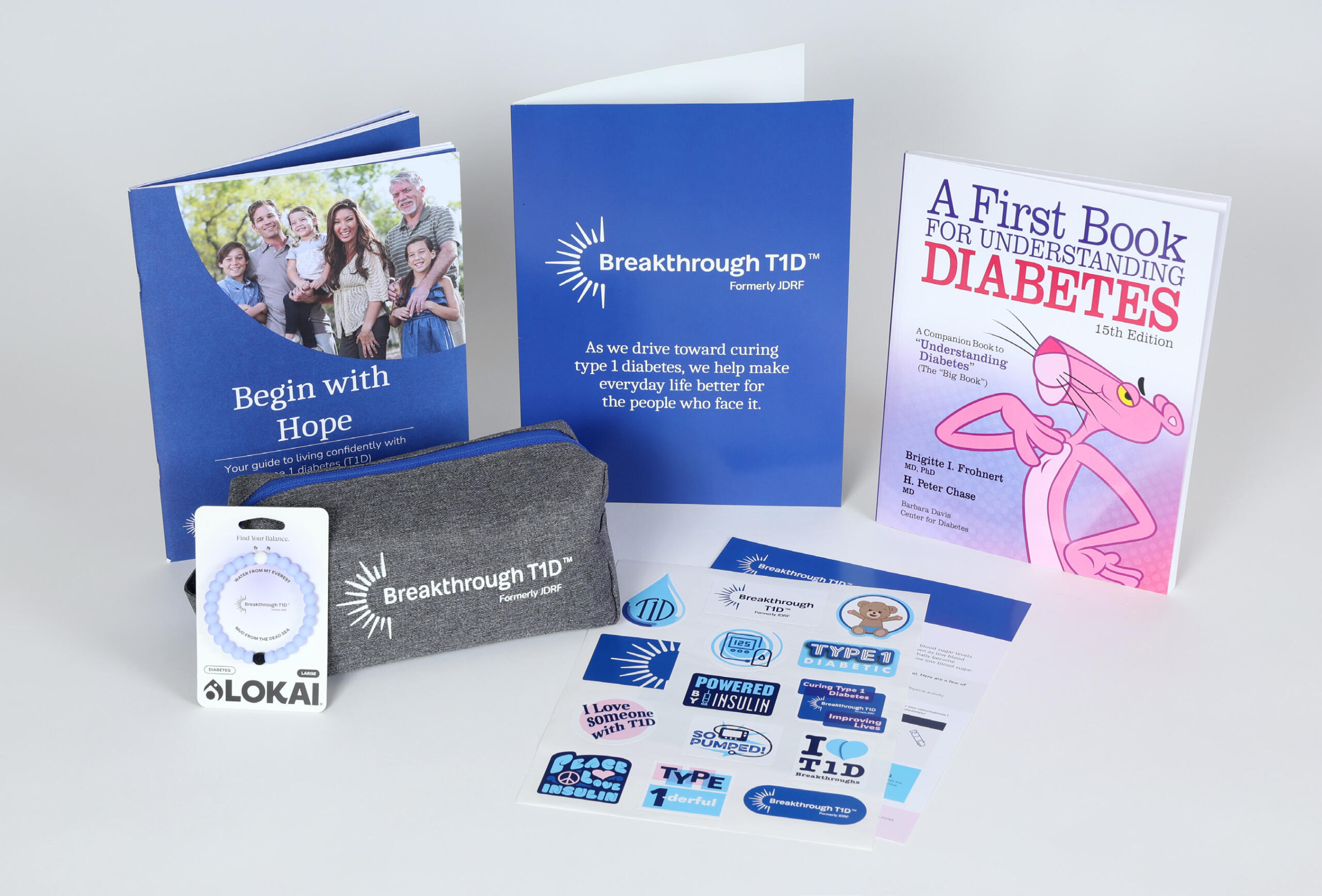
The Breakthrough T1D Teen Pack is filled with tools and resources to help make the journey with type 1 diabetes a little smoother.
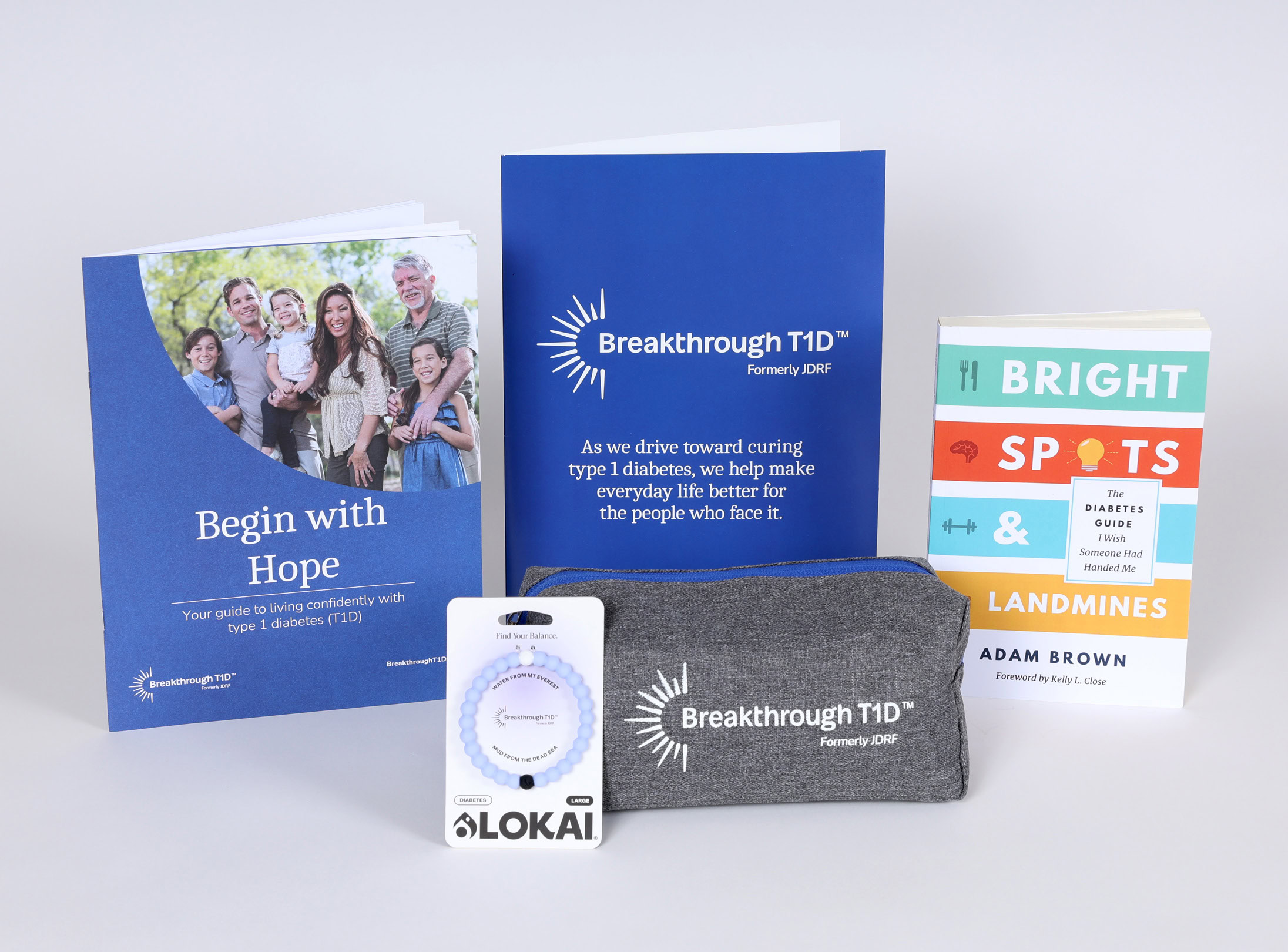
The Breakthrough T1D Adult Pack is filled with information and tools to educate, support, and inspire adults diagnosed with type 1 diabetes.
A message from our CEO
Breakthrough T1D CEO Aaron J. Kowalski, Ph.D., has lived with type 1 diabetes for more than 35 years.
Watch his message of support and hope, and learn how Breakthrough T1D can help you on your journey.
The first 100 days after diagnosis:
The importance of clinical trials
Many people newly diagnosed with type 1 diabetes can still produce insulin and are eligible for clinical trials that aim to understand how to protect the insulin-producing cells. The window for participation in these studies is usually limited to the first three months, or 100 days, following diagnosis.
At Breakthrough T1D, we want to make sure everyone is aware of clinical trials for the newly diagnosed so they can make an informed decision about participation.

