
Continuous Glucose Monitors (CGMs)
What are Continuous Glucose Monitors?
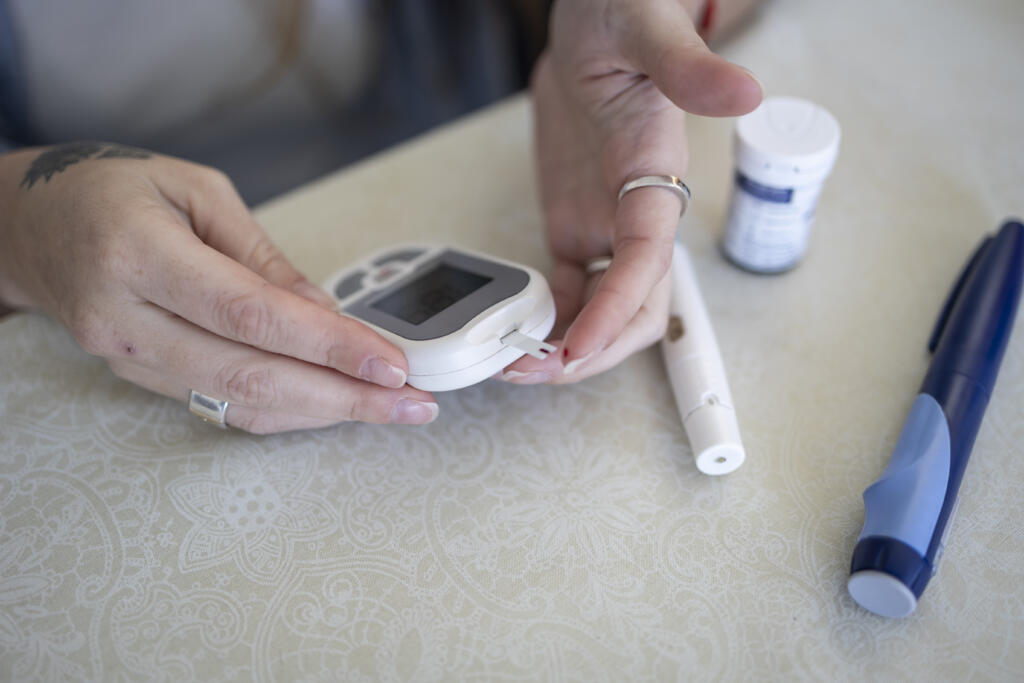
Continuous glucose monitors (CGMs) are small, wearable devices that continually measure a person’s blood-glucose levels. They are largely used in place of glucose meters and finger sticks.

How do CGMs Work?
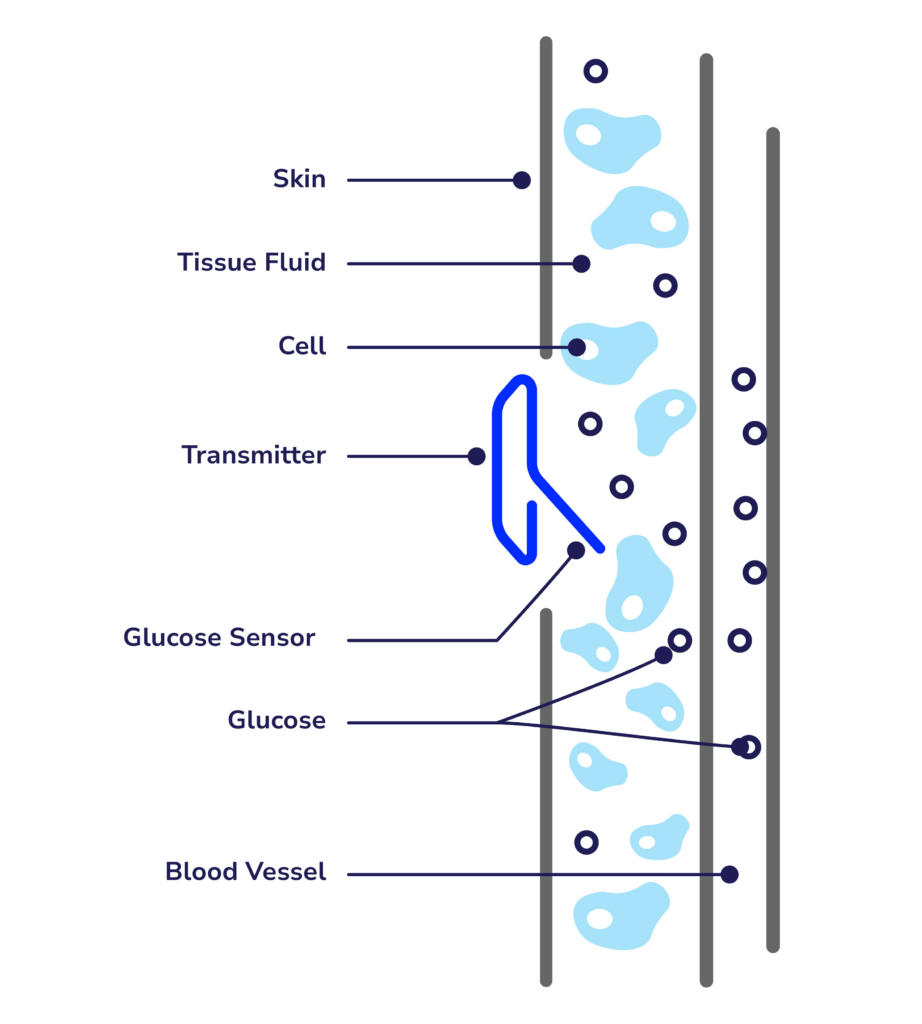
A sensor just under the skin measures the glucose levels in real time. The levels are then relayed to a receiver, smartphone or watch, or insulin pump which displays the readings.
CGMs are mostly worn on the upper arm or abdomen, but some can be worn on other parts of the body.
What are the Potential Benefits of Using a CGM?
Continuous glucose monitors have been transformative for people living with type 1 diabetes. They have proven to:
- Lower HbA1c levels
- Reduce episodes of hypoglycemia (low blood sugar)
- Reduce the risk of complications associated with chronic hyperglycemia (high blood sugar)
- Increased time-in-range
CGMs can also help make daily management of T1D easier by:
- Requiring fewer finger sticks
- Showing where your glucose is now and where it is trending
- Alerting you when your blood sugar is too low and too high
Other Things to Consider about CGMs
- You need to wear the CGM all the time (24/7) to get the most benefit
- Glucose readings are available all the time—this can be overwhelming for some people
- They provide more glucose data to share with healthcare providers and family members
CGMs Available in the U.S.*
The following are FDA-approved CGMs available for use in the U.S.
| Device name | More information |
|---|---|
| Abbott FreeStyle® Libre 2 Abbott FreeStyle® Libre 3 Abbott FreeStyle® Libre 3 Plus | https://www.freestyle.abbott/us-en/home.html |
| Dexcom G6® Dexcom G7® | https://www.dexcom.com |
| MiniMed™ Instinct MiniMed™ Simplera Sync MiniMed™ Guardian 4 MiniMed™ Simplera | https://www.minimed.com/en-us/support/product-support/sensors/compare-sensors |
| Senseonics Eversense® E3 Senseonics Eversense® 365 | https://www.eversensecgm.com/ |
Navigating Issues with your CGM
At times, people living with T1D experience issues with their CGMs. This can include inaccurate readings, faulty sensors, customer service issues, lost time, and unexpected or high costs. Breakthrough T1D created a guide to help navigate sensor issues.
More T1D Technology
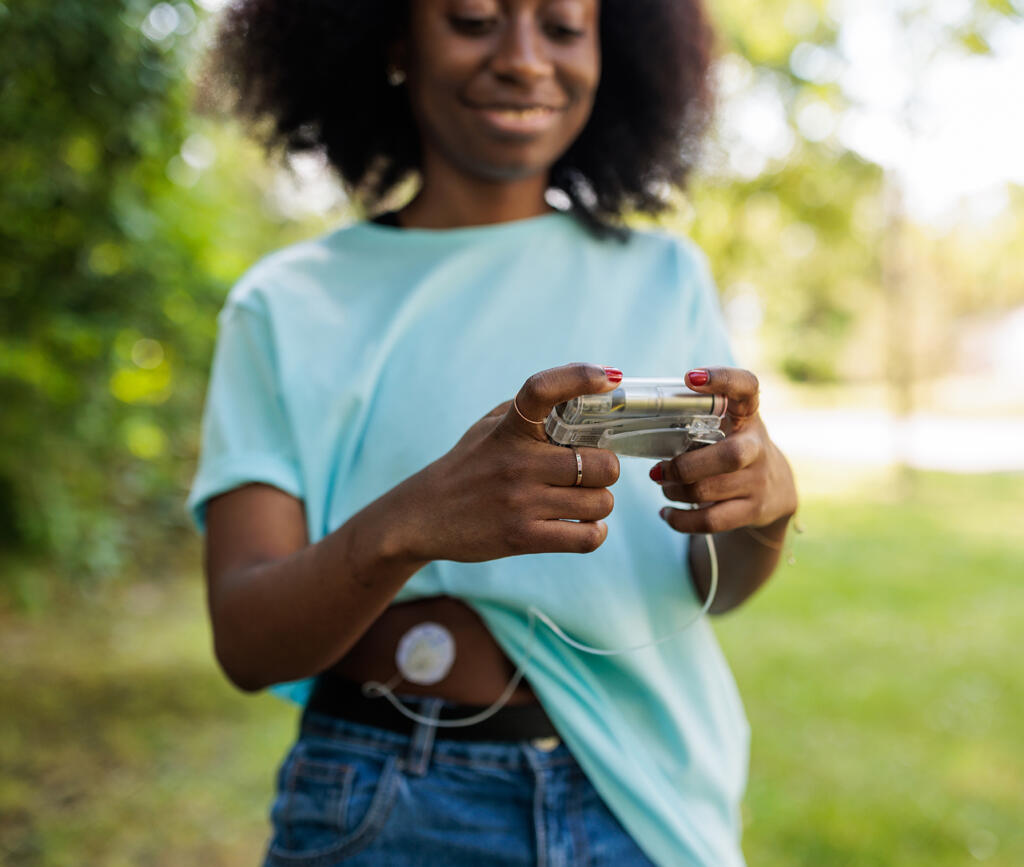
An automated insulin delivery (AID) system has three main components: an insulin pump, a continuous glucose monitor (CGM), and an algorithm that determines the best insulin dose to help keep you in range.

Smart insulin pens and pen caps are used to track insulin doses for people who take multiple daily injections (MDI) of insulin.
Health Insurance Guide
If you think a CGM might be right for you, speak with your healthcare provider. Consult the Breakthrough T1D Health Insurance Guide to learn about insurance coverage for T1D management tools and therapies.

