
We’ve all had moments where an insulin injection just doesn’t go the way you want. The insulin burns going in, you watch the insulin leak out of your skin as soon as you pull out the needle, there is bleeding after the injection, or the injection doesn’t seem to lower your blood sugar at all. It’s hard enough to have to give an injection several times a day, so any injection that goes wrong can make it even worse. Luckily, we have a few tips to help make all your insulin injections go a little more smoothly!
Inject the insulin into fat
Insulin is meant to be injected into fat. To make sure insulin goes into the fat, 4mm pen needles or 6mm syringe needles are recommended for people of all ages and weights. Pinching the skin up for an injection is not routinely recommended, but may be necessary for children and lean adults. Talk to your healthcare team for specific guidance.
Techniques to improve comfort
There are different techniques to minimize any burning or stinging from an injection:
- Cooling devices and vibrating devices have both shown to improve pain and reduce fear in children. You can also keep a spoon in the freezer and place it on the injection site after you remove the needle.
- Pressure applied at the injection site after injection has also been shown to reduce pain, but avoid massaging the area.
- Use a new needle for every injection.
- Let the alcohol fully dry before inserting the needle to further minimize pain.
Keep insulin at room temperature
Insulin can be kept at room temperature for one month or more once it’s open. Cold insulin tends to sting more going in, so keep your insulin at room temperature for a more comfortable injection.
| Insulin Type | Time Safe at Room Temperature |
|---|---|
| Ultra-rapid Fiasp, lyumjev | 28 days |
| Rapid-acting Lispro, aspart, glulisine | 28 days |
| Long-acting Glargine U-100 | 28 days |
| Long-acting Glargine U-300, degludec | 56 days |
Take your time
Nothing is worse than finishing an injection only to realize not all the insulin went in. Press the plunger all the way down and make sure to hold the pen or the syringe in your skin for a full 10 seconds to make sure all the insulin goes in.
Location matters
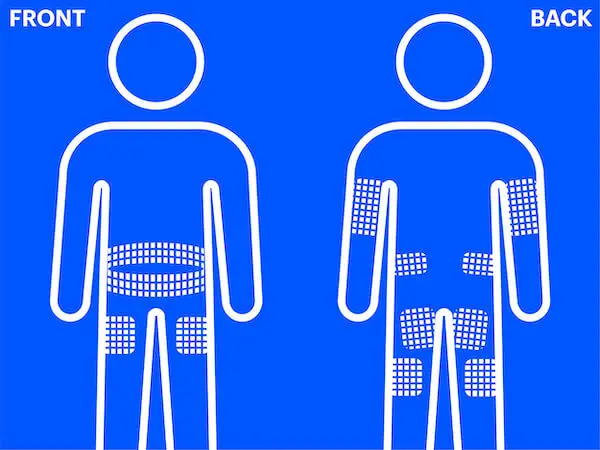
Certain injection sites absorb faster than others. Insulin typically absorbs fastest in the abdomen, then the arms, and absorbs slowest in the thighs and the buttocks. However, if you are planning to be active, avoid injecting near the muscles you plan to work out. Working out the muscles near your injection site can make the insulin absorb faster and cause low blood sugar!
Rotate injection spots
Make sure to rotate your injection spots. Everyone has a favorite spot, but if you use it too much scar tissue can build up (lipohypertrophy) and the insulin won’t absorb as well. This can lead to unpredictable blood sugar levels and higher HbA1c. Try to avoid injecting in the same spot twice in a row. You can use the same area of your body if you move the injection site by at least 1cm (1 finger width). Following a pattern for injections can help to make sure that you rotate regularly.
Assess your site
If your skin feels lumpy, bumpy, or hard when you press on it, choose a different spot. This usually means some scar tissue (lipohypertrophy) has built up in that spot and the insulin won’t absorb as well. Choose other spots until your skin no longer feels hard or lumpy. It can take months for this scar tissue to heal. Talk to your medical team to make sure that the tissue has healed before you start using this spot again.
Methods for administering insulin
There are four primary methods for administering insulin: Injections, insulin pumps, artificial pancreas systems/automated insulin delivery systems, or inhaler. Explore the differences between methods and which may work best for you.
This resource is made possible in part through the support of