
Checking blood sugar
With type 1 diabetes, the amount of sugar in the blood can be too high, too low, or in the target range.
Type 1 diabetes blood sugar monitoring
Checking blood sugar is a vital part of type 1 diabetes (T1D) management. With T1D, the amount of sugar in the blood can be too high, too low, or in the target range. Blood-sugar levels need to be monitored frequently during the day and overnight.
Everyone is different, but for most people with T1D, the goal is to keep blood sugar between 70 and 180 milligrams of sugar per deciliter of blood (mg/dL). Very young children and older adults often have individualized targets. Talk with your healthcare provider about the right blood sugar range for you or your loved one.
How to check blood sugar
Continuous glucose monitors
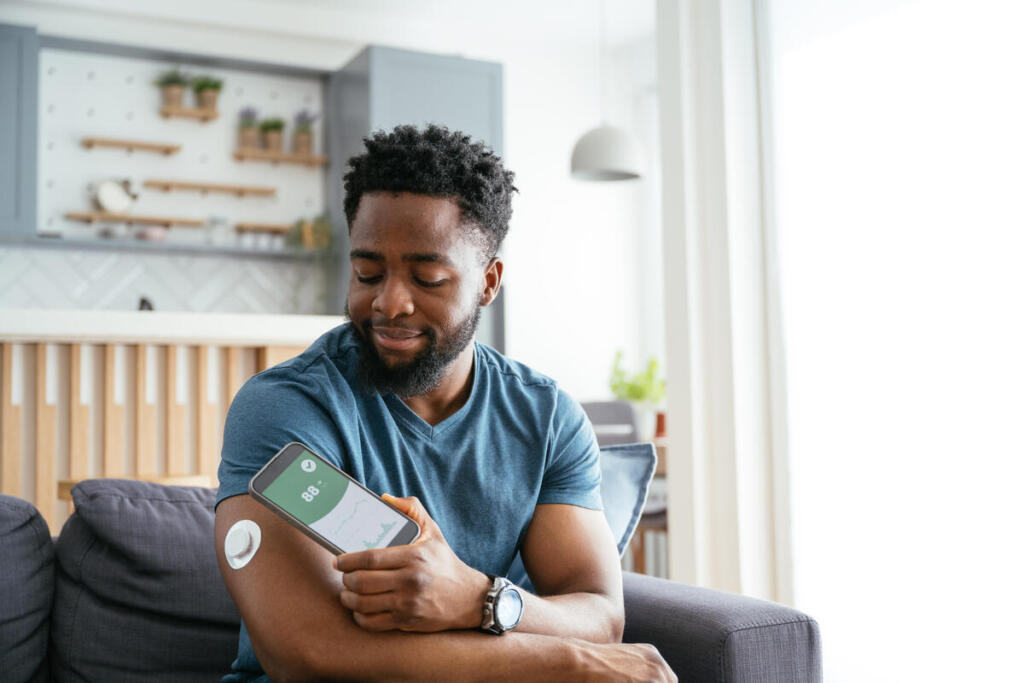
CGMs measure the tissue-glucose levels in real-time via a sensor just under the skin. The levels are then relayed to a receiver, smartphone, or insulin pump, which displays the readings.
CGMs can be programmed with customizable alarms that alert the user (and, if desired, caregivers and loved ones) when blood sugars are high, low, or rising or falling quickly.
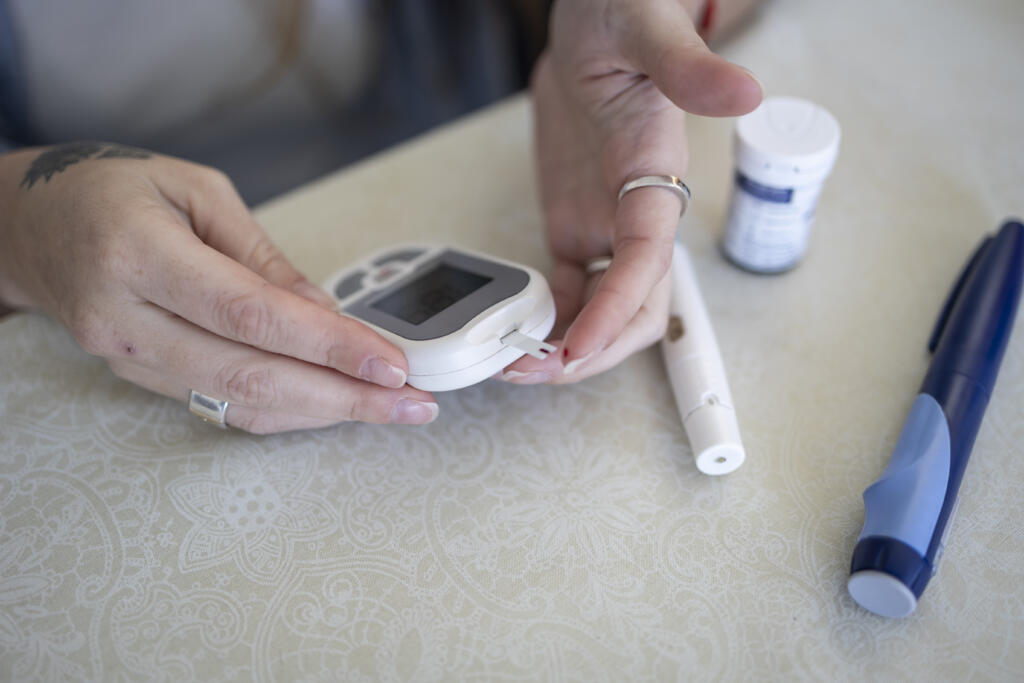
Glucometer (blood sugar meter)
A glucometer, or blood sugar meter, is commonly used for monitoring blood sugar. This involves taking a small drop of blood, usually by pricking the fingertip, and placing it on the test strip in the glucometer. Blood-sugar levels are measured in milligrams per deciliter (mg/dL). These readings give an accurate measurement of blood-sugar levels at that moment in time.
Understanding blood sugar levels
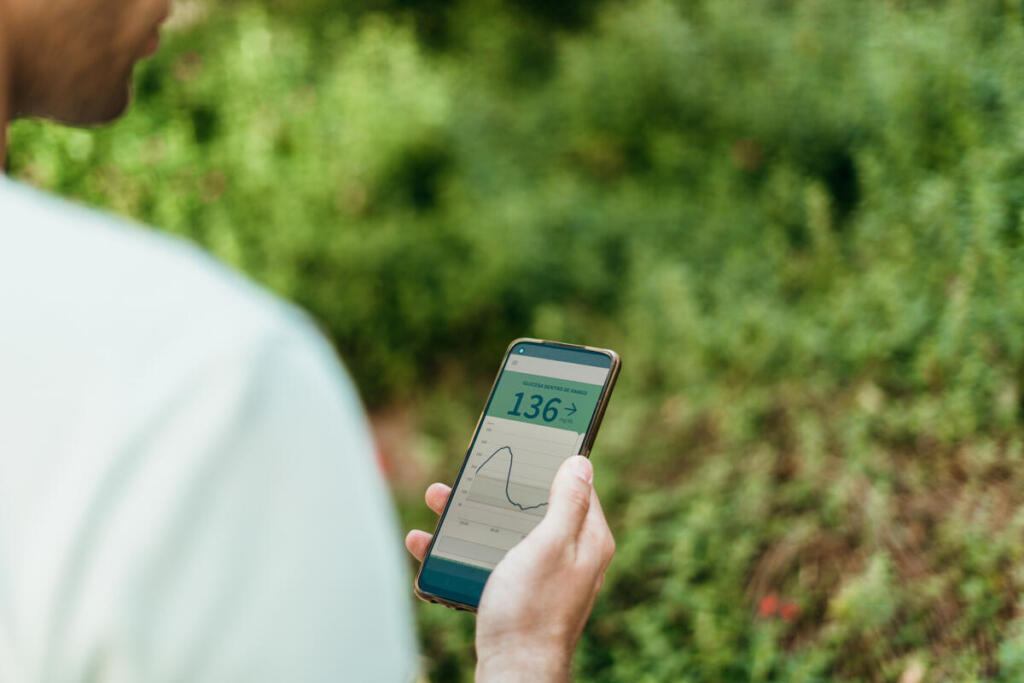
Having too much sugar in your blood is called high blood sugar, or hyperglycemia. The target blood sugar range for most people living with type 1 diabetes is 70 to 180 mg/dL.
High blood sugar is typically treated with insulin.
When you have too little sugar in your blood, it is called low blood sugar, or hypoglycemia. Low blood sugar in people with type 1 diabetes usually means anything lower than 70 mg/dL.
Low blood sugar is typically treated with fast-acting carbohydrates.
What is time-in-range?
Time-in-range (TIR) is a measurement that tells you what percentage of the day your blood sugars are in the target range. Measuring TIR is made possible with a continuous glucose monitor because this technology takes new readings of your glucose levels every 1-5 minutes.
While using a CGM, you’ll work with your healthcare team to set personalized “low” and “high” targets that determine the appropriate goal range for your blood-sugar levels.
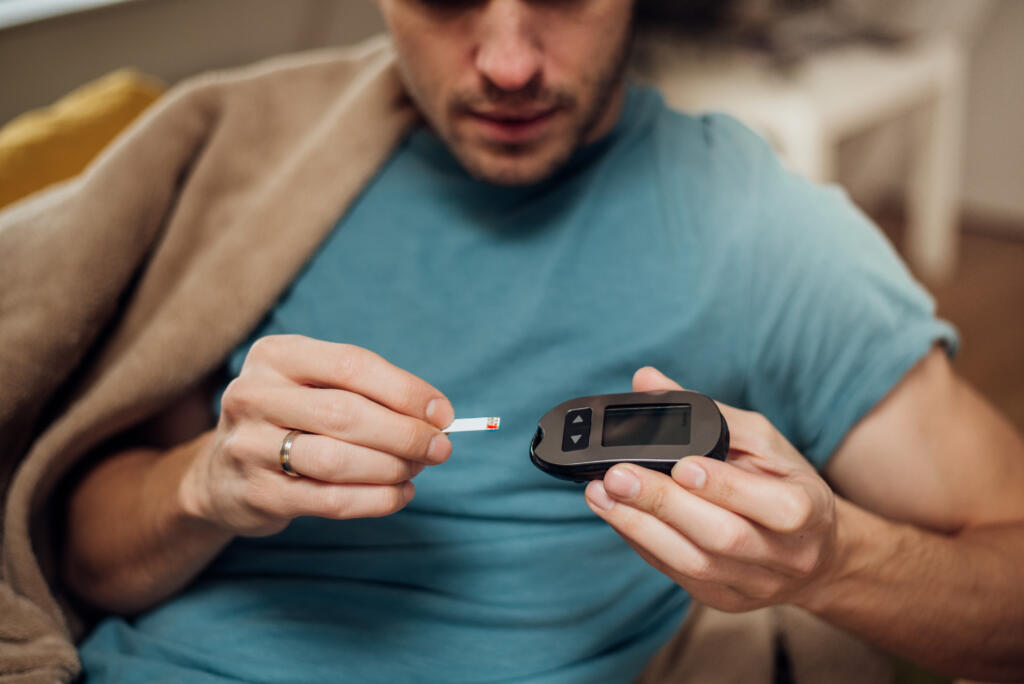
Sick Day Guide
Sick days can cause unexpected spikes or drops in your blood-glucose levels. Get guidance on managing type 1 diabetes when flu or illness strikes.

