

A cornerstone of Breakthrough T1D is awarding funding to scientists, researchers, and clinicians who are embarking on promising type 1 diabetes (T1D) research projects. The research we fund spans across the entire spectrum of T1D, including underlying biological and genetic causes, new approaches to cures, advanced technologies, clinical trials, and more.


Here, we feature Remi Creusot, Ph.D., a Principal Investigator at Columbia University and a postdoctoral fellow in his lab, Camillo Bechi Genzano, M.D. Breakthrough T1D’s Young Adult Advocacy Council (YAAC) spearheaded an interview series with these Breakthrough T1D-funded researchers to shine a spotlight on the incredible work they’re doing towards our mission.
These interviews were led by Michaela Weiss, who previously interned in Dr. Creusot’s lab, and Cameron Crouse, who holds a leadership role in the YAAC. Crouse is currently pursuing a doctoral degree in T1D research in the lab of Breakthrough T1D-funded researcher Cherie Stabler, Ph.D., at the University of Florida. Both Michaela and Cameron serve on the Research & Advancements Committee, which plays a critical role in supporting advocacy efforts around Breakthrough T1D’s research initiatives.
Young Adult Advocacy Council
Breakthrough T1D’s Young Adult Advocacy Council is a group of young adults actively supporting the advancement of Breakthrough T1D’s advocacy priority areas and drive meaningful progress on our path to cures for T1D.
In their interviews, Drs. Creusot and Bechi Genzano cover a range of topics, from their personal connections to T1D, to the details of their research, to the impact of Breakthrough T1D on their careers. Through candid dialogue with Michaela and Cameron, these conversations highlight the human side of critical T1D research, giving the T1D community a chance to understand and ultimately support the research that we fund to accelerate breakthroughs.
Read on to see what the experts had to say.

Q: What drew you to T1D research and do you have a personal connection?
RC: I personally didn’t have anyone in my family or my circle with type 1 diabetes, so that wasn’t the reason. But when I started working on this, I really felt like it was the thing I wanted to focus on for the rest of my career, because I thought there was a real need there, and it was a challenge too. Eventually I met a lot of people with type 1 diabetes, so it’s always even more motivating.
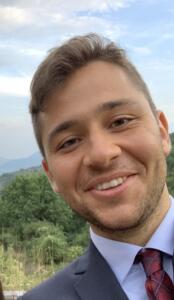
CBG: In my case, it’s more personal, as I was diagnosed with type 1 diabetes when I was 12. Life back then was pretty hard. I remember all the struggles before continuous glucose monitors and insulin pumps, and the life of people with this disease has dramatically improved over the past few years, and it’s going to improve further as we go. From a professional standpoint, I started as a clinician, since I’m an M.D. endocrinologist by training, and I switched to pre-clinical research in Remi’s lab, targeting immune causes of the disease.
Q: Can you explain your current Breakthrough T1D-funded research project?
RC: In type 1 diabetes, the immune system loses the ability to recognize certain tissues as part of the body, and it starts trying to get rid of the cells that carry those markers. What we’re trying to do is remind the immune cells that these markers are actually part of the body. We do that by expressing these markers in hematopoietic stem cells, the stem cells from bone marrow that produce all the cells of the immune system. As new immune cells are generated from these stem cells and populate the body, they’ll encounter these markers in a different context and be re-educated to not attack them, even later on, in a place where there’s inflammation. Because we use the patient’s own cells, this approach wouldn’t require the harsh conditioning treatments, like irradiation or chemotherapy, that are normally needed to make space in the bone marrow for transplanted stem cells, and it wouldn’t require immunosuppression, the way a transplant from a donor would.
CBG: The title of my fellowship is ‘Achieving Persistent Presentation of Multiple Disease-Relevant Antigens to Prevent Autoimmune Diabetes.’ Out of all the immune cells involved in type 1 diabetes, only a small number actually attack the beta cells, and current therapies like teplizumab target nearly all T cells rather than just those. We’re using antigen-specific immunotherapy to target only the few pathogenic cells responsible for the disease, with the goal that a single injection of these modified stem cells could permanently protect against it. Right now, this approach is mainly aimed at preventing the disease, so it will likely need to be combined in the future with beta cell replacement or transdifferentiation approaches.
Q: What does receiving funding from Breakthrough T1D mean to your work?
RC: It means a lot to have funding from Breakthrough T1D. You develop a relationship over time, and I feel I’m part of their community too, even though I don’t have T1D. It’s not only because it helps make progress with the research, but also because it feels like you belong in that community, and that you are someone really in the field.
CBG: Being supported by a fellowship is really important for a postdoc. First, it gives you certainty about your future, at least in the medium- to long-term, because you know that for the next three years you can actually perform the experiments you were planning on doing. Second, it gives you a degree of independence. Third, and I think most importantly, it’s about being financed by a mission-driven organization like Breakthrough T1D. Here, you feel that the clinical translatability and the impact you can have on actual people is a lot closer, and actually achievable.
Q: What’s one thing you’d like people with T1D to know about your research?
RC: The work we do in the lab is important, but it’s part of a huge, massive effort that requires progress at many different levels, because no single lab is going to come up with a cure on its own. There are many different aspects to this research: intervening at an early stage, but also giving hope to people who’ve had diabetes for several years, where you can combine stem cell-derived beta cells with a treatment that protects them. Looking back twenty years, it’s really quite amazing how much knowledge we’ve accumulated and how many new approaches are being evaluated. Things are slow, but that’s what science is. There are options for every stage of the disease. If you have a family member with type 1 diabetes, there are ways to assess your risk, and if you’re at high risk, there will be options to prevent it so you get to keep your own beta cells. For everyone else, there will be options as well. I’m super optimistic, given the progress we’ve made in the last twenty years, and we’ll get there.
Q: How can people stay informed about or get involved in scientific research?
RC: I think curiosity and perseverance are really character traits, and you need at least those two. For type 1 diabetes research, I see a lot of people who have been in the field for a long time, some attracted by the pathological aspects and biology of it, and others who are personally connected to it. Thanks to Breakthrough T1D, there’s always support for trainees in the form of fellowships, and that’s really key to keeping those people involved in the field, because it allows them to progress to the point where they can be fully committed and feel secure in that area of research.
CBG: I would say two things. The first is that the easiest way is probably through Breakthrough T1D, since they often organize events, not only about fundraising, but also opportunities like students visiting the lab for a day. There are opportunities to visit a scientific lab and see whether it’s your specific passion or not. The other thing I want to say is that having an actual impact on patients with T1D doesn’t necessarily mean going into a scientific position. What matters in the end is that you have an impact on the life of people with T1D, whether that’s through a scientific effort or another kind of effort, as long as you enjoy it and have an impact on people.
Q: Thinking about advocacy and fundraising, how can people support your research as a general constituent, a member of the population, of Breakthrough T1D?
RC: Support is not always in the form of a grant or money. Sometimes words or support can help, in a form of encouragement and motivation, knowing that people understand the science. As they understand it and believe in it and encourage us, it could be a positive cycle.
CBG: Of course, the easiest answer is by donating. If only one person has a dream, it’s just a dream, but if many people have a dream, it can become a reality.
Thanks to Drs. Creusot and Bechi Genzano for taking the time to speak about research and to Breakthrough T1D’s YAAC for organizing.
Looking for more? Check out Breakthrough T1D-funded research driving progress towards our mission.
