
Leading researchers from around the world will gather for the annual meeting of the European Association for the Study of Diabetes (EASD). At this year’s meeting, which will take place virtually from September 22-25, more than 40 studies will be presented by Breakthrough T1D researchers, funded now or in the past, working to find cures for type 1 diabetes (T1D) and improve the lives of those living with the disease today.
- Dana Lewis, who founded the open source artificial pancreas system movement, and Henk-Jan Aanstoot, M.D., Ph.D., will debate pros and cons of open source vs. commercial closed loop systems.
- Alexandra Smink, Ph.D., a Breakthrough T1D-funded postdoctoral fellow who was one of four people chosen to take part in the Rising Star Symposium, will present on mimicking the pancreas and preventing rejection within an islet transplantation device.
- We will hear from Chantal Mathieu, M.D., Ph.D., Maria Gomez, Ph.D., and Adrian Vella, M.D., about the Innovative Medicines Initiative (IMI), a European public-private partnership aiming to speed up the development of better and safer medicines, which funds INNODIA, BEAT-DKD and Hypo-RESOLVE, all of which have Breakthrough T1D grants.
- Maria Cristina Nostro, Ph.D., a former Breakthrough T1D-funded postdoctoral fellow and two time grantee, will discuss how stem cells can model pancreatic development and diabetes, in an EASD/Breakthrough T1D Symposium.
- Breakthrough T1D-funded investigators Craig Beall, Ph.D., Peter Jacobs, Ph.D., Pratik Choudhary, M.D., Ph.D., and Paul McKeigue, Ph.D., will discuss low blood sugar, termed hypoglycemia, and new approaches to reducing this fearful complication of diabetes.
“I’d like to share a personal dream. A dream that one day children will be told, ‘like Polio, there once was a disease called diabetes. With your help, that dream may become a reality.” – Maurice Hertzfeld, testifying at the 1975 National Commission on Diabetes
Rob Hertzfeld was 14 years old when he was diagnosed with type 1 diabetes (T1D) in 1972. Most people living with T1D only lived to be 40 years old back then. Imagine learning your child has a disease that will change his life, and yours, forever.

Maurice Hertzfeld with son, Rob
Rob spent the next two weeks in the hospital learning how to give himself injections and control his disease. Life after that meant daily urine tests, hoping the test strip wouldn’t change color, that he wasn’t “spilling sugar.” His parents, Gladys and Maurice, were determined to make sure their son would live a long and healthy life. They devoted themselves to finding the cause and cure.
Gladys mentored recently diagnosed families. Knowledge about T1D was limited, and in Rob’s case, doctors avoided discussing complications such as blindness and circulatory problems.
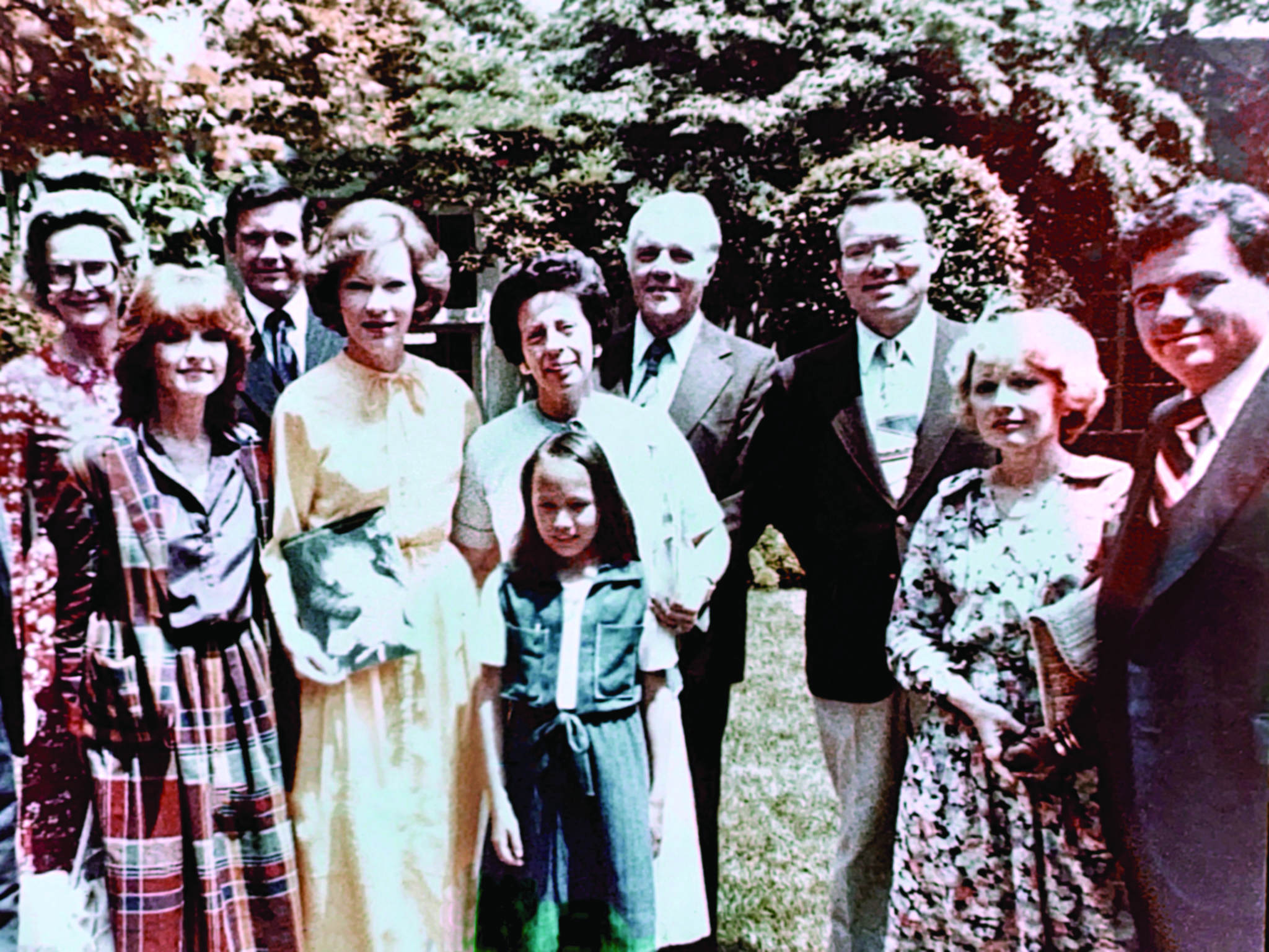
Maurice Hertzfeld with first lady, Rosalyn Carter, and other founding members of Breakthrough T1D
Maurice, a real estate developer in Philadelphia, became a founding board member of Breakthrough T1D (then JDF) while Rob was still in the hospital. He served as chairman in its early years and commissioned a groundbreaking study to document the number of people living with diabetes, and the effect on the country. It would serve as the basis for federal legislation to combat the disease and find a cure.
But the Hertzfeld’s commitment to a world without T1D didn’t stop there. Their generous contributions spanned over five decades and their desire to greatly impact progress led them to create a gift to Breakthrough T1D in their wills.
Maurice passed in 2019, but his spirit lives on. This year, Rob decided to create a gift of his own to Breakthrough T1D through his retirement assets. Having lived with T1D for 48 years, he wants all people of all socioeconomic levels to have access to life-changing therapies, so they may also have a long and healthy life.
Rob is 62 today. Like his parents, he dreams of a world without T1D.
“I’ve been very fortunate in my life. I have money and insurance to deal with the everyday struggle of living with T1D. I can’t imagine what it must be like to worry about those things. I want to make sure that everyone has access to the supplies and care they need and deserve.”
As we mark our 50th year, we celebrate the power of generous donors like the Hertzfelds, who have devoted their lives to helping others – improving the world through their volunteerism, advocacy and philanthropic commitment.
“Even now I can hear that ghostly whisper from 48 years ago. The doctor’s voice, ‘Mrs. Greenspon, your son has diabetes.'” – Roz Greenspon, Charlotte, NC
He was talking about Keith, 8 years old, the oldest of our 3 children. “But,” the doctor added as he exited the room, “Don’t worry. He’ll take insulin – he’ll be fine.” I stood there, in shock, speaking aloud, to no one in particular, “What is it? How do you spell it? How do we fix it?” I cried.
Roz Greenspon and son, Keith
Fine? How could daily injections ever be fine? Our normal family life disappeared under an avalanche of test tubes for urine sugar testing, injections using syringes with fat needles painfully shooting thick U40 insulin made from pig islets, and overwhelming feelings of anger, hopelessness, and fear. No one offered us support. We were alone. It was the dark ages of living with diabetes. I cried – a lot. That was June 1972.
Then in 1973, “The Universe” came to our rescue. I learned about a new group called the Juvenile Diabetes Foundation (now Breakthrough T1D). There were only four chapters in the entire country, all run by volunteers. The members were just like us, wanting a cure for their children with juvenile diabetes.
Breakthrough T1D was offering hope, passion, and determination – a better life for our children. I felt the fire rise up in my bones.
“Enough of this crying, Roz. Get up and Do Something!” I told myself.
In one year, with true Breakthrough T1D passion, our Charlotte Chapter was founded with seven families. I “volunteered” to be the president. The rest of the story is now history. Our pipe dreams of better daily treatments are becoming realities daily. Cures are close to fruition.
I was 32 years old when my passions to find the cure were first ignited. This year I turned 80. How do we keep those pipe dreams alive? How do we ensure that Breakthrough T1D’s determined work will continue to be well-funded when we are no longer around?
I have included Breakthrough T1D as one of the beneficiaries in my estate plan. Through estate legacy planning, you too can ensure Breakthrough T1D’s work continues until cures are found.
Keeping the hope alive for my children, grandchildren, and great grandchildren will keep me smiling…long after I’m gone.
Testimonial written by Roz Greenspon, BETA Society Member and Breakthrough T1D Charlotte Chapter Founder
Accurate control of blood sugar for people with type 1 diabetes (T1D) was not easy in the 1970s. At the time, the degree of diabetes control relied on patient history, urinary sugar and blood-sugar measurement at the time of the doctor’s visit. There was nothing that could tell you what your blood-sugar levels were for the past 2 to 3 months.
Enter Anthony Cerami, Ph.D. In 1976, he and his colleagues, knowing that sugar attaches to red blood cells (hemoglobin) in the body, demonstrated that it could be used to determine how well blood sugar had been controlled in the previous 2 or 3 months (because red blood cells have a life span of about 120 days). This discovery led to the creation of the hemoglobin A1c (HbA1c) test. (Although other researchers had already observed elevated HbA1c levels in people with diabetes, Cerami was the first to propose its use for monitoring blood-sugar control.)
Breakthrough T1D funded Dr. Cerami in 1976-1978, to study the role of HbA1c as a monitor of diabetes control. This led to it being used for the Diabetes Control and Complications Trial (DCCT), a comprehensive clinical study from 1983-1993, to find out if intensive insulin control warded off complications from the disease. The conclusion of the trial: people who were able to keep their blood-sugar levels as close to normal as possible, as assessed using HbA1c, had less chance of developing complications, such as eye, kidney, heart and nerve disease.
At the time, many doctors had not put much emphasis on tight control of blood-sugar levels. The common belief for decades was that diligent monitoring of blood sugars and intensive insulin therapy had little consequence for people with diabetes. Since the DCCT’s findings, statistics have proven that tight blood-sugar control can be extremely beneficial for people with diabetes.
Without HbA1c, this would have been nearly impossible to demonstrate.
High school nerd pines for popular/attractive crush, experiences some zany hijinks while trying to win over said crush and learns some lessons about life and love along the way.
It’s a story we know well, yet can’t get enough of.
Lucky for us, “This Is the Year,” a soon-to-premiere rom-com movie, is about to tell that story to a new generation:
“In a last ditch effort to win over the girl of his dreams, a nerdy high school senior (Lorenzo Henrie) and his best friends embark on a road trip to see their favorite band at the biggest music festival of the year. On their journey, they realize that elaborate plans never go off without a hitch, and that you can find true love in the most unexpected places.”
If that sounds familiar—maybe like the plot of a teen flick from the 1980s—well, that’s the idea.
Produced by “Wizards of Waverly Place” alums David Henrie and Selena Gomez, on Friday, August 28, the film will be the first ever to have a live, digital premiere.
A First-of-Its-Kind Experience
Billed as “a completely new movie premiere experience,” the virtual premiere promises a star-studded event that starts with a pre-show party, followed by the livestream of the film, then a live afterparty Q&A with David AND Selena hosted by Charli and Dixie D’Amelio. The night wraps up with a live performance by lovelytheband.
“Most premieres are for a very small collective of people, but not this one” Gomez emphasized in the film trailer. “We want all of you to watch it with us.”
But, that’s not all—just by buying a ticket, you also help advance us closer to cures for type 1 diabetes (T1D).
You may be thinking, “Cool! But how did this happen?”
Like any story, it involves personal relationships and an unexpected twist.
But in this case, it also involves a family whose members are dedicated to helping others and know all too well about the day-to-day burden of T1D.
The Backstory
Kelly Engelbert of Charleston, SC, is the mother of two girls. Her youngest, 11-year old Libby, was diagnosed with T1D at age 3.
“I’m a do-er,” Engelbert said. “I like to fix things and help people.”
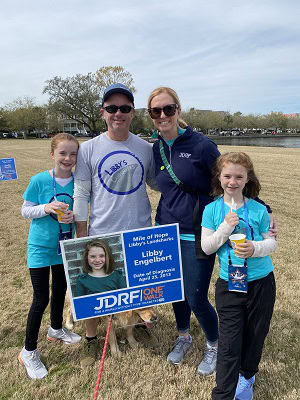 A do-er she is indeed. In addition to her job as a Chief Financial Officer and being a T1D parent, she has been on the board of directors of the Breakthrough T1D Palmetto Chapter for the past 2 years.
Turns out, being a “do-er” runs in the family.
“My father is the one responsible for this. He is extraordinarily charitable. He jumps right into everything you ask him to do. He’s the first to support your cause,” Engelbert said.
Her father (and Libby’s grandfather), Denis J. Gallagher, is also the executive producer for “This Is the Year.”
But there’s more to it than that.
“He’s known the Henrie family for almost 10 years and was an early stage investor in one of their production companies,” Engelbert said.
“We came to acquire the rights of the film,” Engelbert said about the movie, which is David Henrie’s feature-length directorial debut. Henrie also wrote the film.
“They had shot the film prior to COVID, really knew they had captured lightning in a bottle, and had planned for a theatrical release.’”
Then, the unexpected twist: The coronavirus pandemic struck and theatrical releases were put on hold, but demand for in-home, streamed content skyrocketed.
The opportunity presented a slight quandary for Engelbert and Gallagher: “We kind of sat back and really thought about this and said, ‘What’s really the best way to go? Do we approach the traditional outlets with this content and hope for the best? Or do we take this as an opportunity and really try to make something of it?’”
They decided to go all in and make something of it.
Not only is this going to be the first ever live virtual movie premiere; it’s also the premiere of a new digital content streaming platform launched by Bold Capital Group, LLC— the firm Engelbert and her father launched and lead together.
“There’s a lot of potential here,” Engelbert said of the new platform. “It’s all been very quick. We’ve done it all within the span of maybe 3 months.”
A Happy Ending
Naturally, the father-daughter duo of do-ers also saw the event as an opportunity to give back.
“We thought, ‘Why don’t we have a charitable element to it?’” Engelbert said. “Obviously, it’s not hard for us to pick what charity we want to give to. We are super committed to Breakthrough T1D and the research that’s being done. I’m confident that this is the organization that has the pathway to a cure.”
David and Lorenzo Henrie know Libby and that she lives with type 1 diabetes, as does actress Jennifer Stone who starred in “Wizards of Waverly Place” with Henrie and Gomez. Stone has been a T1D Champion and great Breakthrough T1D supporter. She served as a T1D Role Model at Children’s Congress 2019 an recently shared her story in Breakthrough T1D’s Power of Us National Broadcast.
“When we mentioned this (donating to Breakthrough T1D), they (the Henrie family) agreed absolutely 100 percent,” Engelbert said.
Gallagher even has a cameo in the movie.
“He plays Officer Joseph, the police officer who is at the jail,” Engelbert said as she laughed.
And with that, it’s always good to have a happy ending.
“Movies and music and entertainment have been our getaway. They let you have a laugh when things are tough,” Engelbert said. “We hope the virtual live premiere of this fun, feel-good film will help people take a little break from all that is going on in the world.”
Watch the trailer for “This Is the Year” below.
Breakthrough T1D recently became the first nonprofit organization whose Chief Data and Technology Officer, Sri Mishra, has received one of three, highly-coveted annual awards from the International Society of Chief Data Officers (isCDO).
 Inaugurated in 2017, the awards recognize the achievements of Chief Data Officers (CDOs) who led organizations in developing and implementing analytics capabilities with outstanding transformational results.
Mishra received the award at the 2020 Annual MIT Chief Data Officer and Information Quality Symposium hosted by MIT’s Sloan School of Management on Wednesday, August 19.
In recognition of the development and implementation of a data-driven technology architecture and infrastructure to centralize all of Breakthrough T1D’s digital systems and data, Mishra accepted the award titled “Transformation of Collaboration from Inwards to Outwards.”
According to the isCDO, the category acknowledges work that has demonstrably “impacted business mission outcomes, improved trustworthiness and timeliness of data, improved data governance” and provides a unified, secure and user-friendly data experience to internal and external stakeholders.
A Bold Vision For the Future
Breakthrough T1D’s technology transformation is a critical linchpin of its bold vision for the future: to accelerate mission and become more volunteer-powered than ever before.
The vision outlines Breakthrough T1D’s strategies to drive greater impact to unlock cures and drive research that improves the lives of people with type one diabetes (T1D) today.
As part of that vision, Breakthrough T1D will use its technology transformation to advance research collaborations, increase fundraising, and engage more supporters.
Improved technology has already helped with the disruption brought on by the coronavirus pandemic: in a timely manner, Breakthrough T1D was able to pivot from in-person to virtual community-building and fundraising events.
“We were thrilled our efforts helped the T1D community continue to move our mission forward in this challenging time,” Mishra said.
Breakthrough T1D has a bold vision for the future: to accelerate mission and become more volunteer powered than ever before. The vision outlines Breakthrough T1D’s strategies to drive greater impact to unlock cures and drive research that improves the lives of people with type one diabetes (T1D) today.
T1D research is advancing at unprecedented rates. Beta cell therapies are being tested in people with T1D. And an immune therapy, teplizumab, was recently shown to delay onset of T1D by three years in people almost certain to develop the disease. These are some of the recent advances that would not have been possible without Breakthrough T1D.
In the midst of this progress comes a global pandemic, which upended our fundraising model. We’re now fast-tracking new strategies to maintain our mission momentum. The strategies focus on three areas: mission, funding, and community engagement.
Mission:
We continually evaluate our research portfolio and will prioritize opportunities with the greatest potential to lead us to cures and life changing advances in the shortest amount of time. A top priority will continue to be accelerating the development of first-generation beta cell replacement therapies that demonstrate six months of insulin independence or more. We’re also focusing on the development of disease-modifying therapies that delay, stop or reverse the development of T1D.
We are putting our focus on research closest to becoming real world, life-changing interventions, both through our research grants and T1D Fund investments. And we will continue to use our leadership to drive advances through the research and development pipeline so they get into the hands of people with T1D as soon as possible.
Funding:
We will continue our critical core community-based fundraising events, reimagined in a new operational model, while seeking to grow multi-year philanthropic giving. Events build community and engage our supporters. However, the need for social distancing has upended this model, showing the vulnerabilities of our reliance on in-person events. Also, greater efficiency is crucial. Our largely event-based model is resource intensive as we host hundreds of local events, such as Walks, Rides, and Galas, around the nation. And we must do more to reach all those with T1D. That’s why we have realigned our chapter footprint to leverage chapter and regional staff, as well as volunteers, to support broader geographies more efficiently and become a more “volunteer-powered” organization. We are also working to prioritize multi-year philanthropic giving, venture philanthropy, and individual giving to bring more dollars to mission.
Community Engagement:
We know that volunteers are the engine driving our success. We will become even more volunteer powered as Breakthrough T1D enables volunteers to have greater impact on mission than ever before. We’ll also engage people outside the areas where we have chapters and staff, using new digital strategies to reach even more supporters. We can widen our tent to include people outside the T1D community who also benefit from our research, such as people with insulin-dependent type 2 diabetes who, for instance, can benefit from our work driving innovation and access to diabetes technologies.
Thanks to a new, national partnership, Breakthrough T1D and Tandem Diabetes Care are teaming up to help drive awareness and education on topics related to technology innovation, diabetes management and healthcare for people with diabetes.
“Together, we will show how innovations in type 1 diabetes (T1D) management and care will continue to minimize the intrusions of T1D on day-to-day life and provide better health outcomes for people living with the disease,” said Joe Watterson, Breakthrough T1D Vice President of Corporate Development.
The partnership will utilize Breakthrough T1D’s community facing platforms—including local chapter events, digital channels and education programs—to highlight the benefits of devices such as insulin pumps, continuous glucose monitors, and novel treatment approaches like hybrid closed loop therapy.
People living with T1D have a variety of needs that span from reducing the daily burden of disease management to finding a trusted technology partner who can deliver solutions that work reliably, provide clinical benefits and improve their overall quality of life.
The Breakthrough T1D and Tandem partnership aims to actively support the growing needs of the T1D community and help address the gap in diabetes education on these topics through regional and local activities, including select Community Summits and Breakthrough T1D Walk events.
“Education is the foundation for improved quality of life and clinical outcomes for people with type 1 diabetes, and we are proud to partner with Breakthrough T1D in furthering our shared mission to support the diabetes community,” said Brian Hansen, Executive Vice President and Chief Commercial Officer at Tandem Diabetes Care.
Recently Expand Choice for Prospective Tandem Users
Thanks to a concerted effort that included mobilizing Breakthrough T1D’s grassroots network of T1D champions across the nation, UnitedHealthcare (UHC) recently announced it would cover the t:slim X2 insulin pump from Tandem Diabetes in network, starting July 1, 2020.
This came on the heels of FDA clearance of an expanded pediatric indication for the Tandem t:slim X2™ insulin pump with Control-IQ™ technology in children ages six and older. Initially, the device was only authorized for use in people 14 and older.
Breakthrough T1D believes Black Lives Matter, and that hatred, discrimination and inequality have no place in American society. The recent tragedies in the United States, including the deaths of George Floyd, Breonna Taylor, Ahmaud Arbery, Rayshard Brooks, Elijah McClain and so many other Black Americans, highlight that we need to take action now.
I recognize that pronouncements, as genuine and passionate as they may be, are not good enough without tangible and measurable actions behind them. Breakthrough T1D needs to be more inclusive when it comes to representing the diverse type 1 diabetes (T1D) community that we so passionately serve, especially Black Americans. Yes, we have the best of intentions and say the right words, but until now we have not communicated our areas of focus for creating real change.
That starts today with the following commitments Breakthrough T1D is making internally and to the T1D community to deliver tangible results for Black Americans living with T1D.
Our Culture
Earlier this year, I created our Diversity & Inclusion Task Force to focus on issues we all care deeply about. Among other internal changes that have been identified, a couple of the most critical actions the Task Force will take include:
- Implementing mandatory diversity and inclusion training for staff and volunteer leaders
- Re-evaluating our recruitment and hiring practices to create a more inclusive organization
Community Engagement
- Feature more speakers that represent our Black T1D community and other people of color at Breakthrough T1D events, including our Signature Events, TypeOneNation Summits and Young Leadership Committee events.
- Include more Black Americans on our local and national Chapter Boards to better represent the communities we support.
Mission and Research
As CEO, I’ve done a lot of reflection on the reality that members of our Black T1D community face health disparities and inequities that have gone unaddressed for too long. The latest data from the CDC shows that the diabetes-related death rate among Black Americans remains approximately twice as high as those of Whites and Hispanics. Other studies show the number of T1D cases among Black children has increased by 20%, the highest growth of any ethnicity. Without equal access to treatment plans and life-saving resources, health outcomes are worse – Breakthrough T1D needs to do better for our Black T1D community.
With that in mind, I want to share a few questions that we are working through so that Breakthrough T1D’s mission is prioritized in a way that ensures we are part of the solution and driving positive change.
- How do we advance more clinical trials that include people of color and are aimed at improving all diabetes outcomes for Black people with T1D?
- What funding and mentorship opportunities can we consider to significantly increase support for Black scientists and researchers to help advance technology and treatment options?
- How can we do more to help bridge the gap in access to the most advanced technology and therapies to lead to better outcomes for our Black community?
I am thankful for the generosity of so many Black Americans with T1D who are sharing their experiences and helping us all to learn more. I appreciate our community’s support as I am committing Breakthrough T1D to do better to create a culture in which all people with T1D feel supported, safe, respected and inspired.
Thank you for all that you do,
Dr. Aaron J. Kowalski
Breakthrough T1D President & CEO
At the American Diabetes Association’s Scientific Sessions, which was held virtually from June 12-16, scientists presented on some of the most important topics, from artificial pancreas trials to immune therapy trials to prevention trials, all with the same goal: ending type 1 diabetes (T1D) and improving lives until that day comes. Breakthrough T1D played the roles of presenter, educator and active learner—and was the key funder and supporter of nearly all of the top advances shared at ADA. Here is Aaron Kowalski, Ph.D., President and CEO of Breakthrough T1D, with the biggest takeaways from the conference, and there is a summary of Breakthrough T1D’s highlights below.
Improving Lives
The Next-Generation Artificial Pancreas Systems
Breakthrough T1D Research Area: Artificial Pancreas
In 2016, the Medtronic 670G was the first artificial pancreas system to come to the market, but it had some issues, like all first-generation technology. The Medtronic 780G continues to improve on it. In the pivotal U.S. trial, time-in-range was around 75% (more than the previous Medtronic systems), and it automatically corrects high blood sugars with boluses. Therefore, there is no sustained high blood sugar (hyperglycemia), as seen in the 670G. What does this mean for the T1D community? More freedom. (And, the day before the presentations, the 780G received CE Marking—the European equivalent of FDA approval.)
But that’s not all. The Omnipod 5 (previously called Horizon)—which pairs its disposable insulin pump (which you can change every 3 days) with a Dexcom G6 continuous glucose monitor (CGM)—got a time-in-range of more than 70%. This means more choice for people who want to use a hybrid closed loop system, especially for those people who don’t want wires all around them.
Breakthrough T1D Leadership: Breakthrough T1D was an early and ongoing supporter of this work. We launched the Artificial Pancreas Project in 2006, leading efforts to accelerate the development of artificial pancreas systems, and worked with the FDA to pave a clear pathway to regulatory approval.
Another CGM Authorized in the U.S.
Breakthrough T1D Research Area: Glucose Control
Abbott announced that the FDA has authorized the FreeStyle Libre 2 System for adults and children 4 and up in the United States. It’s a 14-day CGM system that transmits data every minute and now includes customizable high and low alerts without the need to scan the device. It was authorized as an integrated CGM (iCGM), meaning it can be a part of an interoperable system in the future. This makes the FreeStyle Libre 2 the second CGM on the market to receive this designation.
Breakthrough T1D Leadership: A Breakthrough T1D-funded clinical trial conclusively demonstrated that CGM use improved health outcomes for people with diabetes, helping them to avoid blood sugar highs and lows, which led to widespread coverage of CGM by insurance companies. The clinical trial was heralded as one of the top 10 medical breakthroughs by ABC News.
Two Drugs Preserve Beta Cell Function
Breakthrough T1D Research Area: Glucose Control
In two phase 2 studies in recently diagnosed people with T1D—one in children and young adults and the other in adults—golimumab (Simponi®), which targets an immune messenger molecule, and a combination of anti-IL-21, which targets a different immune messenger molecule, and liraglutide (Victoza®), a GLP-1 agonist, showed that they preserved beta cell function. This means that they preserved individuals’ ability to create their own insulin, requiring less injected or infused insulin.
Breakthrough T1D Leadership: Breakthrough T1D is insistent on the need to have more and better therapies for T1D; many people do not reach their desired HbA1c target goals and we still have hypoglycemia occurring in many people. But we are the cusp of potentially 3 or more disease-modifying and preventive treatments—this is unprecedented and promising.
Cures
Immune Therapy Delays T1D for Almost Three Years
Breakthrough T1D Research Area: Immune Therapies/Prevention
Last year at ADA’s Scientific Sessions, a drug, called teplizumab, was able to significantly delay—for over two years—the onset of T1D in participants with a high risk of developing the disease. This was the first ever study in humans to show a delay in the onset of T1D. But it doesn’t stop there. Over the past year, the investigators followed up on the individuals who didn’t develop clinical diabetes, and the effect of teplizumab had been sustained: 50% of those treated with teplizumab remain diabetes-free, compared to only 22% of those who took a placebo, and the delay in the onset of T1D was almost 3 years—adding a year to the previous results. This is the first preventive and disease-modifying drug with data showing a long-term delay to insulin dependence.
Breakthrough T1D Leadership: Breakthrough T1D co-funded one of the first clinical trials of this drug, results of which were integral to the teplizumab prevention trial. The study in this report was conducted by TrialNet, a T1D trial consortium funded by NIDDK and by the NIH’s Special Diabetes Program, for which Breakthrough T1D is the leading advocate. Multiple studies involving samples and data from teplizumab trials have continued to receive Breakthrough T1D funding. Teplizumab (now called PRV-031) is currently being tested in a phase 3 clinical trial in people recently diagnosed with T1D, headed by Provention Bio, a company with an investment from the Breakthrough T1D T1D Fund. If successful, this could become the first immune therapy approved for T1D.
Microbiome: Up-and-Coming Treatment
Breakthrough T1D Research Area: Prevention
The human digestive tract hosts a community of trillions of microbes—called the microbiome—that play an important role in our immune system. Results show that they are markedly different in those that develop T1D. A clinical trial tests a new treatment for T1D: fecal transplantation (yes, we’re talking about poop). The investigators asked: “Can fecal transplantation improve beta cell function in people recently diagnosed with T1D?” And guess what? It does! HbA1c went from 9.3% to 6% to 7%, and it remained so for 12 months. What it means for the T1D community: it may be possible to extend the “honeymoon period” (the time immediately following diagnosis, when the pancreas is still producing insulin) for just diagnosed people.
Breakthrough T1D Leadership: Breakthrough T1D has been focused on the microbiome since 2008, when the Breakthrough T1D-funded study demonstrated that the microbiome is a critical factor in modifying T1D susceptibility. Now, the Breakthrough T1D Microbiome Consortium and Breakthrough T1D-funded research teams are working to reset or alter the human digestive tract microbes, which may prevent the onset of T1D completely.

