
Back Row L-R: John Brady (Breakthrough T1D Director Emeritus), Lisa Wallack (International Board of Directors Member), Karen Jordan (International Board of Directors Member), Aaron Kowalski, Ph.D. (Breakthrough T1D Chief Executive Officer)
Front Row L-R: Award winners John Cammet, Kim Roosevelt, Sally Southard, Hans ten Cate
Volunteers are essential to Breakthrough T1D’s mission. From founding our organization over 50 years ago to building today’s tight-knit—but far-reaching—community of type 1 diabetes (T1D) warriors, they make a profound impact with their time and talents.
Every year, Breakthrough T1D recognizes select volunteers who have gone above and beyond. The Breakthrough T1D 2022 Volunteer Award recipients have shown innovation, dedication, and lifted up those around them.
2022 Erwin Lurie Award: Sally Southard
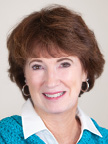
Sally Southard
Sally Southard has been a dedicated and motivated Breakthrough T1D leader for over 25 years. This unwavering passion has earned her the 2022 Erwin Lurie Award, which recognizes chapter volunteers whose commitment to the volunteer-staff partnership has significantly advanced the mission and strategic priorities of Breakthrough T1D.
Sally currently serves as the Virginia Mission Board Chair and as a Research Information Volunteer, as well as in an active member role for both the Mid-Atlantic Chapter’s Community Board of Directors and Executive Council.
She has worn many hats as a former Breakthrough T1D T1D Voices Council member, Greater Blue Ridge Chapter President and Board member, Walk Chair, Gala Chair and honoree. When five communities were brought together to create one chapter in 2020, Sally leaned in and exuded positivity to ensure that the communities would stay engaged.
In addition to living with T1D, Sally watched her mother manage the disease, giving her a unique ability to lead and inspire others through her personal journey. Breakthrough T1D is immensely grateful to Sally for her perseverance and commitment to our shared mission.
Breakthrough T1D would also like to recognize all the nominees for the 2022 Erwin Lurie Award: Cathy Baier, Evan Beane, Jean Bobin, Mike Boyle, Amber and Clay Bretches, Ruthi Byrne, John Cantillon, Rex Ellison, Kim Fisher, Christopher German, Peter Hill, Michael Howell, Helen and Mike Norona, Debbie Nuzzo, Jaleen Siekman, Paul Wallace, and Dan Woolf.
2022 Huntsman Family Community Engagement Award

Dan Connors
Dan Connors and Hans ten Cate are visionary leaders who have leveraged their professional expertise to positively impact the T1D community. Breakthrough T1D is proud to honor Dan and Hans with the 2022 Huntsman Family Community Engagement Award, which recognizes volunteers who have made highly impactful contributions through advocacy, marketing, mission, outreach or volunteer engagement. Their efforts foster a sense of community, deepening engagement with the larger Breakthrough T1D family and empowering individuals to make a difference in their own lives.

Hans ten Cate
Hans began his involvement with Breakthrough T1D in 2018 after his daughter Tabitha’s diagnosis in late 2015. He is currently serving as the Northern California Chapter’s Community Board Vice President. Dan became involved with Breakthrough T1D in 2018 after his son, Rollie, was diagnosed with T1D in 2013. Dan and Hans met through the Northern California Chapter and, as seasoned game industry professionals, saw a compelling opportunity within the gaming realm to support nonprofits. The two innovative thinkers founded the Game2Give initiative; a gaming platform that provides an entirely new way for people impacted by T1D, as well as gamers and game makers, to engage with, build community, and fundraise for Breakthrough T1D.
Under their tireless leadership, Game2Give has generated $2.3 million in less than three short years. Breakthrough T1D is deeply grateful to Dan and Hans for their bold creativity and meaningful impact to the T1D community.
2022 Jim Tyree Chairman’s Award
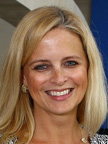
Kim Roosevelt
Kim Roosevelt’s extraordinary leadership as our inaugural Global Mission Board Chair over the past three years is being acknowledged with the 2022 Jim Tyree Chairman’s Award, which is given to a national volunteer leader who has made a significant and noteworthy contribution to Breakthrough T1D during their tenure of service.
Kim became involved with Breakthrough T1D in 2007 after her daughter, Elizabeth, was diagnosed with T1D. She is currently serving as a member of the Nominating and Governance Committee and Global Mission Board. At the National level, she has served as an Advocacy Team Chair, Advocacy Committee member, Breakthrough T1D International Board of Directors member, Children’s Congress Chair, and National Development Committee member. She is actively involved in the Northern Texas & Oklahoma Chapter where she has devoted her time as a Community Board and Executive Council member. Her partnership has been invaluable to the Dallas community, where she created the Breakthrough T1D Fund a Cure Luncheon that has raised over $1 million over the past 10 years.
Kim’s guidance and mission-focused leadership were essential in developing the Global Mission Board charter and activating a group of volunteer leaders for special initiatives critical to achieving organizational goals. She is a dynamic individual whose authenticity makes her relatable at all levels of the organization. Breakthrough T1D has benefitted greatly from Kim’s passion and collaborative spirit.
2022 John Brady Award for Innovation

John Cammett
John Cammet has demonstrated remarkable service to Breakthrough T1D and his Southern Florida Chapter. Breakthrough T1D honors John with the 2022 John Brady Award for Innovation, which recognizes an outstanding volunteer who has exhibited leadership in driving innovation and pioneering projects or ideas with the potential to meaningfully impact the T1D community.
John is a mainstay within his chapter, where he has enriched the golf and gala programs and is the consummate volunteer partner—steadily coaching, counseling, and empowering others. John currently serves as the Host and Co-Chair of the Naples Fund A Cure Invitational Golf Event and as a mentor to local volunteers. His involvement with Breakthrough T1D spans well over a decade and includes being a past member of the National Finance Committee.
As an individual living with T1D, he is passionate about advancing life-changing research. John leads by example through his personal fundraising and spurs others to action. He believes in the progress being made in cures research and provided the first gift to anchor the establishment of the Breakthrough T1D New England Center of Excellence. John articulates our mission and vision in a way that is inspiring to others, making him extremely impactful in cultivating transformational gifts. He is a results-oriented, compassionate, and motivational volunteer partner. John’s influence and philanthropy inspire us all.
Kellogg Early-Career Patient-Oriented Diabetes Research Award
Breakthrough T1D is also thrilled to announce our Early-Career Patient-Oriented Diabetes Research Award will be renamed in honor of the Kellogg family.
The award, which will now be called the Kellogg Family Research Award, provides crucial support to clinician-scientists at the start of their careers in T1D-related clinical investigation. Some of the biggest names in T1D research received this grant early in their careers, including Doctors Kevan Herold, Maike Sander, and George Eisenbarth. This funded research is truly at the nexus of innovation and patient care.
Bill and Bonnie Kellogg have been Breakthrough T1D supporters since 1996, when their son Jeff, then age 23, was diagnosed with type 1 diabetes (T1D). They have consistently and generously supported our efforts with more than $20 million in mostly unrestricted gifts, allowing us to fund research with the greatest potential for cures and life-improving therapies.
Breakthrough T1D thanks the Kellogg family for their confidence in Breakthrough T1D and passion for supporting innovation with the newly named Kellogg Family Research Award.
Jasmine Meriedy, a student at Southern University A&M College in Baton Rouge, LA
Ten years from now, Jasmine Meriedy sees herself working as an entertainment journalist, interviewing Zendaya or Chris Evans at a red-carpet event.
But today, Jasmine is a full-time college student at Southern University A&M College in Baton Rouge, LA, majoring in mass communications.
Diagnosed with type 1 diabetes (T1D) at age 1, Jasmine’s family got involved with Breakthrough T1D right away with a OneWalk Team, Jasmine’s Angels. “I don’t remember a time when the Breakthrough T1D family wasn’t there for my family and me,” she said.
“Breakthrough T1D helped us get connected to other families that understood the struggles of having a child with T1D,” said LaQuanta Bailey, Jasmine’s mom. “Our family then mentored other newly diagnosed families to ease their concerns with their new journey.”
A Passion for Advocacy

Jasmine has always had a strong passion for advocacy, particularly when it comes to those who struggle to afford T1D supplies. “No one should have to weigh the options of paying for medication or the cost of living in our country,” she said. She participated in Breakthrough T1D’s “Promise to Remember Me” campaign, where she visited her local congressman’s office to encourage support of Breakthrough T1D’s research initiatives.
Jasmine took the next big step in her advocacy work by participating in Breakthrough T1D 2019 Children’s Congress. The experience empowered her to speak out about her T1D. “Children’s Congress opened many doors for me to be able to share more about my experience and others living with type 1 diabetes,” she said. “Many people are shocked when I say that I went to Washington to speak about my condition, especially at a young age.”
While some of Jasmine’s favorite memories from Children’s Congress are making lifelong friends and game nights in the hotel, it also made her feel like part of a much larger community. “It helped me see that I’m not alone in the day-to-day routine of T1D and we are all fighting for a cure,” she said.
An Exciting Year Ahead
The next Breakthrough T1D Children’s Congress will take place July 9-11, 2023—the first time it is being held since 2019 due to the pandemic. The excitement is building in Breakthrough T1D Advocacy, with an event schedule already packed with educational sessions, social events, and a Senate hearing.
“Children’s Congress is truly a once-in-a-lifetime opportunity for kids with T1D,” said Elena Purdy, Senior Manager of Breakthrough T1D Grassroots Advocacy. “Seeing the delegates feel a sense of empowerment and learn to use their voices is just incredible.”
Breakthrough T1D 2023 Children’s Congress Delegates will focus on several advocacy initiatives:
- Creating significant support within Congress for a renewal of the Special Diabetes Program (SDP), which currently provides $150 million/year for T1D research through the National Institutes of Health (NIH).
- Engaging the FDA to ensure regulatory policies provide optimized pathways for approval of T1D therapies and devices.
- Ensuring T1D screening and monitoring is more widely accepted in the U.S. healthcare system.
- Accelerating progress towards more affordable insulin.
Paying it Forward
LaQuanta believes that Breakthrough T1D Children’s Congress helped build confidence in her daughter and hopes Jasmine will use that confidence to pay it forward. “I can see her mentoring other kids to show them that it’s okay to be different—it sets you apart in a special way,” she said.
Jasmine can’t stress enough how important of a role Breakthrough T1D Children’s Congress played in shaping who she is. “It changes your perspective on life, showing you that you’re not alone.”
Breakthrough T1D 2023 Children’s Congress® applications are open now through November 30 at cc.breakthrought1d.org.
NFL Superstars across the league have selected Breakthrough T1D as their charity and are sporting custom-designed cleats to raise awareness for type 1 diabetes (T1D). Launched in 2016, the NFL’s annual My Cause My Cleats campaign provides current and former players the opportunity to showcase their passion and creativity, while bringing awareness to the causes that are most important to them.

Now in its sixth year, Breakthrough T1D is excited once again to have the support of several NFL athletes who are impacted by T1D – some who are living with T1D and others who are advocating and bringing greater awareness because their loved ones have been diagnosed.
The campaign kicks off on Giving Tuesday with unboxing day events featuring videos and images of the players’ customized cleats and the stories behind them. The initiative culminates at the end of NFL week 13, when players sport their artistic designs and bring their causes to the forefront on game day.
Players also have the option to raise funds for their causes by donating their cleats to the NFL Auction where 100% of the funds raised are donated to their selected charities.
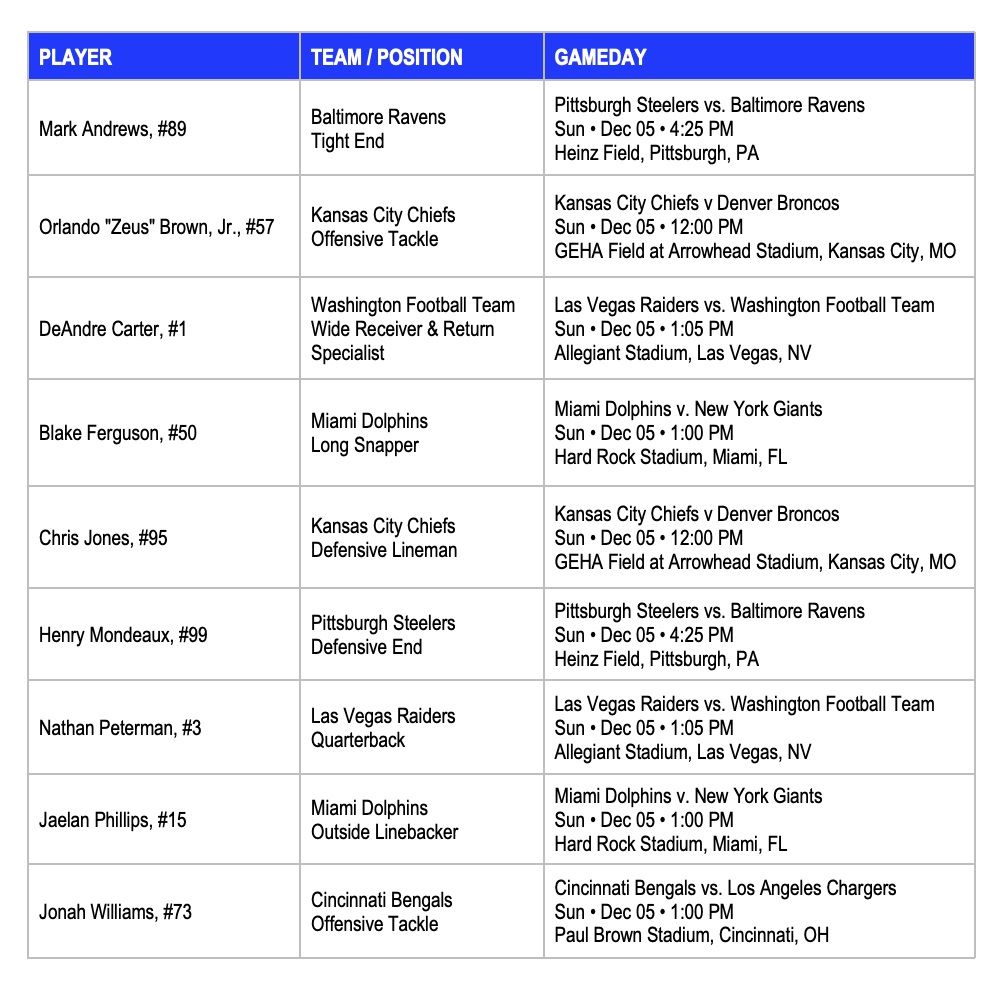
View the list of the players who are supporting Breakthrough T1D and the game dates.
Editor’s note: Written by guest blogger, Matthew Tilton, D.O. He is a family medicine resident in Salina, Kansas, and the father of 6-year-old Adalyn, who lives with type 1 diabetes (T1D).
I have never been much of a trend follower. I thought this was out of a desire to maintain my individuality, but my kids have informed me the real reason is I am just getting old.
I refuse to acknowledge that this may be a contributing factor, and I am going to make an exception this one time. (Well, probably more often now that I am aware it irritates my children but I digress).
About this time every year, I see a multitude of social media posts regarding the wide variety of things people are thankful for. I am actually a big fan of this modern tradition. If nothing else, it inspires a little self-reflection and always provides a little perspective.
I know this isn’t social media but feel that this is close enough to get credit. I’ll give it my best shot.
I am thankful for insulin, continuous glucose monitors, insulin pumps, medical professionals and so much more that I don’t have the word count to list. My 6-year-old daughter, Adalyn, lives a near normal life due to these medical advancements and the amazing people that help her stay healthy.
I am also thankful for the access we have to medical care and life-changing medical technology. As a family medicine resident physician that specializes in working in underserved communities, I am painfully aware that many have not been afforded this same access.
Please understand, I would never take these advancements for granted.
That said, I want more.
I want a cure.
WE Want a Cure
For three generations, my family has faced autoimmune disease, not just T1D.
My mother was diagnosed with an autoimmune disease called systemic lupus erythematosus or SLE. She was healthy prior to her diagnosis and declined quickly despite treatment.
In my intern year of family medicine residency, I was diagnosed with Sarcoidosis, a lung disease that can also involve the skin, eyes, liver or kidneys.
Four short months later, my daughter was diagnosed with type 1 diabetes.
My wife noticed her symptoms long before I did. I was under the irrational notion that she couldn’t possibly have T1D right after I was diagnosed.
I was wrong.
Having dealt with these issues as a son, father, a patient, and as a physician, I feel that I am uniquely qualified to definitively say that autoimmune diseases are terrible.
So What?
As we all know, it is really easy to look at a problem and say, “Oh yes, that should be fixed.”
It is a completely different story to actually make it happen.
My wife, Cassie, a nurse practitioner, and I have decided to spend our lives serving the medically underserved. After residency, we will be practicing at a Midwest Federally Qualified Health Center that focuses on populations that may not have many of the resources previously mentioned.
If I were a researcher, I would certainly be focused working toward a cure. That just isn’t in my wheelhouse.
But I can help those in need until the time comes when a cure is readily available. Make no mistake, this is not a feel-good story. This is a call to action. I am asking you to join me in working towards a cure, and I would never ask you to do something I am not willing to do myself. I live it. We live it.
How?
Earlier this year, Breakthrough T1D announced a partnership with organizations like the Lupus Research Alliance and the National Multiple Sclerosis Society.
These partnerships were designed to create joint research and collaboration in order to help us better understand and advance cures for not just T1D, but all autoimmune diseases.
This is a huge step in the right direction.
These organizations are doing the work; they just need our support.
If you aren’t sure how to make a difference, advocacy with Breakthrough T1D is one way to make it happen.
But there are others. The possibilities are only limited by what you can dream up.
Find your something and make it your own. We are so close to finding a cure; we just have to finish strong.
Learn more about how to get involved with Breakthrough T1D by consulting our Community resources, our Advocacy resources, and our Clinical Trials resources.
NFL long snapper and T1D Champion Blake Ferguson was selected by the Miami Dolphins in the 2019 NFL Draft and is currently in his second season. He was ranked No.1 in the nation for both his junior and senior high school seasons, before committing to Louisiana State University (LSU). Throughout his college football career with the Tigers, he was the first long-snapper in LSU history to be named a permanent team captain and won the David Binn Award for the nation’s best long- snapper.
Never Letting T1D Stand in His Way
Diagnosed at the age of 13, Blake has never allowed type 1 diabetes (T1D) to hinder his dreams of playing football professionally.
“My mom loves to tell the story all the time … the moment that I was diagnosed back in 2011,” Blake said. “As we’re headed to the hospital from the doctor’s office, she caught me looking at my phone at famous athletes with type 1 diabetes because I wanted to know that I could achieve playing football at the highest level with this disease.”
Determined to pursue his goals, Blake looked up to Jay Cutler and other T1D role models for inspiration and reassurance that he too could achieve playing football at the highest level with T1D. Now he uses his platform to inspire others living with the disease that they can achieve anything they set their minds to.
It’s a Family Affair
Long-snapping is a family affair and so is the fight against T1D. Blake and his family have been long-time supporters of Breakthrough T1D since he was diagnosed. From donning custom-designed cleats on the field during the NFL “My Cause, My Cleats” campaign, to advocating on Capitol Hill and mentoring youth – Blake and his older brother NFL Buffalo Bills long snapper Reid Ferguson are committed to bringing greater awareness to T1D, inspiring the community, and fundraising for T1D research.
“I’m thankful to have this platform to spread awareness, inspire, and be a voice for others who are living with this disease,” said Blake.
Joining Efforts with Blake
This NFL season, Blake is encouraging football fans and beyond to join him in raising awareness and fundraising for T1D research throughout NDAM, Giving Tuesday and the NFL 2021 My Cause My Cleats Campaign. Please visit his fundraising site to learn more and support T1D research to bring life-saving treatments, technology, and cures.
Eve Yohalem is an acclaimed author who has published several novels. Her most recent, The Truth According to Blue, published by Little, Brown Books for Young Readers, focuses on the adventures of a 13-year-old girl determined to find a sunken gold treasure—a treasure that she believes, is her family’s long-lost fortune.
This heroine, nicknamed “Blue,” also happens to live with type 1 diabetes (T1D).
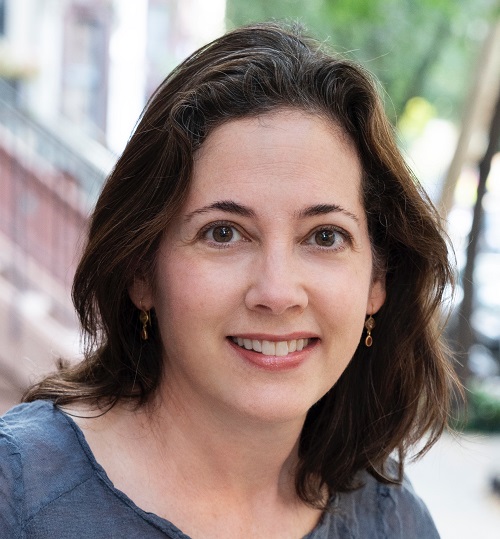
To get a handle on what it is like to grow up with T1D, Eve naturally turned to kids who live with T1D today. But she also turned to another source: Her sister, Jennifer who has lived with T1D since she was nearly 13-years-old.
In recognition of National Diabetes Awareness Month, we asked Eve to interview Jennifer about growing up with T1D and discuss why works of fiction like The Truth According to Blue are critical to increasing awareness and understanding of life with T1D.
Eve: Tell me the story of when you were diagnosed.
Jennifer: In the summer of 1975, just before I turned 13, I got a very bad stomach virus at camp. I didn’t eat for probably three days. I remember standing in line to go eat and not being able to stand long enough before getting nauseous. Anyway, I was sick a lot that summer and lost a lot of weight. I got home end of August and I was thirsty all the time and peeing all the time.
Eve: Classic.
Jennifer: Finally, very end of September, we went to the pediatrician’s office, and she took blood. I’d had to fast beforehand, and I was hungry. So after the blood test, we went to a diner, and I had a big plate of pancakes with real maple syrup.
Eve: Perfect.
Jennifer: The next day we got the test results. The doctor said, “You have diabetes. You have to go into the hospital.”
Eve: Do you happen to remember what your fasting glucose was?
Jennifer: Yes. 364, which is not horrific.
Eve: Can you imagine what it was a couple of hours after the pancakes?
Jennifer: Oh my God. I can’t.
Eve: What was diabetes treatment like when you were diagnosed?
Jennifer: There were no blood glucose meters. You would test your urine with a dipstick or dissolving tablets, but it wasn’t precise. There was no way to know exactly what your blood sugar was. You just guessed by how you felt. Once a day you took a set amount of long-acting insulin, and then you would take a set amount of short-acting for each meal. You were almost guaranteed to have side effects.
I left the hospital with insulin dosages and a meal plan that I had to stick to no matter how hungry I was or wasn’t, and that was all I knew. No one ever explained anything to me. No one told me, “This is what diabetes is about. This is why your body is reacting this way.” It was a month after I’d turned 13.
Before I was diagnosed, I might eat two or three chicken drumsticks at dinner. After I was diagnosed, my meal plan said I could have one drumstick at dinner, and then right before bed I had to eat a sandwich and fruit–a whole extra meal. I hated it. I was told, “Well, this is what the doctor said to do, so this is what you have to do.” Finally, one night I threw a tantrum. I said, “I want another chicken drumstick. I’m still hungry from dinner. And I hate those snacks.” Finally, Mom and Dad called the doctor who said I could have more chicken at dinner.
You had in your list of questions, “What would you like say to your younger self?” I would say, “Ask questions.”
Eve: Did you know any other kids who had diabetes?
Jennifer: I never met another person with diabetes while I was growing up. It was a silent disease. Nobody talked about it. Nobody knew much about it.
Eve: What was it like for you being the only kid you knew with diabetes?
Jennifer: The kids knew that sometimes I would have to eat candy, and I would go to the nurse before meals because I would have to check my urine and get a shot. But nobody had any idea what it was about, including me. I didn’t know any other people who were dealing with this or how to find them. It was just all my problem.
Eve: When I was doing research for The Truth According to Blue, I talked to a bunch of kids who have type 1 diabetes. One of them told me that the thing she hates most about dealing with it is changing her pump site, which is a detail I borrowed for Blue. What’s the thing you hate the most?
Jennifer: Well, I think the scariest thing is that you can’t get pump supplies and continuous glucose monitor supplies just anywhere. You can only get them from suppliers. If you run out, or you forget to bring supplies with you, you can’t get what you need. And if you can’t get your stuff, what do you do? If I’m at work and it’s 9 at night, and the doctors’ offices are closed, even if I go to an emergency room, they don’t have what I need. If I travel across the world, I have to know that I can get what I need there. That’s the scariest thing.
As a kid, I would say the hardest part about diabetes was I always had to check my urine twice before I could eat, which could take 5 or 10 minutes. I could be ravenously hungry or my blood sugar could be low, but I had to wait. Putting off satisfaction is really hard for me now because I constantly had to put off my needs while I was growing up.

Eve: Were there any books about kids who have diabetes when you were a kid?
Jennifer: No, none. There was nothing about diabetes anywhere. There was no internet. You had to ask your doctor, and I didn’t have an endocrinologist. I had a pediatrician. I don’t even know if there were pediatric endocrinologists back then.
Doctors didn’t give out a lot of information then. Nowadays, there are communities, there are chatrooms, there’s Breakthrough T1D. It’s super, super important to get to know other people with diabetes. You learn so much that way.
Eve: I thought you told me there was one really cheesy novel.
Jennifer: That was Don’t Call Me Sugar Baby. I think I was in college when it came out.
Eve: That’s a hilarious title.
Jennifer: That was it, as far as I know. There was nothing nonfiction let alone fiction. Fiction is so key.
Eve: Why? What can fiction do that nonfiction can’t?
Jennifer: Fiction will let you get to know a person as another human being, someone you feel empathy for, someone you care about, someone you like and want good things for. It’s like having a friend. Nonfiction will just give you facts. It’s very different from getting information in fiction where you just absorb it because you care about someone. It’s huge.
Eve: When I told you I was writing a book about a kid with T1D, what was your reaction?
Jennifer: I was so excited. First of all, there still are very few books out there with kids who have diabetes. There are a bunch of books about kids with cancer, but there aren’t a lot of books about kids with other medical conditions.
What you were doing was making diabetes a normal part of humanity, where kids would look at someone with diabetes and think, “Oh, that kid’s just like me.” And “Oh, I know about diabetes now. It’s really tough.” Or “Hey, I want to get to know that person. She’s really brave.” It’s normalizing something that’s never been treated as normal and bringing attention to something that hundreds of thousands of children live with but nobody ever talks about.
Eve: One of the things that really surprised me about The Truth According to Blue was how many adult readers I heard from who have diabetes. They wanted to buy this book for kids in their families, for example, so that the kids would understand what their lives were like. I didn’t anticipate that. I wrote it hoping kids with diabetes would read it, but it didn’t occur to me that it might be meaningful to adults who have diabetes too.
Jennifer: That’s wonderful.
Eve: How did you feel when you read the early draft that I showed you?
Jennifer: I loved that you did this. I knew there was a part of you that did at least a little bit of it for me. I loved that you were putting diabetes in the world for the younger generation. The best thing was that you were writing a great story about friendship and adventure. The main character happens to be diabetic, but that’s not what the story is about. You were bringing out information about diabetes, but in a really matter of fact way. It was extraordinary to me. This was a wonderful, intelligent story that was interesting and fun and exciting, and it featured diabetes. But it wasn’t a pity party.
Eve: I really didn’t want it to be a pity party.
What do you wish that people without diabetes knew about people with diabetes?
Jennifer: That it doesn’t change who we are, and it doesn’t change what we can do. Your book shows that from the inside and the outside.
Help us kick off National Diabetes Awareness Month at TypeOneNation Virtual Summit on November 1, 3, and 4, from 6:00 – 8:00 pm ET. This free event is for people of all ages and stages of type 1 diabetes and their loved ones. We’re offering three nights of sessions covering important topics like Breakthrough T1D’s mission, T1D innovations, and wellness.
Below, you will find sessions, descriptions and the lineup of powerful speakers you can expect to hear from! Pre-registration is required to attend.


Monday, November 1 – Research/Breakthrough T1D Mission Sessions
Breakthrough T1D RESEARCH–PROGRESSING TOWARDS CURES
Breakthrough T1D Director of Research Frank Martin, Ph.D. will provide an overview of Breakthrough T1D’s cures portfolio, which includes disease modifying and cell therapies. He will also share exciting progress, projects, and active clinical trials.
Presented by Frank Martin, Ph.D., Director of Research, Breakthrough T1D
DRIVING RESEARCH AND POLICY PROGRESS THROUGH ADVOCACY
Tune in for the latest on what the team in DC is up to, and how Breakthrough T1D’s nationwide network of advocates is driving meaningful progress that benefits the T1D community. You’ll learn about Breakthrough T1D’s critical work on the insulin affordability front, the newly proposed biomedical research agency called the Advanced Research Projects for Health (ARPA-H), exciting regulatory milestones, and more!
Presented by Breakthrough T1D Advocacy Team Carla Falasco, Director, Grassroots Advocacy; Niels Knutson, Director, Government Relations; Marjana Marinac, Senior Director, Regulatory Affairs; and Aaron Turner-Phifer, Director, Health Policy
GET THE MOST OUT OF YOUR HEALTH INSURANCE
It’s open enrollment season! Tune in to learn how to best utilize Breakthrough T1D’s T1D Health Insurance Guide to help you get the most out of your coverage! In addition to assistance with cost of insulin, the guide helps individuals and families navigate topics including prior authorizations, denials and appeals, and
applying for an exception.
Presented by Jackie Le Grand, Manager, Health Policy, Breakthrough T1D and Aaron Turner-Phifer, Director, Health Policy, Breakthrough T1D
LIDERANDO EN LA INVESTIGACIÓN DE DT1 Y LAS POLÍTICAS DE SALUD A TRAVÉS DE ABOGACÍA
Sintonice nuestra sesión de información donde hablaremos sobre el trabajo de nuestro equipo de abogacía en Washington, D.C. y como nuestra red de voluntarios de Breakthrough T1D está impulsando progreso significativo que beneficia a la comunidad DT1. También aprenderá sobre el trabajo de Breakthrough T1D para asegurar accesibilidad a la insulina, sobre la Agencia de Proyectos de Investigación Avanzada de Salud que fue propuesta por la Administración de Joe Biden, y cubriremos recientes triunfos regulatorios, y mucho más.
Presented by Pedro Montenegro, Manager, Government Relations, Breakthrough T1D
APROVECHE TODOS LOS BENEFICIOS DE SU SEGURO MÉDICO
¡Es hora de registrarse para su cobertura de seguro médico a través del período de inscripción abierta! Sintonice nuestra sesión para aprender cómo usar el guía que creó Breakthrough T1D para que usted pueda aprovechar todos los beneficios que ofrece su seguro médico. El guía ayuda a individuos que están viviendo con DT1 y sus familiares como navegar los temas de pre -autorizaciones, rechazos y apelaciones, recursos para ayudarle con el costo de la insulina, y como solicitar una excepción con su compañía de seguro médico.
Presented by Pedro Montenegro, Manager, Government Relations, Breakthrough T1D


Wednesday, November 3: T1D Innovation Sessions
Breakthrough T1D RESEARCH–EFFORTS IN IMPROVING LIVES
Breakthrough T1D Vice President of Research Sanjoy Dutta, Ph.D. will do a deep dive into Breakthrough T1D’s Improving Lives portfolio, which includes glucose control and complications. He will also provide a current T1D therapy landscape and share exciting clinical trials and projects.
Presented by Sanjoy Dutta, Ph.D., Vice President of Research, Breakthrough T1D
T1D PRODUCT SHOWCASES
The T1D Product Showcases offer product demonstrations and updates from Abbott Diabetes Care, Dexcom, Eversense, Gvoke, Medtronic and Tandem. Join the discussion to learn the latest and greatest in T1D technology, treatment and care.
APOYO ENTRE PARES Y REDES SOCIALES
La diabetes, de todos sus tipos, es con frecuencia una condición de vida que nos hace sentir solos. Encontrar a otros con quienes compartir experiencia y conocimiento puede tener un impacto positivo en nuestra salud en general. Acompáñanos a descubrir dónde y cómo encontrar a tus pares para crear así comunidad.
Moderated by Mariana Gómez, Beyond Type 1, with T1D bloggers and influencers Mila Ferrer and Estefanía Malassisi

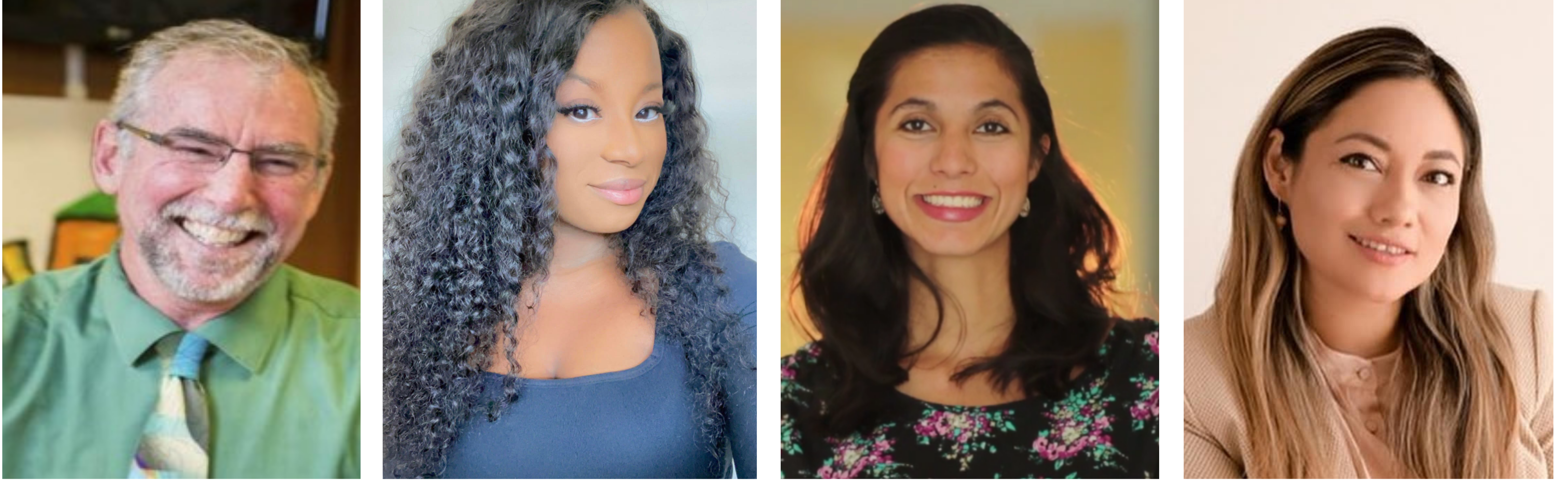
Thursday, November 4: Wellness Sessions
RISING ABOVE THE ↑↑ AND ↓↓ OF DIABETES: STRATEGIES FOR STAYING SANE IN THE MADNESS
This presentation will focus on tried and true strategies for maintaining one’s mental health while dealing with the day-to-day challenges of diabetes. The focus will be on building resilience in the face of the challenges of life and the challenges of diabetes.
Presented by Michael Harris, Ph.D., Oregon Health & Science University
NAVIGATING NUTRITION FOR DIABETES
As many of us know, understanding food and learning about nutrition while managing diabetes can be challenging. Join Bridget Wood, R.D., L.D., CDCES as she gives tips, shares helpful information, and discusses all things food and nutrition for people living with diabetes.
Presented by Bridget Wood, R.D., L.D., CDCES
DIABETES Y BIENESTAR EMOCIONAL
En esta sesión hablaremos sobre los retos que implica vivir con diabetes y cómo impacta el manejo de nuestra condición de vida en nuestra salud emocional. Descubre respuestas para vivir más allá de tu diabetes.
Moderated by Eugenia Araiza, Beyond Type 1, with Certified Psychologist Daniela Rojas, Professor René Buenfil and Psychology Clinician Nancy Martínez
Fall is arriving in all its usual glorious colors—pumpkin orange, apple red, forest green, and…blue? That’s right. Thanks to National Diabetes Awareness Month, blue is the color to flaunt this November.
From T1Day (wear blue!) to World Diabetes Day to social media storytelling and celebrity appearances, Breakthrough T1D has a bunch of exciting plans that you won’t want to miss out on! Let’s take a look:
- November 1 is T1Day! Show us your #T1Day spirit by wearing blue and sharing the hashtag on social media to encourage everyone in your community to wear blue in honor of T1Day and the start of National Diabetes Awareness Month.
- Register to join a Breakthrough T1D One Walk® or Ride to Cure Diabetes, or dream up your own “Your Way” fundraiser.
- Visit our website to learn about Breakthrough T1D’s work in cell therapies, disease-modifying therapies, complications research, and more.
- Attend the Fall Virtual TypeOneNation Summit the first week of November—stay tuned for more details!
- Watch and share videos of the Breakthrough T1D Research Team, describing what has been accomplished to date and what’s next.
- Become an advocate. Sign up to receive updates and action alerts to help advance our Advocacy priorities.
- On #GivingTuesday, taking part this year on November 30, encourage your community to make a gift to Breakthrough T1D during this annual day of giving to advance our mission of a world without type 1 diabetes.
Plus, so much more! Sign up to receive Breakthrough T1D emails and follow us on social media to stay up to date on all things National Diabetes Awareness Month (NDAM)!
There’s no doubt that a type 1 diabetes (T1D) diagnosis changes an individual’s life, but it almost always has a ripple effect that can be felt throughout an entire support network of family and friends.
While parents and guardians play the leading role in the care of children who live with T1D, the bond that forms between children living with T1D and their siblings is truly something special – unconditional, inspirational, and supportive.
As we wrap up National Diabetes Awareness Month (NDAM), three sibling pairs shared how they’ve experienced the strength and influence of their unique sibling bond.
Abby and Jack, Twin Teenagers
ABBY (sibling):
What is it like having a sibling with T1D?
 “Having a brother with T1D is sometimes scary and stressful, but it makes him unique and it has taught him to be responsible in ways our peers don’t always understand. Jack is so good at taking care of himself, but I get scared sometimes because having T1D throws curve balls even with good management. Learning about T1D and the management of diabetes makes me feel closer to him and helps me understand his struggles and his ‘wins.’”
What would you like others who just had a sibling diagnosed with T1D to know?
“I would encourage them to stay calm and always take a deep breath before responding. In that moment, you will be reminded that the sibling with T1D cannot always control their mental or physical responses due to their swinging blood sugar. Your sibling doesn’t choose to feel this way and you have the chance to make them feel supported and loved.”
How would you describe Jack in one word and why?
“Fearless, or fighter. Jack has to make health decisions every minute of every day and he does so without pause. I look up to Jack every day and wish I could be as fearless as him. He rarely complains and he confronts everything with a smile. He makes me so proud to be his sister and I am appreciative that I can do life beside Jack, with or without the struggles of T1D.”
JACK (lives with T1D):
How does Abby support you in your T1D journey?
“Abby is a huge part of my support system. She makes sure that I have my supplies with me and always 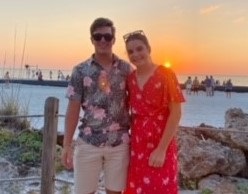 looks out for me when my blood sugar isn’t cooperating. In these moments when I just don’t feel well or clear-headed, Abby quietly gets me what I need or reminds me what I need to do. If I am having a bad day, just knowing she is right there thinking about me, makes me feel supported and having this support system has allowed me to really never feel bad about having T1D.”
How would you describe Abby in one word and why?
“Amazing! She never fails to help me through my hardest moments and is always there for me, even when I may not have been the greatest brother to her. She knows how to put a smile on my face and I know she will always have my back, no matter what. Abby will drop what she is doing if she sees me having a hard time and when I am having a good day or week with my blood sugars, she is right there with me enjoying a sweet treat.”
Shaina Hatchell and Dom Minyard, Delware
SHAINA (sibling):
How do you help Dom get through tough times, as well as celebrate the “wins” in his T1D journey?
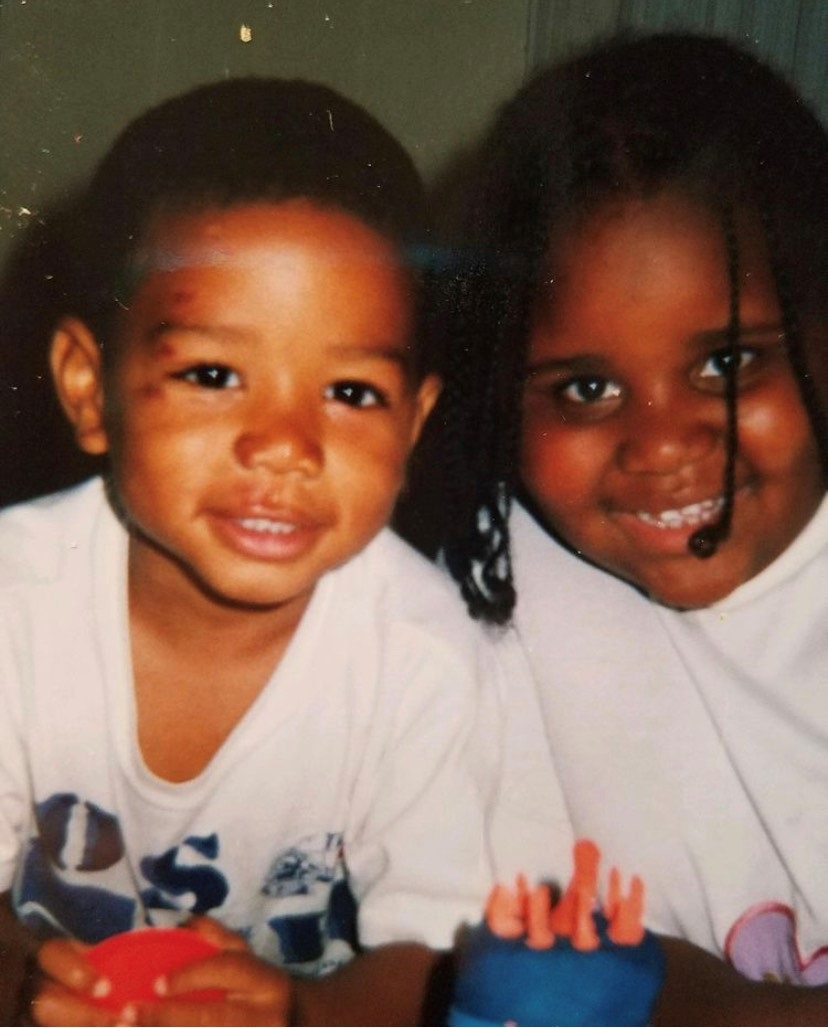 “I have lived separate from my brother since 2009. No matter the distance, I have always wanted to make sure that he knows we’re in this life thing together. When life sent storms, we weathered them together, from near or far. When life sends wins, I make sure I affirm how proud I am of him. I have even sent him medals in the mail to celebrate his successful management over these now many years. Today, when I am providing new onset diabetes education to families, I ALWAYS brag about my brother as a way to keep affirming how proud of him I am (even when he does not hear me) and provide hope for those families who are just beginning their journey.”
How has Dom’s management of his T1D diagnosis inspired/influenced you?
“My brother is my daily inspiration. I am a diabetes educator because of him. I wrote the children’s book ‘Shia Learns About Insulin’ because of what he has taught me over the years and how he continues to inspire me. I can never complain about my life because he literally never does about his.”
DOM (lives with T1D):
How does Shaina support you in your T1D journey?
“Shay does an awful lot for my journey. She’s a nurse with a focus in diabetes, she’s devoted a great portion of her life studying to know more about what I go through on a daily basis. Proactively, she even attended a weeklong camp to help her understand what children with T1D experience (and believe me, 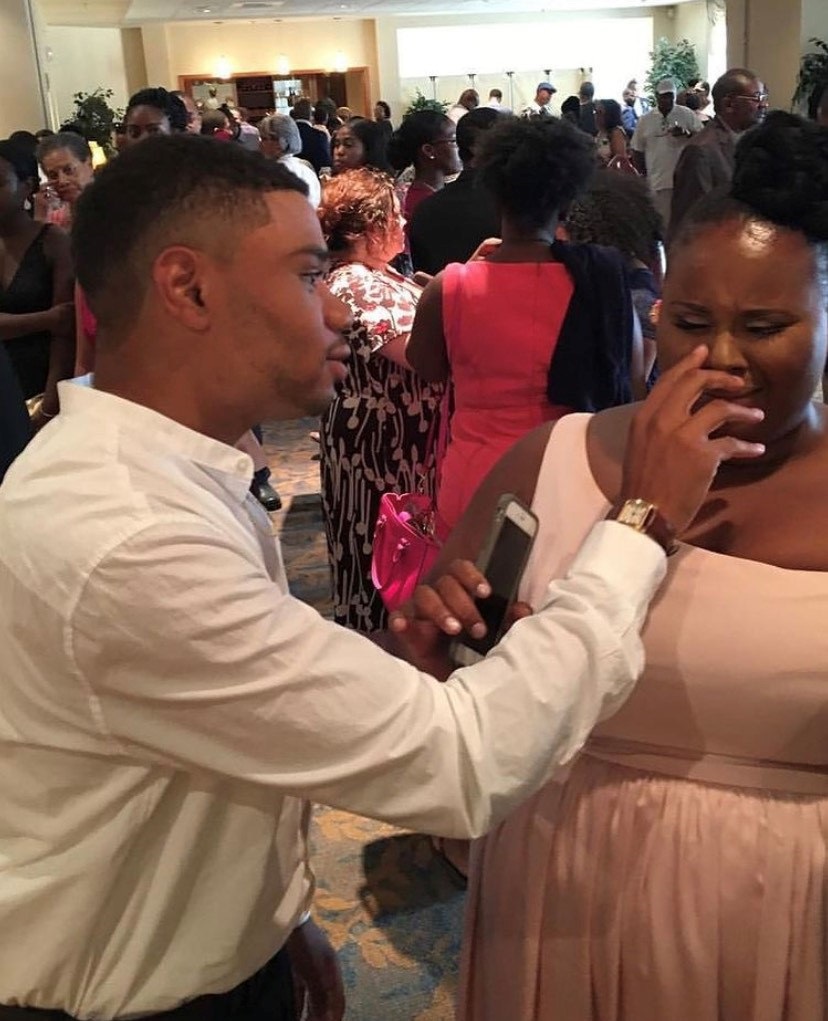 she hates the woods). My sister has done everything to help in my T1D journey – given me insulin checked my blood sugars, dealt with highs, lows, and all the mood swings in between. The book she created spreads awareness and helps me and everyone with diabetes, so maybe one day we don’t have to tell people that yes, we can eat that cake at birthday parties!”
How has having such strong support system impacted you as you navigate your T1D journey?
“Having my sister along for the journey is not something she or anyone else signed up for, so to have her along for the ride for the good and the bad makes it a whole lot easier for me. Even the little things like the occasional ‘Did you take your insulin?’ or the late-night text message ‘Hey, your Dexcom says you’re going low. Are you okay?’ are important and can help save my life.”
Marc and Len Teitelbaum, Hoboken, NJ
MARC (sibling):
What is it like having a sibling with T1D?
“Having a sibling with T1D means always keeping your guard up. My mom taught every one of my brothers, at an extremely young age, what to do in case of an emergency when Len’s blood sugar ran low. Len and I played youth sports together and observing what he had to do to take care of himself 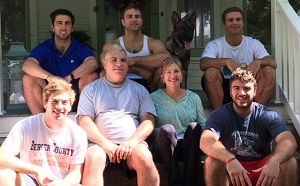 before and after soccer games ignited a passion to help him and millions of others that suffer this debilitating disease.”
How has Len’s management of their T1D diagnosis inspired/influenced you?
“It definitely inspired me significantly. I’m currently pursuing a PhD in biomedical sciences, which I think had a lot to do with my exposure to his medications and disease at a young age. Len is unbelievably diligent, working out two hours a day, waking up early and going to bed early. Seeing how he has taken this disease and spun it into his superpower is empowering, not just for me but for others, too. In order to combat T1D, you need to manage the symptoms and lifestyle meticulously, which he does 24/7, 365 days a year.”
LEN (lives with T1D):
How has having such strong support system impacted you as you navigate your T1D journey?
“It gives me the ability to lean on someone when I’m going through a difficult period. I’m a pretty 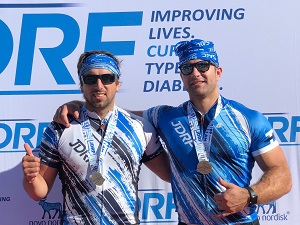 strong-headed individual and having Marc helps me to reset myself and get back to neutral because he is able to “check” me. If I’m struggling and Marc is around, I know that help is always available and that allows me to move a bit more at ease through this thing we call life with T1D. If it isn’t Marc, then it’s one of my other 3 brothers, or my parents, or my friends who are always there to provide a helping hand for support. The ability for someone within my close circle to just ask “Is everything okay?” allows me to work on my T1D with less pressure knowing I have support whenever I need it.”
What would you like others who just had a sibling diagnosed with T1D to know?
“Your family is there to support you in all aspects of life, not look down on you because of this condition. It’s a tough road, but if you are diligent and smart, there is no need to fret. Diabetes is a tough condition, but it also makes you want to work harder on yourself, to become a better and stronger person, physically and mentally.”
Thank you to all of the amazing sibling T1D Champions out there – you are making a difference! If you have or know a sibling of someone living with T1D, reach out and tell them how much their support is appreciated.
The following piece was authored by Pip Soret, the parent of a child living with T1D. It was originally published on The Daily Rind, a music industry blog featuring insights and resources provided by leading music distributor, The Orchard.
“Corinne has type 1 diabetes” I texted my wife, Laura.
I knew I was committing the ultimate digital cardinal sin delivering such terrible news, but I needed Laura to hear this before she saw Corinne, our then three-year-old daughter. She was just diagnosed with a life-changing condition and Laura was on a flight home from a long weekend visiting a friend.
Hours earlier, Laura was waiting for her flight and we were talking about how Corinne had been drinking a lot of water lately. To be sure, Laura asked me to call the pediatrician and make an appointment. “Just as a precaution” we decided, our girl has been the picture of health since day one, she’s perfect.
Flash forward to 6 p.m: Laura is in the air, Corinne and I are in the exam room and I see on the doctor’s face that the news isn’t good.
“Her blood sugar is 423. She has type 1 diabetes (T1D). There is no cure, but it is manageable. She’s going to be fine, but you will need to put in the work to manage her. This is serious though and you need to take her to the emergency room right away.”
The air left the room, my world was crashing down but I had to keep it together as Corinne looked at me while the doctor spoke. She didn’t know what T1D was, she didn’t know what blood sugar was, she just knew that if something was wrong, Daddy would make it better. We calmly packed ourselves into the car and got ready to go get Mommy at the airport on our way to the Children’s Hospital of Philadelphia (CHOP).
By the time Laura got into the car, she’d (mostly) composed herself but Corinne knew she had been crying. “It’ll be ok, Mama. You don’t need to cry.” Corinne had no idea why her mom was crying but she knew that everything was going to be ok. We weren’t so sure.
After a whirlwind three-day stay in the hospital, we reentered the world shell-shocked, changed, and frankly terrified. The world looked the same, but everything was different. Diabetes impacts every single thing Corinne does; snacks, meals, playtime, bedtime. We’re watching her blood sugar at all times trying to keep her in a safe range. If her blood sugar drops too low, there are risks of seizures, unconsciousness, and even death. If it’s too high, there are risks of diabetic ketoacidosis, coma, death and an increased chance of long-term complications such as kidney and nerve damage.

Every minute of every day we’re walking a tightrope just to keep our daughter safe. Everyone knows about diabetes but what we have learned is that very few people know that T1D requires 24/7 management, or the fear parents feel when they see a low blood sugar at 3 a.m., the worry of what life looks like when their fledglings leave the nest, the anguish we feel when our children cry about insulin injections or insulin pump site changes, or the helpless feeling of watching politicians argue over protections for people with preexisting conditions.
A year and a half since Corinne’s diagnosis, life isn’t so scary but it’s by no means easy. She knows she’s the only “diabetes girl” at her school but her condition doesn’t make her feel different. We don’t let her see the stress it causes us. We don’t call diabetes a disease and we NEVER call her “sick”; diabetes is a condition and it’s just the way her body works. Some people can’t eat peanuts, some people wear glasses, some people use wheelchairs, and some people need insulin injections. Just like some people have green eyes or curly hair.
The difference, though, is that Corinne and other kids with T1D can’t recognize each other by appearance alone, which is ironically isolating considering the prevalence of T1D. I learned this when I went public with Corinne’s condition on my social media and was contacted by more friends and musicians than I could ever have expected.
“Diabetes people” are out there and The Orchard is in an incredible position to connect the T1D community through culture and shared interests. The power of music as a driver for social acceptance cannot be overstated.
I’m sure that other people living with T1D are just like Corinne and feel excited and, well, normal, when they realize that someone they know or a celebrity is just like them. It’s my hope that with The Orchard and Breakthrough T1D initiative, we can help raise awareness of the T1D community within the music industry and beyond.
Our family was introduced to Breakthrough T1D before we even left the hospital. The incredible staff at CHOP told us all about the organization that would come to be our lifeline as we navigated this seemingly impossible situation.
Laura and I spent countless hours on their website and social media, learning tips and tricks of diabetes management, about the latest research, and reading stories they shared about other kids and families just like ours. Seeing these happy, thriving kids made it possible to believe that life would feel normal again- that we would be happy again. A few days after we got home from the hospital, Breakthrough T1D even sent Corinne a Bag of Hope with a teddy bear named Rufus, who also has diabetes. He has a favored place among Corinne’s “buddies.”
Through Breakthrough T1D, Laura and I have been able to realize what Corinne knew all along – it will be ok. Breakthrough T1D’s research and advocacy are helping people with T1D live longer, healthier, and easier lives. As parents, the work they do is invaluable and the stories Breakthrough T1D shares of people with diabetes managing and overcoming the minute-to-minute challenges are a constant reassurance that we are not in this alone.
While it took Laura and I some time to adjust to our new life, Corinne never missed a beat. She has been her brilliant, happy, hilarious self since we walked out of that hospital on March 14, 2019, and hasn’t looked back. T1D hasn’t stopped her from doing a single thing she wants to do. She is a ray of sunshine to everyone who knows her and inspires us daily. Our girl is perfect.
