
The questions came like a waterfall as Breakthrough T1D President and CEO Aaron J. Kowalski, Ph.D., hosted a Facebook Live event on April 3 with hundreds of members of the type 1 diabetes (T1D) community.
As he spoke, attendees used the “chat” feature to repeatedly ask: “Is he a type one?” Others chimed in quickly: “Yes!” Dr. Kowalski is Breakthrough T1D’s first president with T1D, diagnosed when he was 13. (His brother was diagnosed before him, at age 3.)
“The best piece of advice I received in managing my type one was from my parents, who told me and my brother: ‘You’ll be able to do everything your friends can do and more.’ They were right, don’t let it hold you back. You only live once.”
Dr. Kowalski talked about T1D research moving forward even as so many institutions have closed because of the coronavirus pandemic, how he plans to support research without Breakthrough T1D’s iconic large-crowd events and what the future of T1D research looks like.
He also answered a question that many on the chat said they thought he might avoid:
Why haven’t we cured type one diabetes?
“I am going to tackle this because what you will find with me as CEO of Breakthrough T1D is full transparency. I know that many supporters are frustrated. ‘Why is there not a cure yet. Should I believe you when you say we are making real progress?’”
The question was driven by a pledge made by Breakthrough T1D in the late 1990s that a cure for type 1 diabetes was just years away.
At the time, researchers where working on islet transplants, which took beta cells from a cadaver pancreas and implanted them in a person with T1D. Once transplanted, the islets were to begin producing insulin and regulating blood-glucose levels. The procedure was used mainly in cases of extreme and unpredictable blood-sugar swings and hypoglycemia.
“These islet transplants cured people with type 1 diabetes,” Dr. Kowalski said. “Two decades later, these people are still insulin free.”
The challenge, researchers quickly realized, was twofold. First, they did not have access to enough beta cells. In the last 20 years, about 5,000 islet transplants have been performed; yet 64,000 new T1D diagnoses are made every year in the United States alone. Second, the treatment needed ongoing immunosuppression medication for the new cells to be retained by the body. The ongoing use of immunosuppression medicines can lead to other medical issues.
“This was not a bait and switch. This was something that we believed was real—and it was—it just was not scalable. But believe me that we are working to make it scalable, and it will happen.”
Dr. Kowalski said scientists have been racing to solve both challenges, with Breakthrough T1D driving their research through funding, collaboration, and strategically bringing in new expertise and partners to tackle the problem.
How has research gotten us close to cures?
“We now have line of sight to address both of those barriers. We can now make insulin-producing cells from stem cells and that would allow for the supply and demand issue to be fully addressed,” Dr. Kowalski said.
In September 2019, a company long supported by Breakthrough T1D and working to mass produce insulin-making cells was bought by a major pharmaceutical leader. “They made a huge investment to make this work real.”
In addition, Dr. Kowalski pointed to a series of projects working to implant cells without the need for potentially harmful immunosuppressant drugs. He said research being done at the new Breakthrough T1D Center of Excellence at Northern California is forward reaching and groundbreaking in “working to cure type one diabetes with immune suppression-free cell transplants.”
How has COVID-19 impacted T1D research?
Work in T1D research continues, but the coronavirus pandemic has slowed some projects where researchers are not able to access labs, Dr. Kowalski said.
“In January, we were saying we are in real renaissance of research in terms of cures for type one diabetes, making real, tangible, specific progress….We were all coming together and moving fast. And now, here we are, seeing research slowing down because we can’t get into some of the labs. It’s hard. But one thing we know for certain: we are going to come out of this, it won’t last forever. We will come back, focus on our mission to cure type 1 diabetes.”
Why does Breakthrough T1D need to keep fundraising if research has slowed?
Regardless of what else is happening in the world, T1D does not stop, Dr. Kowalski said. And neither does T1D research or Breakthrough T1D’s support of the T1D community. Breakthrough T1D continues to support ongoing research, clinical trials, and plan for the coming months when all work resumes full speed.
In addition, the needs of the T1D community are not less, but more, because of COVID-19. He said Breakthrough T1D is working “round the clock” with other organizations to share accurate, clear messages and advice, and that Breakthrough T1D continues to advocate for the needs of the community—including ongoing medical coverage, affordable access to insulin, and availability of T1D supplies in hospitals facing extreme shortages during the pandemic.
How can you raise funds without in-person events?
Breakthrough T1D is transforming its walks, rides, and galas into virtual events, where people and teams still participate, but on their own instead of in a large group. Rather than connecting in person, they connect virtually through social media. Dr. Kowalski is joining two “virtual runs” and said Breakthrough T1D has hosted several successful virtual walks already, with more to come.
“Where people can, and are able to, we hope they will continue to support this mission so that we can cure type one diabetes for everyone.”
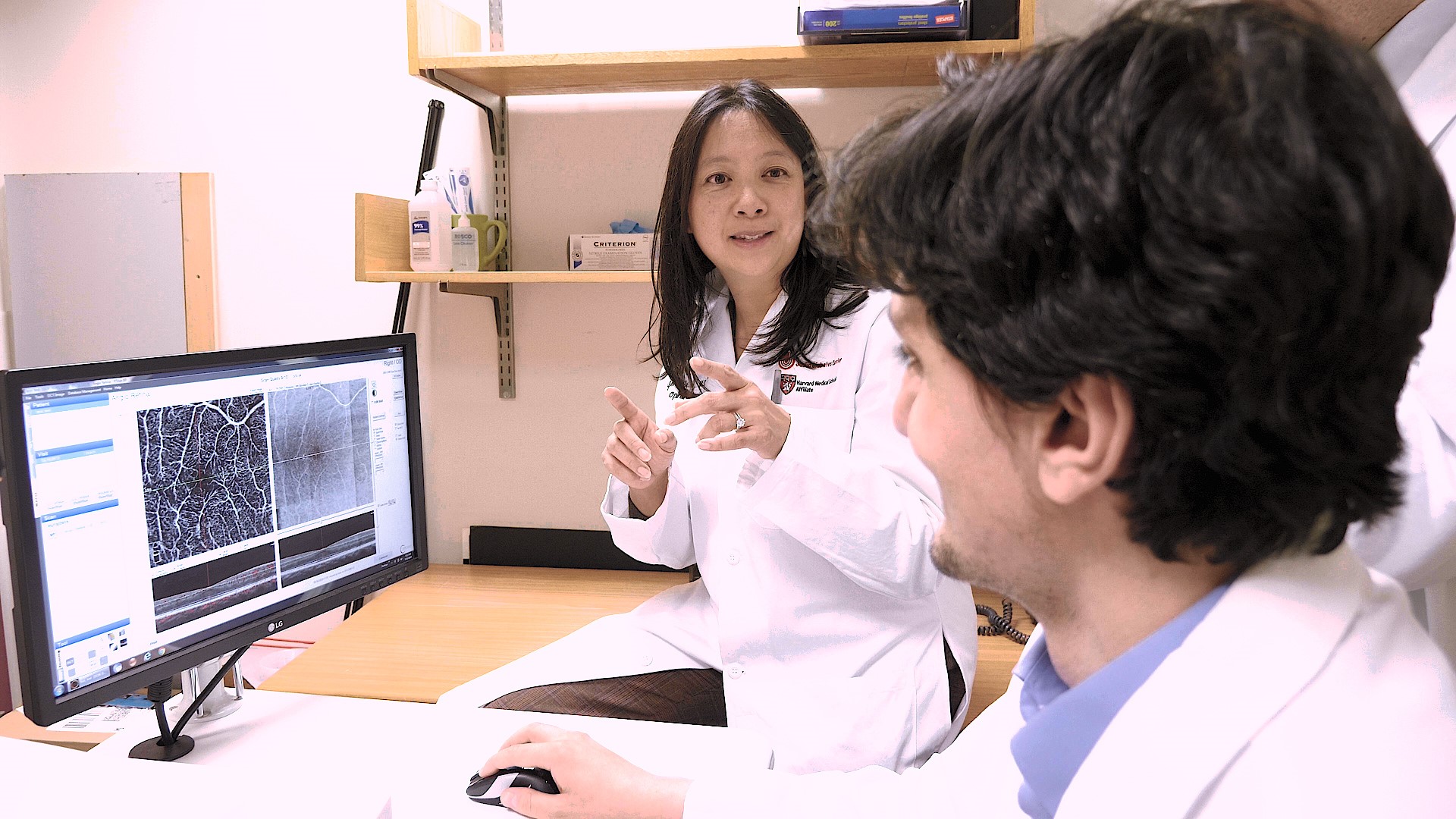
Several decades ago, type 1 diabetes (T1D) patients brought their seeing-eye dogs into the offices where Jennifer Sun, M.D., MPH., now works. The complications of T1D had severely compromised or cost the patients their eyesight.
Today, work led by Dr. Sun is changing all that.
We share Dr. Sun’s work as part of our Meet the Scientists series, but also in celebration of Women’s History Month and Save Your Vision Month.
Dr. Sun, is a surgeon at the Joslin Diabetes Center and an associate professor in the Harvard Department of Ophthalmology, and is one of the more than 400 researchers supported by Breakthrough T1D donors.
For 14 years, Dr. Sun focused on preventing diabetic eye disease and has helped advance physician’s ability to diagnose eye disease earlier and faster. That’s a critical focus for the future, as more than 90% of people with T1D develop diabetic eye disease within two decades of being diagnosed. With early diagnosis, doctors can create better outcomes and prevent vision loss.
Recently, multiple technologies have come together in a way that allows researchers to intervene earlier for people with diabetes, and identify the treatments that they need sooner. Instruments such as adaptive optic scanning and laser ophthalmoscopy are complex, but they help scientists look at tiny structures in the eye. Dr. Sun can see a person’s eye in minute detail. So precise is this technology that Sun can view a single cell passing through an ultra-fine capillary, which are the smallest blood vessels that supply nutrients to our eyes.
Dr. Sun thinks the next phase of research is to combine that kind of personal imaging data with electronic medical data that has been captured from many patients across thousands of clinics. By using artificial intelligence algorithms, researchers may be able to identify patients who need treatment earlier, and develop new therapies for them.
“What I hope is that the research projects I’m doing today, sometime down the road I’ll be able to look at them and say those made a difference in saving vision in our patients with T1D,” says Dr. Sun.
Get introduced to Breakthrough T1D grant recipient Dr. Sun. See how researchers are forging their own paths to help find cures and improve the lives of those living with T1D.
Ensuring eye complication research continues is extremely important to Breakthrough T1D. Please consider donating today, as we help those with T1D today and work to prevent future complications with your support.
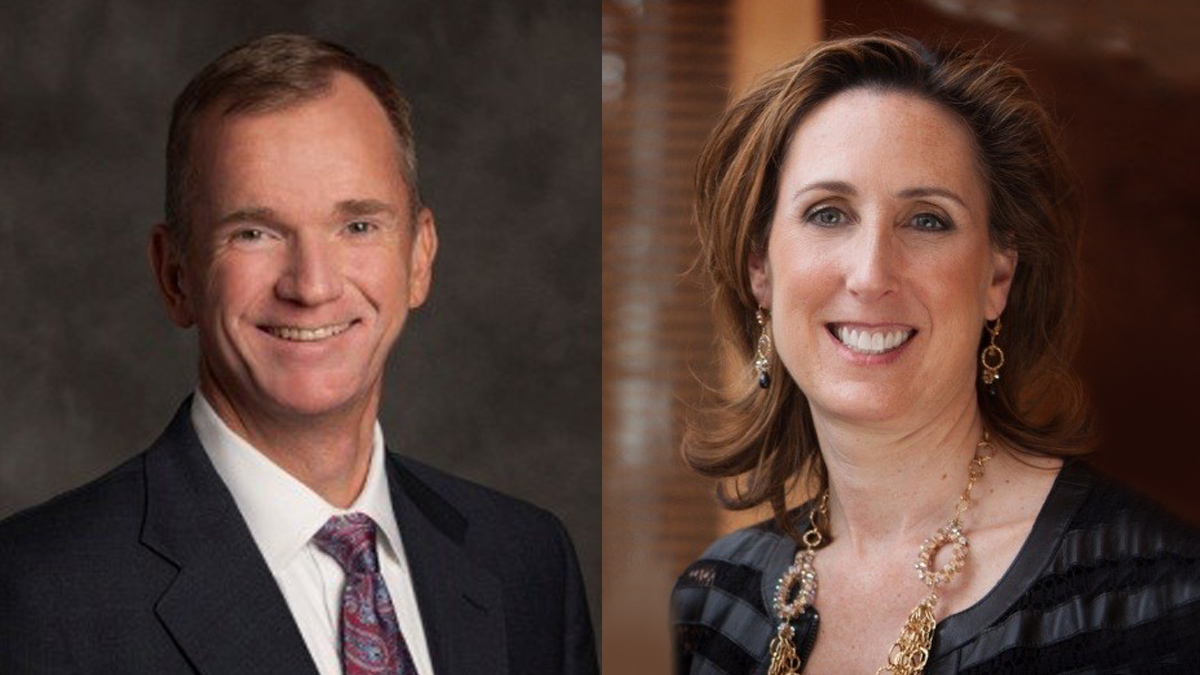
The Breakthrough T1D International Board of Directors (IBOD) named two long-time volunteers to serve as Chair and Vice Chair when current board leaders end their two-year terms on July 1.
Joseph P. Lacher, Jr., who is President and Chief Executive Officer of Kemper Corporation, will serve as Breakthrough T1D Chair, succeeding current Chair Ellen Leake. Joe is a long-time Breakthrough T1D volunteer who was diagnosed with type 1 diabetes (T1D) while in college and has two adult sons who were diagnosed as children.
Previously, Joe served as Illinois Chapter Board President and has held several roles with the Breakthrough T1D International Board of Directors, including serving on the Talent and Compensation Committee and Funding Committee. The year Joe and his family served as the “Fund a Cure Family” for the Illinois gala. The chapter raised a record-setting $7 million.
“My life and that of both of my sons are so much better because of the work Breakthrough T1D does every day,” Joe said. “It has been a humbling experience to be a part of this organization, and I am honored to take on this new role as IBOD Chair to help Breakthrough T1D accelerate the development of cures for our community.”
Lisa Fishbone Wallack, a former attorney and passionate community fundraiser, will serve as Vice Chair, succeeding current Vice Chair Jeff Plumer. Lisa has been part of the Breakthrough T1D family her entire life, as her parents began volunteering after her brother was diagnosed at 18 months. In the 1980s, her father served as IBOD Chair. Lisa’s involvement increased when her son was diagnosed at age 5.
Lisa has served as New England Chapter President and held two terms as Board member. She also served as Co-Chair of Breakthrough T1D’s Leadership Giving Working Group.
“Breakthrough T1D has been part of my family for as long as I can remember,” Wallack said. “The progress we have made in the past 50 years is inspiring, with significant improvements in the quality of life for those living with type 1 diabetes and profound new understanding about the disease. I am confident that together, we can drive the ongoing progress needed to achieve our ultimate goal of curing and preventing type 1 diabetes.”
IBOD is the governing body for Breakthrough T1D, the leading global organization funding type type 1 diabetes research and the driver behind nearly every major advance—drug, device, cell therapy—made in T1D in the last 50 years.
“The appointment of these two highly successful and dedicated leaders speaks to the depth of talent and passion we have at Breakthrough T1D,” said Breakthrough T1D President and CEO Aaron J. Kowalski, Ph.D. “We know that with their extraordinary experience and commitment, Breakthrough T1D will accelerate our race to find cures for this disease.”
Under Ellen and Jeff’s leadership, Breakthrough T1D transformed its governance model, moving from a 35-member board to one with up to 15 members, each selected for key leadership strengths with the aim of creating an IBOD that is laser-focused on purpose, efficiency and higher impact. They also led the selection of Breakthrough T1D’s new President and CEO, Aaron J. Kowalski, Ph.D., and the creation of a new Global Mission Board aimed at tapping the unique talents of Breakthrough T1D volunteers to accelerate work on the Breakthrough T1D mission.
Inspired by the past, driven toward tomorrow.
That message was woven throughout this year’s Breakthrough T1D Mission Summit, organized to share news of exciting type 1 diabetes (T1D) advances and outline Breakthrough T1D’s plans for the future.
“Because of so many dedicated supporters, our extraordinary journey has improved and saved lives,” said Breakthrough T1D President and CEO Aaron J. Kowalski, Ph.D. “And we are accelerating our work to accomplish so much more.”
The event brought together some of the word’s leading T1D scientists working with Breakthrough T1D and advancing focused-on therapy areas. As part of the event, Breakthrough T1D honored five scientists for their leadership work in the field of T1D. Each, in turn, thanked Breakthrough T1D supporters for enabling and driving their work forward.
Ellen Leake, Chair of Breakthrough T1D’s International Board of Directors, highlighted the organization’s earliest days, when two mothers joined together 50 years ago to fight T1D and improve lives for people with the disease.
“Right from the start, from that truly humble beginning, ours was a story of inspiration, showing the Power of Us—the power that we could have by working together,” Ellen said.
“In those very early days, Breakthrough T1D was just a small collection of volunteers. But amazing volunteers who drove some truly forward-thinking, high impact work that shaped who we are, and the impact we are having today.”
Breakthrough T1D volunteers built a network of researchers working in collaboration; chapters to support people with T1D in their own communities and life-changing programs such as the Bag of Hope, Galas, and Walks.
“Each program created connections so that those with type 1 diabetes would know they are not alone—while also raising awareness of type 1 diabetes and raising critically important funds to drive research to cure this disease,” Ellen said.
Today, Breakthrough T1D is the world’s largest philanthropic funder of type 1 diabetes research. Breakthrough T1D has raised more than $2 billion to fight T1D and also secured $3 billion in government funding through our advocacy. Breakthrough T1D has played a major role in the discovery and availability of nearly every T1D advance of the past 50 years.
Aaron joined Ellen in applauding the progress that has been made in improving the lives of those living with T1D, then focused on what’s next.
“Because of the work of Breakthrough T1D volunteers and supporters all over the country, we are at the cusp of enormous opportunities to further Breakthrough T1D’s mission to improve lives of those living with type one diabetes and to find cures for this disease,” Aaron said.
He focused on Breakthrough T1D’s work to accelerate advances across the research pipeline, moving promising research from one stage to the next and ultimately into the hands of the T1D community so to improve outcomes.
“Our job—and my job as CEO—is to accelerate.”
Key in driving toward curing T1D is to accelerate work in beta cell therapies and immune therapies.
“Not only have we figured out how to make beta cells—but we are making them in large quantities and, this year, we developed a super beta cell that acts more like the original—responding faster and better to the body’s need for insulin,” Aaron said.
Scientists also are learning how to transplant beta cells into the human body without rejection and without ongoing doses of immunosuppression medicine.
“What we care about is our loved ones doing better,” Aaron said. “I spend every waking moment thinking about how we can move things faster.”
Next from Mission Summit: What is new in Beta Cell Research and a recap of work being done in all key therapy areas.
When Derek Rapp stepped down as President and CEO of Breakthrough T1D last year, he vowed he’d never be far away.
Holding true to his promise, immediately after relocating back to St. Louis, he and his wife Emily checked in with the local chapter. What could they do? How could they help build the strongest base of support possible through the Missouri & Kansas Chapter to support the entire T1D Community and raise as much as possible for T1D research?
“Their warmth, compassion and commitment all run so deep. And their offer of help, as always, came with no limits,” said Ellen Leake, Chair of the Breakthrough T1D International Board of Directors. “They simply told the local team: ‘we are here. And we are here to help.’”
When the chapter asked if they could honor the Rapps at the 2020 Breakthrough T1D Hope Gala, Derek and Emily accepted–with the caveat that the honor be tied to building greater support for Breakthrough T1D’s mission.
“In nearly two decades of involvement, Derek has helped create strategic partnerships, increased efficiency and raised millions of dollars that have transformed type 1 diabetes research,” said John Kurowski, Chapter Board President. “We are so proud to honor Derek and Emily and showcase their story as an example of how powerful being involved in the Breakthrough T1D mission can be. Each of us can and should strive to make as big of a difference in our own way as they have.”
Derek and Emily say they are no different than any other Breakthrough T1D supporters: committed until the disease is cured.
“Our family has directly benefited from Breakthrough T1D-driven research advances,” Derek said. “We also know that we are getting so close to finding cures for type 1 diabetes. If more funding will help us get there, we will raise more money!”
Derek and Emily have been active supporters of Breakthrough T1D since 2004 when their son Turner was diagnosed with type 1 diabetes. Derek volunteered for 10 years in a series of highly influential roles, including serving as Research Chair and member of the Research Committee, the Lay Review Committee, the Strategic Alliances Committee, the Development Committee and the Advocacy Committee. He joined the IBOD in 2010, serving as Vice Chair until he was named President and CEO in 2014, a role he held until 2019, when he passed the baton to current CEO Aaron Kowalski.
Emily worked as an avid fundraiser and Breakthrough T1D presenter, and also as Board President for the Greater Missouri & Southern Illinois Chapter.
“Derek and Emily are committed in every way to leading by example and doing everything they can to help find a cure,” said Elizabeth Foss, Ride Champion and Former Chapter Board Member. “They have even put in thousands of miles on their bikes for the Breakthrough T1D Ride, raising money for research, sharing stories and cheering on fellow riders along the way.”
Derek and Emily moved from New York back to St. Louis when Derek accepted the role of Managing Director at RiverVest Venture Partners.
Working with the Greater Missouri & Southern Illinois Chapter, Derek and Emily hope to strengthen and expand the network of Breakthrough T1D supporters in the region and across the country.
“This organization is part of our family, and the research that Breakthrough T1D has and continues to drive has changed our lives. Our youngest son is living a healthy, full life thanks to the technology and advances brought to us by Breakthrough T1D,” Derek said.
“Breakthrough T1D has been a gift to us. We will continue working to ensure that same gift helps others and eventually, together, we celebrate cures for the entire T1D Community.”

