
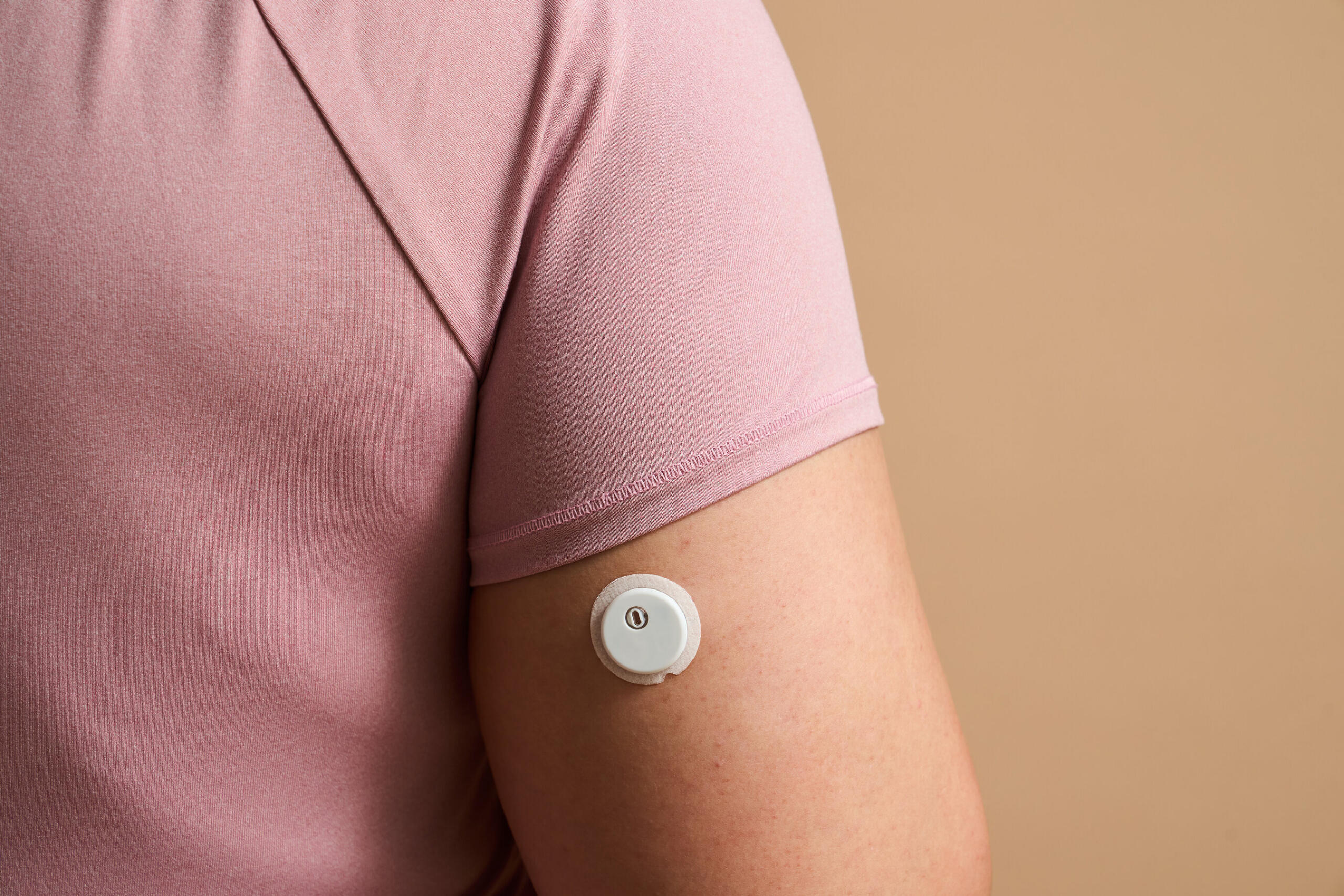
The First Dual Glucose-Ketone Monitor is Approved in the U.S.
You might have seen the news: the U.S. Food and Drug Administration approved Abbott’s Libre Duo 10 Day, the world’s first dual glucose-ketone sensing technology for ages 2+. Studies have shown that many people with type 1 diabetes (T1D) don’t have ketone testing supplies at home and never or rarely check their ketone levels—and this continuous ketone monitoring (CKM) technology has the potential to change that.
Can Ketone Monitoring Prevent Diabetic Ketoacidosis?
Ketone monitoring is an important step in preventing diabetic ketoacidosis (DKA), a potentially life-threatening condition that occurs when the body doesn’t have enough insulin, causing ketones to build up in the blood. Very high levels of ketones require emergency medical care.
Some people with T1D are at a higher risk of developing DKA. This includes:
- Adolescents and emerging adults, whose disease management may be impacted by hormonal changes and psychosocial factors
- Pregnant women with pregestational or gestational diabetes, who may have increased resistance to insulin
- People who use SGLT inhibitors to treat heart and kidney complications
- People with early-stage T1D who are progressing to symptomatic disease and will soon need insulin therapy
Thanks to the approval of the first dual glucose-ketone monitoring device in the U.S., people with T1D—especially those at higher risk of DKA—have a new tool at their fingertips to help achieve better health outcomes.
Factors that Influence Ketone Levels in People with T1D
There are several factors that can alter blood-sugar levels, insulin dose, and insulin resistance, which may ultimately increase the risk of ketone formation. These include:
- Stress: increases blood-sugar levels and insulin resistance
- Exercise: exercising with high blood sugar and ketones increases DKA risk
- Illness: can lead to reduced appetite and lower insulin dose
- Diet: low-carb diets increase risk of ketone formation
- Medications: SGLT inhibitors (SGLTi) reduce blood-sugar levels and lower insulin dose
The major benefit of dual glucose-ketone monitoring is clear: it can detect rising ketone levels early, so people and families with T1D—including very young children using diabetes technology—can take action before DKA occurs.
Continuous Ketone Monitoring May Help Enable Safe Use of SGLT Inhibitors
SGLTi can lower blood sugar by preventing the kidneys from reabsorbing glucose, which leads to excretion of excess sugar through the urine. These drugs have shown tremendous benefits in people with type 2 diabetes (T2D) and in people without diabetes, including reducing heart and kidney complications. Empagliflozin and dapagliflozin are approved to treat chronic kidney disease and heart failure, regardless of diabetes status—meaning these approvals cover people with T1D and kidney and heart complications too.
Because SGLTi lower blood sugar levels, people with T1D may need to reduce their insulin doses, which drives ketone formation and DKA risk. Several ongoing studies are establishing more evidence around safe use of SGLTi in people with T1D, and all of them include DKA risk mitigation strategies. Ketone monitoring is a promising new strategy to reduce DKA risk from SGLTi. Including continuous ketone monitoring in ongoing and future studies will improve our understanding of how SGLTi affect ketone patterns and provide evidence for how this technology can best be used for DKA prevention with this class of therapies. The goal is to take advantage of this new device to prevent DKA and empower people with T1D to safely use SGLTi for heart and kidney health. Breakthrough T1D recently published a roadmap for advancing SGLTi for heart and kidney complications for people with T1D to help drive this effort forward.
Clinical Trials Investigating SGLTi in T1D
Explore Breakthrough T1D-funded clinical trials investigating SGLTi for heart and kidney disease in people with T1D:
How can the T1D Community Benefit from Dual Glucose-Ketone Monitoring?
The work doesn’t stop at the approval of the device. Breakthrough T1D is funding several studies to amass evidence around the benefits of continuous ketone monitoring for people with T1D who are at a higher risk of DKA. These studies will provide essential data around which populations with T1D stand to benefit and how continuous ketone monitoring can improve health outcomes, in addition to providing key information around safe and appropriate use of SGLTi and other therapies.
Breakthrough T1D funded 8 projects stemming from a request for applications for studies that address clinically relevant questions about ketones and the use of continuous ketone monitoring in T1D. All of these projects are using dual glucose-ketone sensors donated by Abbott. This is the next step in a decades-long partnership with Abbott and a continuation of our commitment to better ketone monitoring for people with T1D.
Read on to learn more about some of the grants that were recently funded.
Continuous Ketone Monitoring in Youth with Type 1 Diabetes: a Randomized, structured Education, physical Activity and meal Challenges Trial (CKM-REACT)
- Principal Investigator: Martin Tauschmann, Ph.D.
- Institution: University of Graz (Austria)
- Co-funded by Abbott
The goal of the CKM-REACT study is to determine whether continuous ketone monitoring, paired with structured education, helps children and teenagers with T1D using automated insulin delivery (AID) systems spend less time with high blood sugar and identify early warning signs of DKA more effectively. Different study groups will receive different kinds of education, including in-person training and written materials. This will help improve our understanding of how education around continuous ketone monitoring can improve safety and ketone levels in children and teens with T1D.
Digital Health Model to Support Adoption of Continuous Ketone Monitoring By Underserved Adults with T1D: Evaluation of User Experience and Treatment Guidance
- Principal Investigator: Howard Wolpert, M.D.
- Institution: Boston Medical Center
- Co-funded by Abbott
This project will develop and evaluate a digital health system with on-demand treatment guidance via a smartphone app to support the use of continuous ketone monitoring in T1D care. The team will develop person-centered educational and clinical guidance tools around use of continuous ketone monitoring, conduct clinical trials to evaluate if continuous ketone monitoring can reduce the risk of DKA when used with app-based guidance, and evaluate the experiences of people with T1D using the tool. The goal is to support use of continuous ketone monitoring across all individuals with T1D, including those who do not receive care from expert diabetes clinicians.
Continuous Ketone Monitoring as a Tool to Identify Hyperglycemic Events and Predict Kidney Disease Progression in Individuals with Type 1 Diabetes and Moderate-to-Severe Diabetic Kidney Disease
- Principal Investigator: Sarit Polsky, M.D.
- Institution: Regents of the University of Colorado
This study will build on the Breakthrough T1D-funded SUGARNSALT clinical trial, which is evaluating whether the SGLT inhibitor sotagliflozin can slow kidney function decline in people with T1D. This clinical trial includes a safety protocol to help reduce the risk of DKA that involves fingerstick ketone testing in scheduled intervals and when symptoms appear or DKA risk increases. Dr. Polsky’s study will expand on this by investigating whether continuous ketone monitoring or fingerstick ketone testing can better predict progression to DKA, compare CKM-detected ketone patterns between those who are taking SGLTi versus those who are not, and characterize continuous ketone monitoring profiles in relation to health outcomes in adults with T1D and kidney disease. The goal is to improve safe use of SGLTi.
Improving Early Type 1 Diabetes Management Through Dual Glucose–Ketone Monitoring: Metabolic Characterization, Prediction of Progression, and Patient Experience
- Principal Investigator: Brigitte Frohnert, M.D., Ph.D.
- Institution: Barbara Davis Center for Diabetes, University of Colorado Anschutz Medical Campus
This project will evaluate ketone patterns in people with early-stage or newly diagnosed T1D, considering factors such as capacity to make insulin, carbohydrate intake, exercise, and whether individuals experienced DKA at diagnosis. The goal is to use these ketone patterns to better predict when people with early-stage T1D are progressing to symptomatic stage 3 T1D and prevent DKA during this transition.
The Steno 1 study – Continuous Glucose-Ketone Monitoring substudy
- Principal Investigator: Peter Rossing, M.D.
- Institution: Steno Diabetes Center Copenhagen
This study is embedded in the ongoing Steno 1 clinical trial, which is assessing whether a combination of heart- and kidney-protective diabetes medications (sotagliflozin, semaglutide, and finerenone) can reduce heart complications in people with T1D. The purpose of the substudy is to use continuous glucose-ketone monitoring to gather information on ketone levels and assess risk of DKA in adults with T1D receiving a new, multi-target treatment regimen. Ultimately, this data can support safer implementation of novel heart and kidney therapies in T1D.
What’s Next for Dual Glucose-Ketone Monitoring
As we continue to uncover the benefits of continuous ketone monitoring in T1D, Breakthrough T1D continues to support the advancement of dual glucose-ketone monitoring through clinical studies evaluating its use in T1D as well as research to accelerate new dual glucose-ketone monitoring technologies and expand options for people with T1D.
We’re also working to support clinical adoption of dual glucose-ketone monitoring. In fact, Breakthrough T1D is already one step ahead—we spearheaded expert recommendations for use of dual glucose-ketone monitoring in T1D to help guide healthcare professionals (HCPs) and families on best practices.
Expert Recommendations for Use of Continuous Ketone Monitoring in T1D
Experts from 12 countries, led by Breakthrough T1D’s Chief Medical Officer International Thomas Danne, M.D., Ph.D., published a manuscript titled “Continuous ketone monitoring for people with diabetes: international expert recommendations on the application of a new technology,” in The Lancet Diabetes and Endocrinology. This publication includes guidance for integration of dual glucose-ketone monitoring into clinical care and practical recommendations for use of dual glucose-ketone monitoring to reduce the risk of DKA. It will also serve as a resource for future conversations around regulatory decisions and payer coverage.
To better understand the community’s needs, our Medical Affairs team is leading a collaboration with Abbott and other partners to uncover the perspectives of people with T1D and their care providers on ketone monitoring and the challenges associated with current approaches. This information will help inform best approaches for integrating new technology into the T1D community based on real-life needs.
Now that the first CKM device is approved in the European Union and the U.S., clinicians and families can use available resources to help guide actions around ketone monitoring in people with T1D. As Breakthrough T1D continues to invest in research around the benefits of CKM and as additional devices become available, we’ll push toward driving access and adoption on a global scale to prevent DKA and establish safe and effective use of ketone monitoring across the T1D community.
Key Takeaways
- Dual glucose-ketone monitoring may have transformative benefits for the T1D community, most notably reducing the risk of DKA.
- Breakthrough T1D is building evidence around the benefits of dual glucose-ketone monitoring to support access and adoption.
- Cross-team collaboration, education, and advocacy for dual glucose-ketone monitoring will be critical for clinical implementation.
