
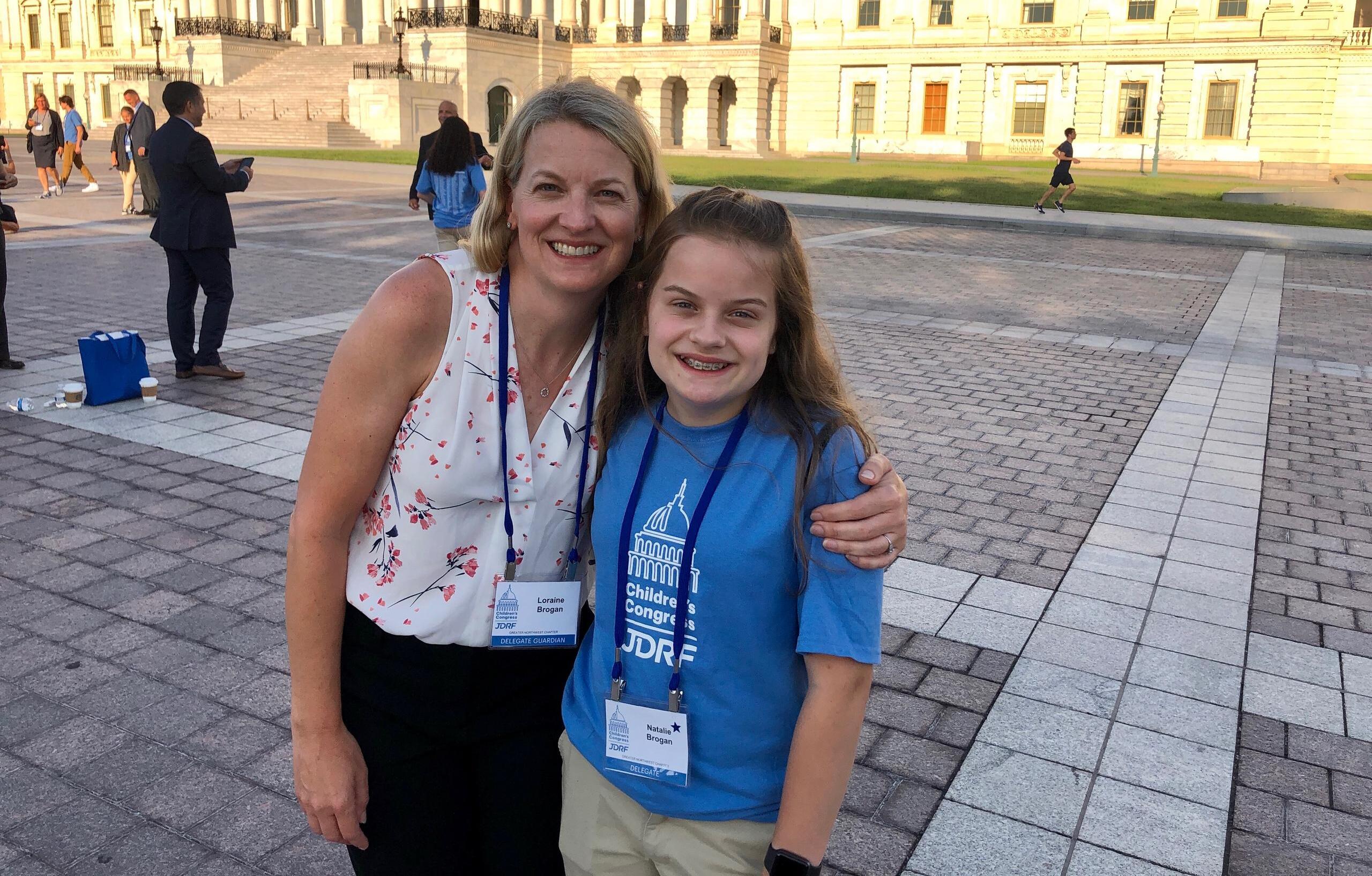
This article was written by Loraine Brogan and her daughter Natalie Brogan, who lives with type 1 diabetes. Loraine and Natalie are both Participant Advisory Council (PAC) members, advocates, and long-time Breakthrough T1D supporters. This story details Natalie’s diagnosis, what research means to them, and their journey to the PAC. The views expressed by the authors are their own and are not necessarily representative of Breakthrough T1D or our leadership, employees, or supporters.
A New Reality
When Natalie was diagnosed with type 1 diabetes (T1D) at nine years old, our world shifted overnight. As a family, we were suddenly thrown into learning carb ratios, insulin injections, blood-sugar checks, continuous glucose monitor (CGM) alarms, and a new kind of constant vigilance. Nothing prepares a family for that moment.
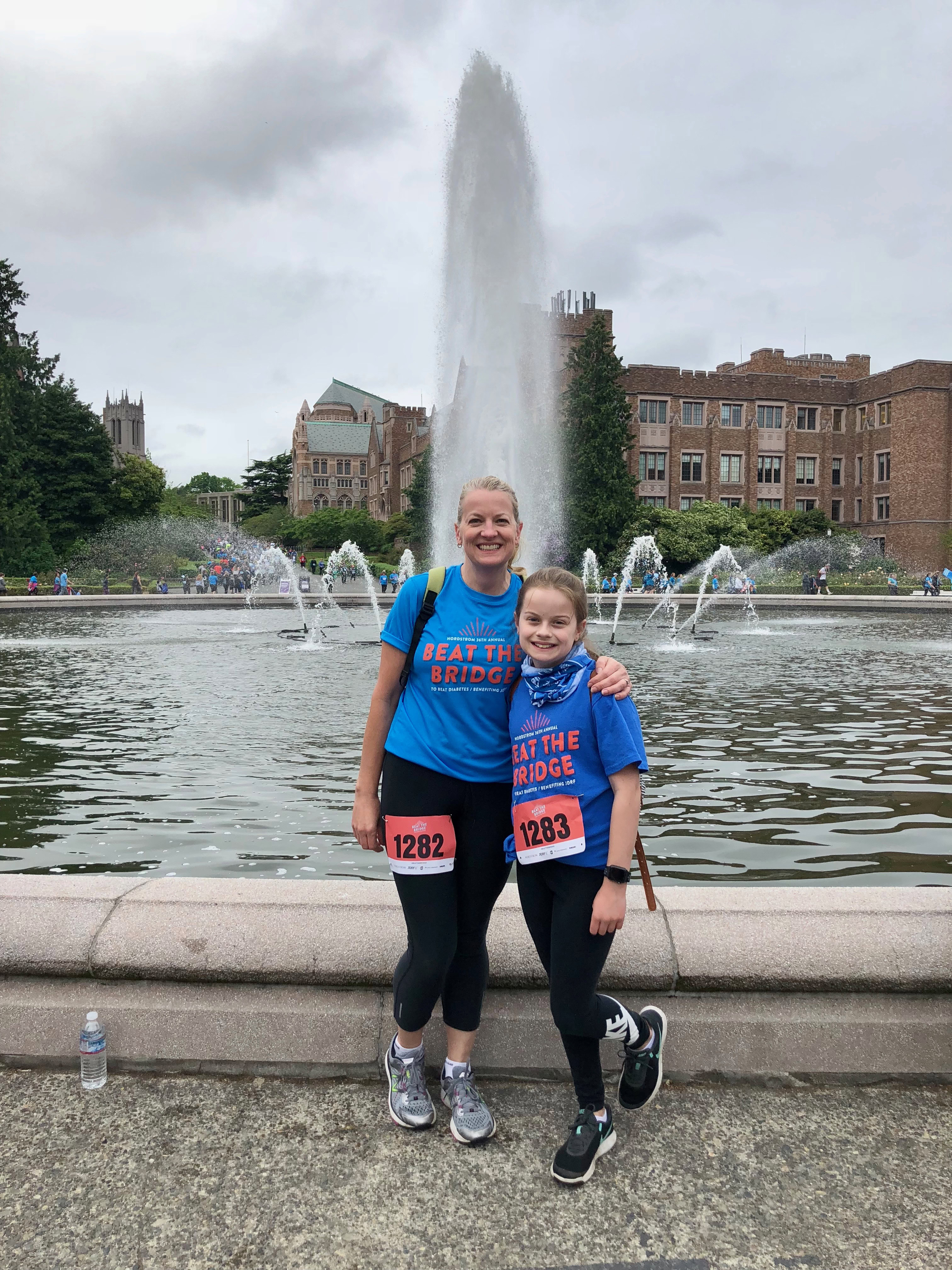
We adjusted because we had to, but it took time. There is a unique kind of exhaustion that comes with T1D management, and we learned quickly that the physical routine is only part of the story. The emotional side—the fear, the pressure, the feeling of being “different”,—was another thing to work through. As Natalie grew more independent, we learned how to balance safety, autonomy, and hope.
Toward a Different Future
Over the years, our family found strength in the T1D community and in the idea that progress is always happening. Research became a lifeline, not just in the scientific sense, but in the hopeful one: the belief that the future could look different. Natalie grew especially connected to this. That connection deepened through her opportunity to provide her input in a two-year pilot project at Seattle Children’s Research Institute. She helped develop youth-centered curriculum and saw firsthand how thoughtfully designed research can lift families up rather than overwhelm them.
As her mom, I watched her come alive in those spaces: asking questions, thinking deeply, and understanding that research is about people just as much as data. It was the first time she said, “I want to be a pediatric endocrinologist someday.” And she meant it.
The Path to the Participant Advisory Council
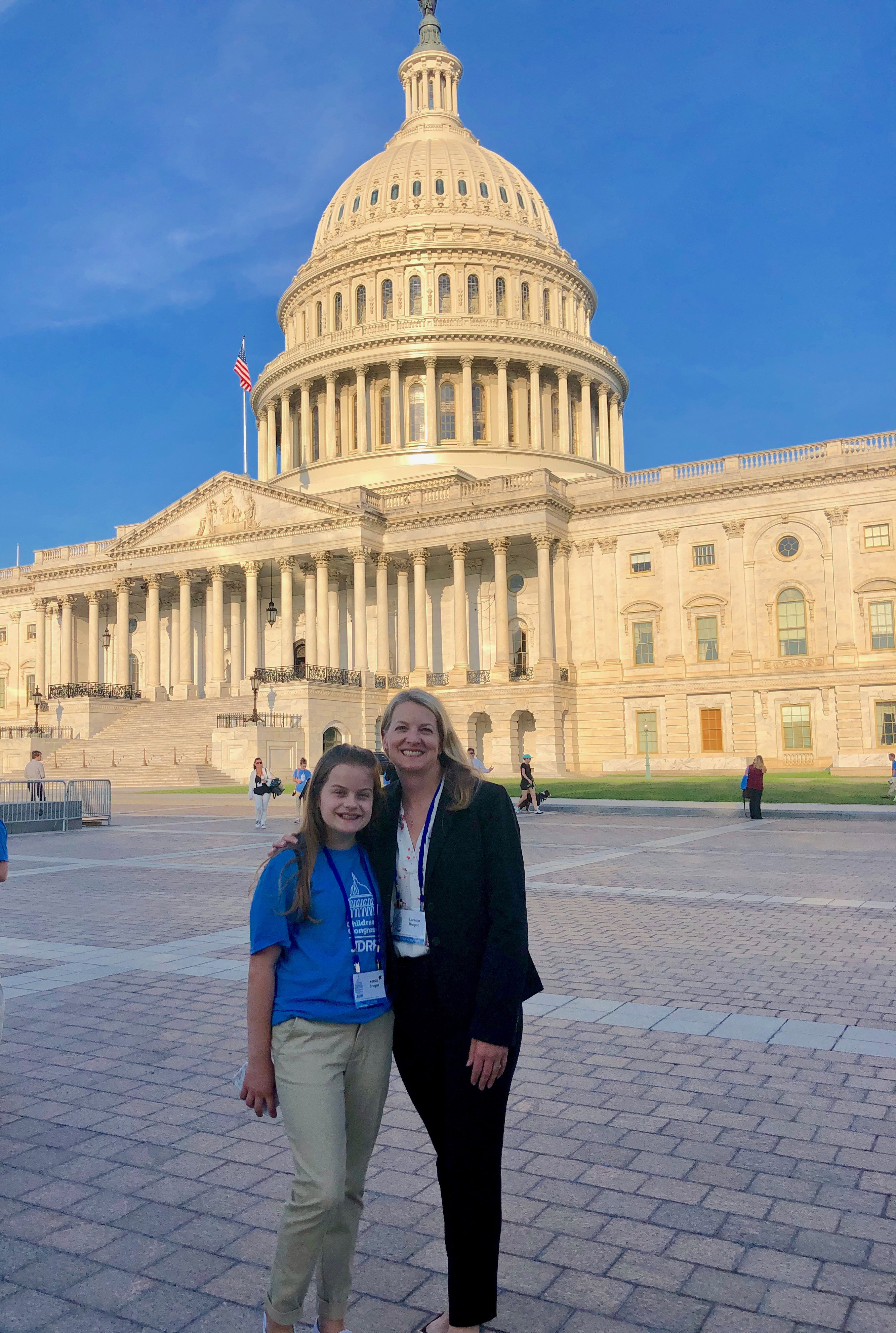
That belief in the power of research is what led both of us to Breakthrough T1D’s Participant Advisory Council (PAC). We learned about the PAC through one of the Breakthrough T1D staff we met years ago when Natalie was diagnosed, and we immediately felt aligned with the mission. For Natalie, it was a chance to advocate on a platform where young voices mattered. For me, it was an opportunity to share a caregiver’s perspective: the fears, the hopes, the logistics, the invisible mental load parents carry every single day.
Our experience as PAC members has been deeply meaningful. We’ve joined conversations where researchers and Breakthrough T1D teams asked us not just for opinions, but for lived experiences. They want to understand what T1D truly feels like inside a household: how clinical trial commitments may interfere with everyday life, what language to use around T1D families, and more. One project stands out to both of us: reviewing elements of a study design and being asked directly how families and teens experience challenges like clinic frequency, time commitment, or emotional burden. We spoke honestly about what helps, what hurts, and what makes participation feel accessible. Hearing that our feedback led to adjustments in communication approach and visit flexibility was incredibly validating. It made us feel like our voices weren’t just heard, but that they shaped something real.
A Mother-Daughter Duo
As a mother–daughter pair, we each bring something unique to the table. Natalie brings the firsthand experience of living with T1D since childhood: the alarms, the nighttime lows, the math she does before every meal, the determination she carries. I bring the caregiver perspective: the memories of sleepless nights, the years of managing school care plans and prescriptions, the worry only a parent of a child with T1D can understand.
Together, we represent the dual experience so many families navigate: the child who grows up with T1D, and the parent who walks beside them. For us, including the lived experience of T1D in research isn’t just beneficial, but essential. It ensures studies are not only scientifically strong but also humane, accessible, and reflective of reality. When researchers listen to families and people with T1D from the beginning, everything becomes better—study design, recruitment, communication, follow-through, and ultimately, the impact.
Hope for the Future: The Power of Sharing your Story
We joined the PAC because we believe in improving the future of T1D research. We stay because we see how powerful it is when families and people living with T1D are true partners in the process. Our hope is that our story, and the stories of everyone in this community, helps move us closer to the day when managing T1D looks very different from what it looks like today.
One day, we hope, it will be a world where type 1 diabetes doesn’t exist at all.
If you or someone you know may be interested in joining the Participant Advisory Council, please reach out to Michelle Simes-Kennedy at [email protected].
Learn more about clinical trials
Visit Breakthrough T1D’s clinical trials web page to learn more about how you can get involved in clinical trials. Use our clinical trial matching tool to find recruiting trials near you that you may be eligible for. Connect with a Clinical Trial Education Volunteer in your area to better understand the process and get your questions answered.
