

On July 15, Pat McAleer flew from Richmond, VA, to Seattle, WA, dipped his bike in the Pacific Ocean at La Push, WA, and embarked on Ride Pat Ride—a solo, 5,000+ mile, three-month journey to the Atlantic Ocean at Virginia Beach, VA, all to raise money for type 1 diabetes (T1D) cures.
We first checked in with Pat two weeks ago, when he was just rolling out of the Rocky Mountains in Montana. He’s currently about halfway across Wisconsin, but we caught up with him at a picnic table in Leonard, North Dakota (around a 3-hour ride from Fargo), when he was 1,850 miles into the 5,000+ mile journey.
“You go from this forest mountain thing, where you can see a bit into the distance and then you get these big mountaintop views, and then pretty quickly, you’re in the rolling hills and the prairies and plains kind of scenario,” Pat said. “They don’t call it ‘big sky country’ for nothing. You can just see from horizon to horizon, and at night, the stars are amazing.”
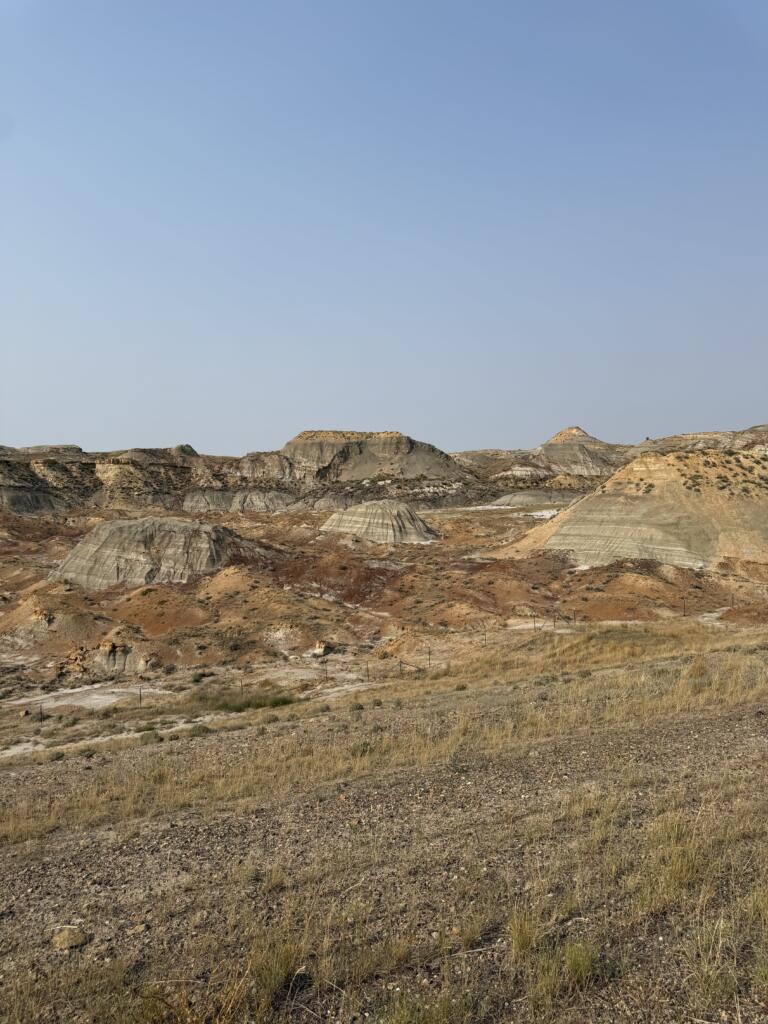
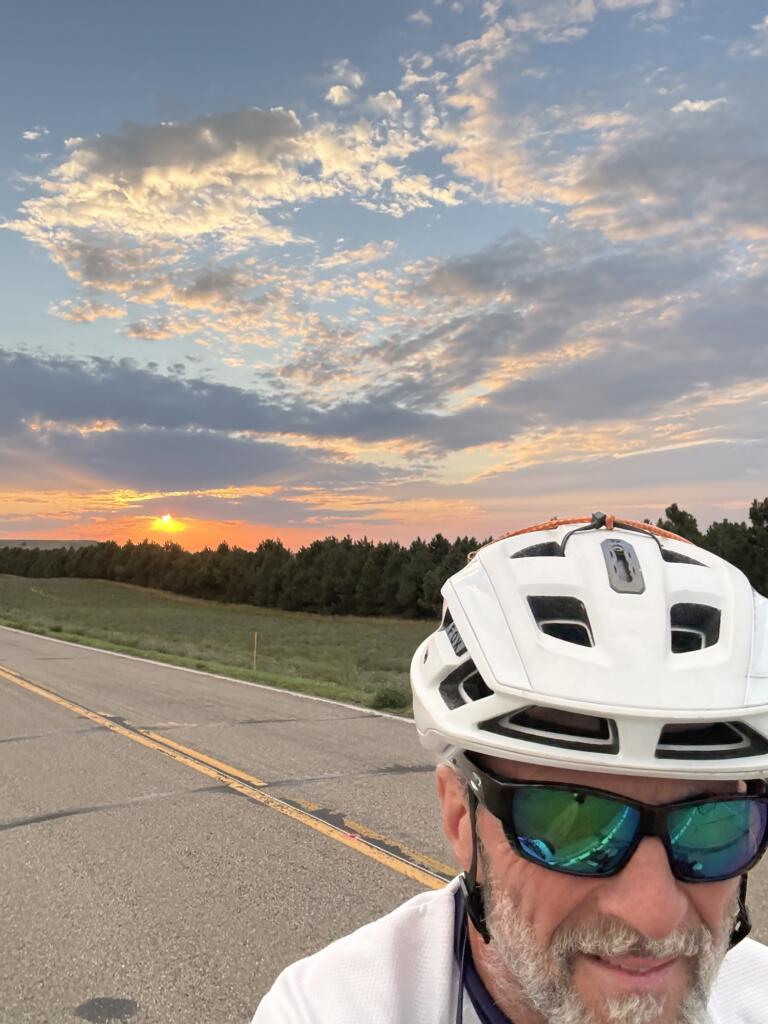
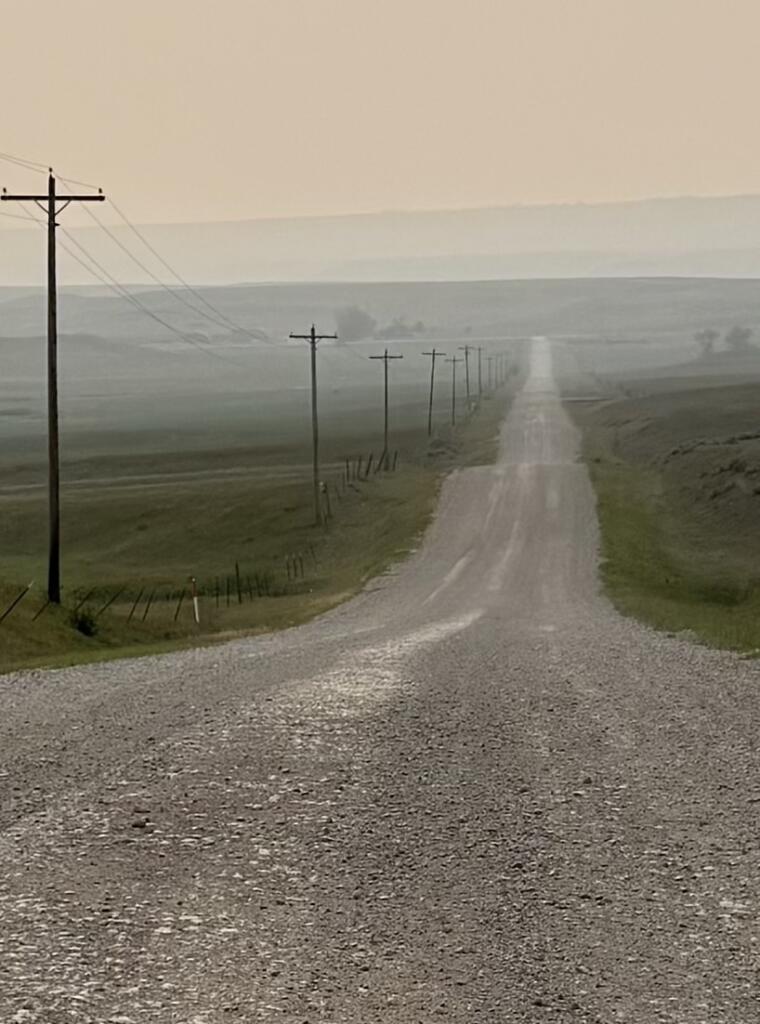
Although he’s left the mountain passes and rolling hills behind, the plains bring with them a new challenge: headwinds.
“It’s deceiving because in the morning, you look at your route, you look at the topography, and you’re like, ‘Oh, this will be great.’ Not so quick—check the wind!” Pat said. “It does feel like you’re climbing one of those mountain passes.”

Additionally, he had to ride on the interstate (I-94, to be exact) for a bit, as part of the Adventure Cycling Association’s Northern Tier Route, which Pat is following for much of his journey. Why?
“It’s the safest way to get from here to there, and there are also no small roads that I could get on,” Pat said. “You could go on one of these service roads right next to the interstate, but go down for about 12 miles, it’s going to dead end, and you’ll have to go back.”
“It was a good route, trucks gave me a ton of room—cars did the same, but it was really the trucks, they would all get in the left lane,” he added.
Outside of that I-94 stretch, Pat has been pedaling down two-lane highways across North Dakota and into Minnesota.
Packing, and Overpacking
Since Pat is carrying all his supplies with him, he had to decide early on how much he would bring.
“Am I going to go super, super light, but be dependent on food and motels and places to stay?” Pat said. “Or am I going to go a little heavier and be fully self-supported—like wherever I am, I can just stay there? And I decided on the latter.”
That means he’s hauling his own mattress pad, sleeping bag, tent, pillow, cook stove, a good amount of food, and several gallons of water in addition to all the normal travel stuff like changes of clothes, a phone charger, and a toothbrush.
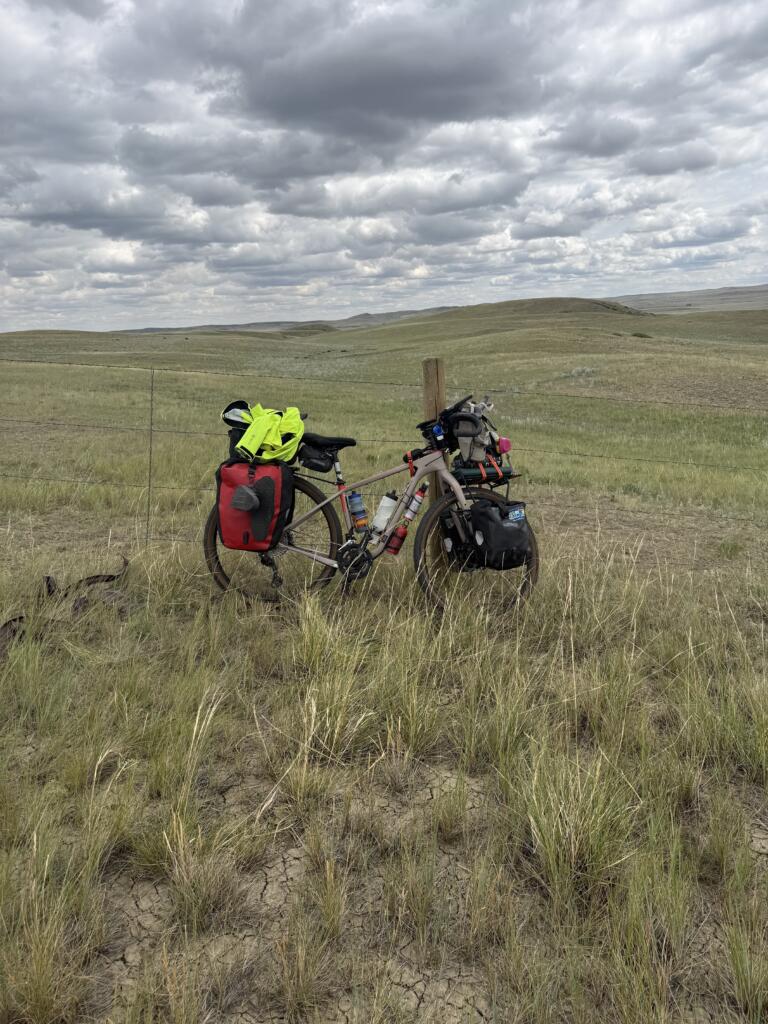
“It adds some weight, which is a little more work, but it gives me an incredible amount of flexibility,” he added. “You’re able to just say, ’Well, I’m tired and then this is as far as I’m going.’”
And in the end, Pat says he packed too much! He flew out to Seattle with a “one way suitcase” and ended up sending a few things back home a few days into the ride.
“I had extra clothing that I didn’t need, I had extra straps, I had a backpack that holds drinking water—and I decided I didn’t like riding with it, so I went to a store and just bought a little jug instead,” Pat said.
Whenever he’s needed something that he didn’t bring, he’s been able to find it out on the road at local hardware stores, general stores, or national big box stores. Purchases included a hat with a wide brim that fits around his bicycle helmet to make riding in the sun easier, and a respirator mask so he could keep riding through wildfire smoke.
Community Connections
In the mountains, Pat was typically staying in campgrounds at state and national parks and forests, sometimes sleeping in his tent and other times sleeping under the stars, mixed with the occasional stint in a motel.
“You wanted to be in a campground there, because you’re in bear country—you need a bear box or a pole,” Pat said. “Out here, there’s really not much in the terms of, you know, bear threats.”
Pat’s night in the small town of Moffit, ND (“It’s a crossroad, 3 little streets, and then it’s done,”), is a good overview of his typical plains camping experience.
“There’s a post office and a bar, and it was Sunday night, 8:45 p.m., the bar’s open. I walk in, there’s a bartender and this guy sitting at the bar. And I just talked to them both—I said do you think anyone’s going to care if I camp behind the post office, which was literally right next door?” Pat said. “And [the bartender’s] like, ‘No, no, you’re fine. No one’s gonna care. And if anyone asks you anything, you just tell them Darnell said it’s okay.’”
“That’s kind of what you need, when you pull into some town. You just need someone and you need to know their name—so that if someone else asks, ‘Hey, what are you doing here?’ You can say ‘Darnell said it’s cool,’” he added.
The next morning, when Pat was rolling up his tent, a local resident walked up with two cups of coffee.
“He hands me one and said ‘I kind of noticed you were behind the post office camping, figured you probably needed some coffee this morning,’ Pat said. “Dude, thank you!”
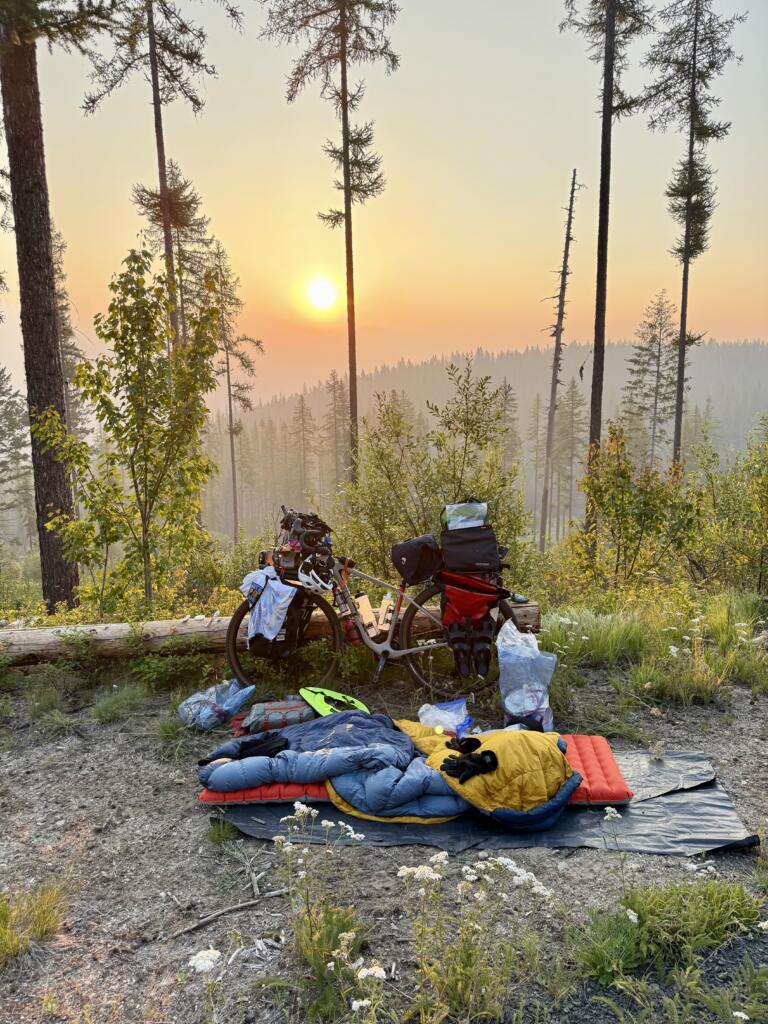
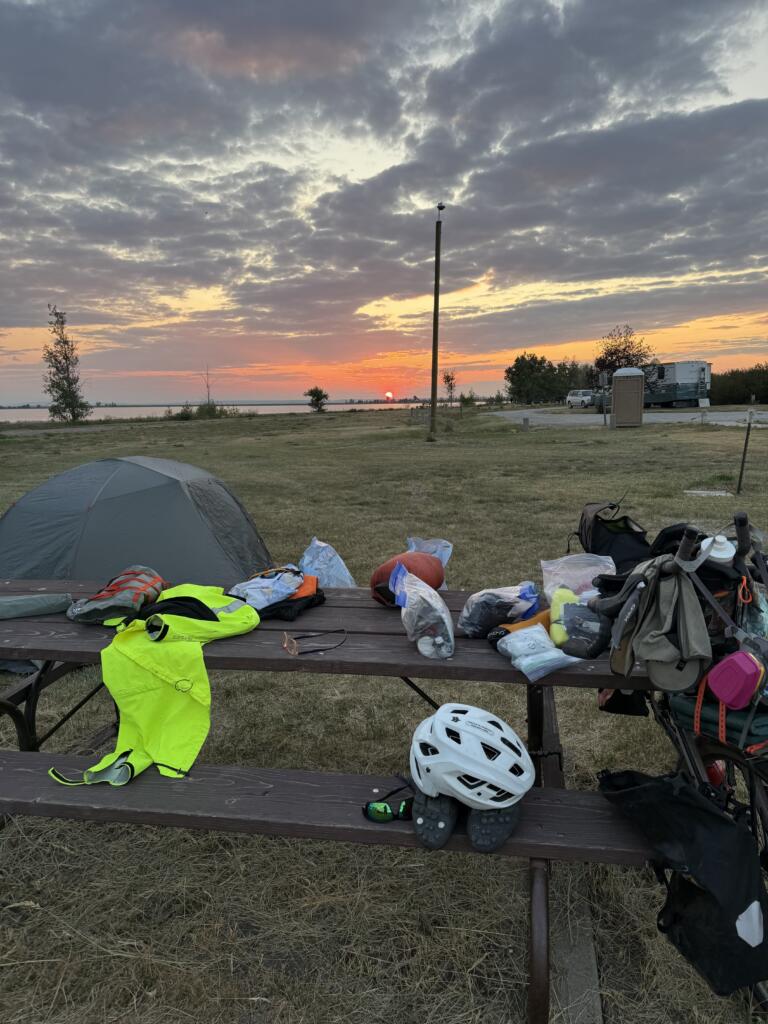
Pat says experiences like that have been common during his ride—like the time he stopped at a rural convenience store for lunch.
“They gave free ice cream to anybody that’s riding across the country, and when I walked in with my shirt, the guy’s like ‘Oh yeah, you get ice cream.’ So I have this big, huge lunch, and I sit down at the table and I’m looking at my map, and I can’t keep my eyes open,” Pat said.
“I fell asleep. I drooled on my map. I woke up and then I went over to the counter and I jokingly said to the people, ‘How long was I asleep?’ And they were like, ‘You were asleep for quite a while, but we just let you go. But we saw your jersey and decided to look up what it is you are doing, and we both want to donate,’” he added.
The two workers ended up donating $140 to Ride Pat Ride.
“This guy working this counter, and this other lady working on the other side of the counter making lunches and stuff, together, they kick in 140 bucks because I was taking a nap and they get curious about why this guy’s sleeping in a convenience store,” Pat said. “They were hosting me in their store by, you know, just taking care of me. It just brought out the goodness of people and let me, once again, be reminded of that.”
Support Pat Your Way
Pat’s transcontinental journey was made possible thanks to Breakthrough T1D Your Way, our DIY fundraising platform that puts you at the controls with your custom campaign idea (it doesn’t have to be a cross-country ride!), while we handle all the tools and support you need to make it happen.
If you’re feeling inspired to get out on your bike but don’t have three months to spare, try Breakthrough T1D Ride! We’ve got five destinations across the country in 2026, or you can join in anywhere, anytime with My Ride.
And stay tuned—Pat is posting updates from the road on his Instagram and Facebook pages, and we’ll be following along with articles right here on BreakthroughT1D.org.
