
It’s a rainy day in Philadelphia, but the mood at CRC 2026 could not be sunnier! The attendees were positively buzzing (seriously) with how timely and impactful this meeting is. It’s the right time for a meeting focused exclusively on type 1 diabetes (T1D), and the good news is we won’t have to wait years for the next one!
CRC 2027 will take place from October 15-17 in Washington, D.C., USA. Stay tuned for more information!
Breakthrough T1D’s Clinical & Research Congress
The inaugural Breakthrough T1D Clinical & Research Congress (CRC 2026) is a groundbreaking forum uniting clinicians, researchers, scientists, healthcare professionals, industry leaders, and the T1D community. Attendees will explore cutting-edge advances in T1D science, clinical care, and more. Designed to foster collaboration and spark innovation, CRC 2026 will provide translational insights, interactive learning, and meaningful dialogue, all with one shared goal: improving lives and driving toward a world without T1D.
Islet Cell Therapies vs. Disease-Modifying Therapies: Which is Better?
Spoiler alert: there’s no right answer—there are pros and cons to both!
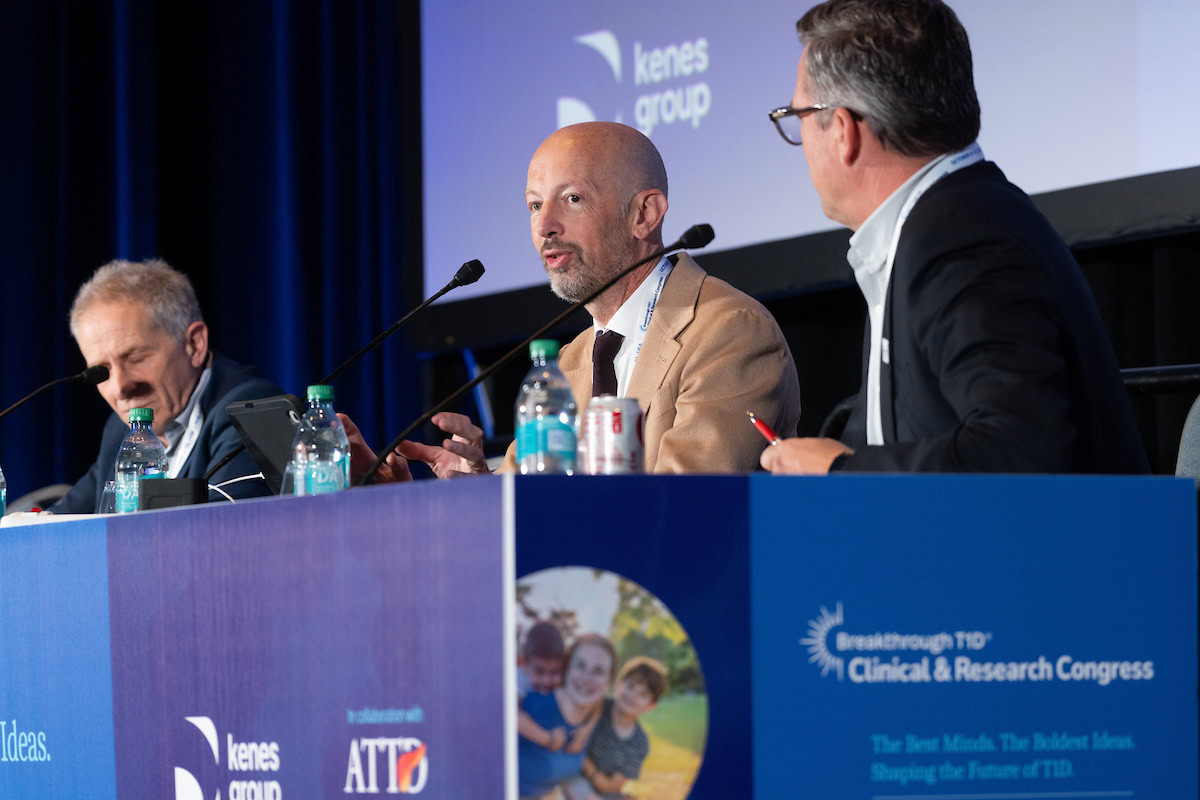
Peter Senior, MBBS, Ph.D. (University of Alberta) and Colin Dayan, MBBS, Ph.D. (University of Birmingham) debated the safety, costs, monitoring, potential long-term outcomes, and considerations for global access of disease-modifying therapies (DMTs) versus islet cell therapies.
Dr. Dayan made the case that islet cell therapies may be effective in the short-term, but in the long-term they might not be scalable, affordable, or deliverable globally. On the flip side, emerging DMTs may allow for a one-and-done treatment—meaning they could be far more affordable and easily accessible, especially in the pediatric population. DMTs also address the root cause of T1D from the start, rather than “putting a patch on it” later.
On the flip side, Dr. Senior argued that there are significantly more people living with established T1D compared to early-stage T1D or even within 100 days of a diagnosis—meaning that islet cell therapies, especially manufactured versions that are scalable, must be the solution since it is too late to preserve beta cells in most people. He also made the point that islet cell therapies can give patients more beta cells than a DMT would—and more beta cells meanings better outcomes, including freedom and flexibility.
Someone in the audience chimed in with an important point: ideally, DMTs and islet cell therapies can one day be combined to maximize the benefits of each (e.g., restore insulin production and address autoimmunity against beta cells).
Key Takeaway
Both DMTs and islet cell therapies have a future in T1D—ideally one day used in combination—and have several benefits for different ages and stages.
Islet Cell Therapies
The Burden of Immunosuppression
Sabarinathan Ramachandran, Ph.D. (University of Minnesota) gave an update on immunosuppression with islet transplants. The key challenge is these transplants work, but over the long term, 50-70% of recipients lose function. He outlined the approaches investigators are taking to reduce the burden of these necessary drugs, like gene-editing, encapsulation, and engineered microenvironments.
Cellular Reprogramming
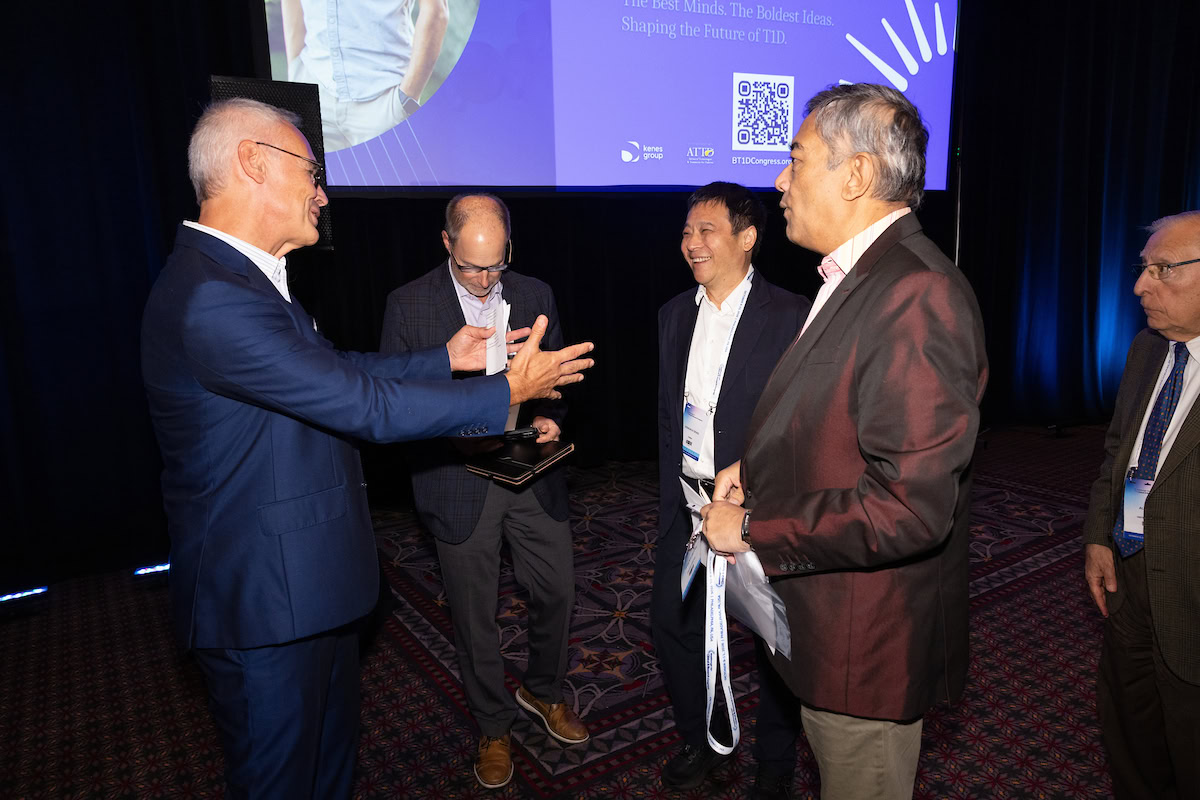
Hongkui Deng, M.D. (Peking University) presented a talk on cellular reprogramming, which involves treating cells with specific factors that turns them into a different cell type. Dr. Deng and his team developed a new, non-traditional strategy—which he called “chemical reprogramming”—that uses small molecules (instead of proteins) to reprogram cells. This approach is more efficient and easier to accomplish in the lab than traditional cell reprogramming approaches.
Using chemical reprogramming, Dr. Deng’s team turned a person’s fat cells into islet cells. The team then transplanted these islet cells back into the same person under the anterior rectus sheath, a large, easily-accessible, and well-vascularized area (meaning transplanted islets have access to blood vessels carrying nutrients and oxygen).
This person achieved substantial improvements in time in range and blood-sugar management, and no safety issues were identified during continuous monitoring. They were also already on immunosuppressants for a liver transplant. Now, more than one person has received this treatment, and Dr. Deng and his team are monitoring them closely.
Dr. Deng’s lab is also working on artificial intelligence (AI)-based approaches to scale up chemical reprogramming for islet cell therapies in addition to researching new ways to remove the need for immunosuppression.
Key Takeaways
- Reducing the need for immunosuppression is a key focus area for islet cell therapies.
- Chemical reprogramming of a person’s own fat cells into islet cells is a new and promising approach to restoring insulin production in people with T1D.
Disease-Modifying Therapies
Clinical Trial Design Post-Teplizumab
- Presenter: Jason Gaglia, M.D. (Joslin Diabetes Center, Harvard Medical School)
- We know that teplizumab (Tzield) works, but individual responses can be variable and there may be an optimal treatment window.
- Now that we have an approved DMT, the question becomes: do we use teplizumab as a comparator in clinical trials instead of a placebo, so that everyone who participates has a chance to benefit?
- If we do, people may not want to participate if they can get teplizumab at their clinic and covered by insurance—or they may not want teplizumab at all because of the 14-day infusion, side effects, or other reasons.
- With this in mind, we do not have a clear answer yet about whether teplizumab should be used in place of a placebo in DMT clinical trials.
Disease-Modifying Therapies Highlight: Breakthrough T1D-Funded Work
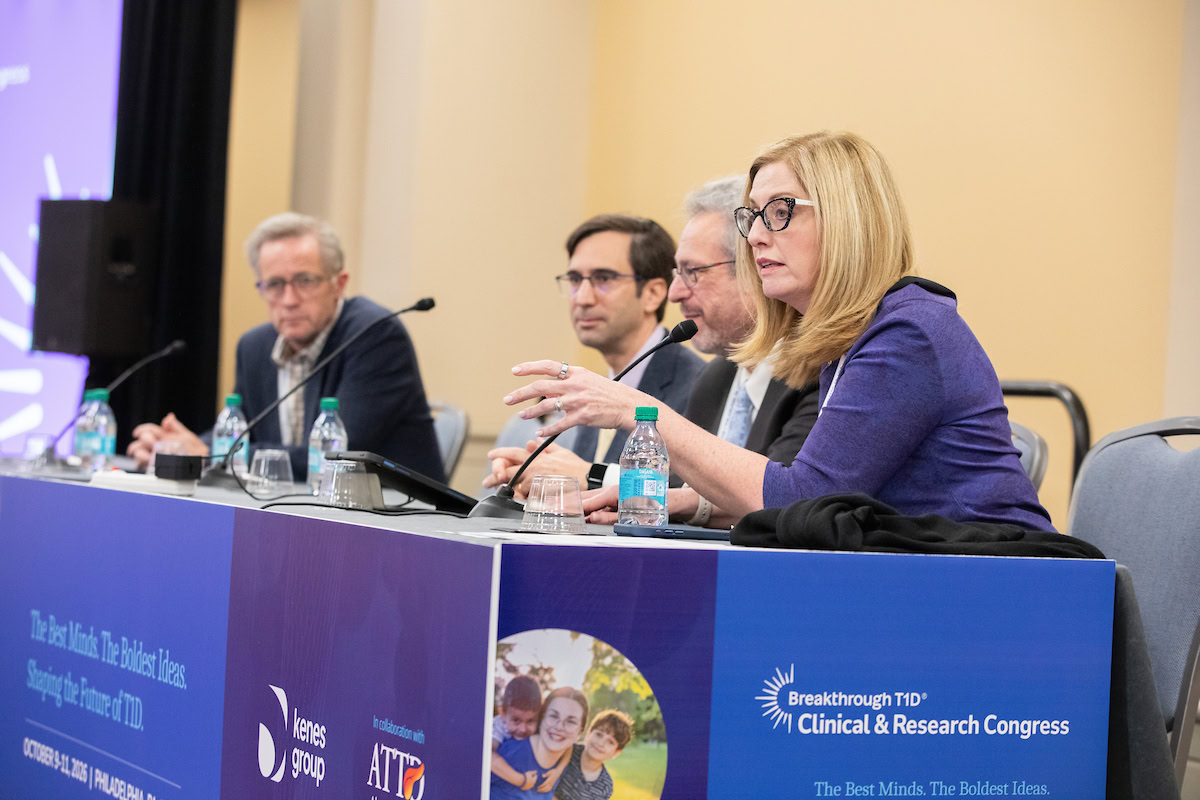
Peter Gottlieb, M.D. (Barbara Davis Center for Diabetes) presented on the T1D Cures Accelerator, a global effort to develop new biological markers (or biomarkers) that can accelerate DMT clinical trials. This consortium represents a group of experts from academia, industry, the T1D community, regulatory agencies, and healthcare. The team plans to aggregate data from several DMT trials, perform large-scale AI-based analyses on available datasets, and identify and validate new biomarkers.
Carmella Evans-Molina, M.D., Ph.D. (Indiana University School of Medicine) talked about mechanisms driving beta cell stress. Her team showed that activating a protein called SERCA can delay diabetes development in animal models of T1D. She worked together with Neurodon, a company that previously received an Industry Discovery and Development (IDDP) award from Breakthrough T1D, who developed the small molecule targeted to SERCA.
Bruce Verchere, Ph.D. (University of British Columbia) is a member of The Breakthrough T1D Canucks For Kids Fund Centre of Excellence in Canada. He presented his lab’s work on a nanoparticle-based method to target a specific subset of immune cells called antigen-presenting cells( APCs). APCs activate the immune cells that are responsible for destroying beta cells, and this approach reprograms them to stop doing this. In animal models, this prevents T1D.
Key Takeaways
- Teplizumab could one day be used instead of a placebo in DMT clinical trials, but we need to work out the pros and cons for participants first.
- A new global consortium will help accelerate DMT development.
- We’re learning more about how beta cells function in the autoimmune environment, and new approaches targeting beta cells or immune cells are showing promise in preclinical studies.
Early Detection
Advanced Screening Technologies
Katsiaryna Prystupa, M.D. (German Diabetes Center) presented a machine learning analysis to sort more than 600 newly diagnosed people with T1D into 3 groups based on shared features like autoantibodies and insulin resistance. One group is associated with diagnosis earlier in T1D progression, when more beta cells are remaining. This work could help identify who may benefit most from DMTs.
Callie Zaborenko, Ph.D. (Indiana University School of Medicine) analyzed electronic health record (EHR) data and genetic information from adults to see whether a genetic risk score could help identify people at a higher risk of developing T1D. Adults with the highest scores were nearly ten times as likely to be diagnosed with T1D as adults with mid-range scores. This could one day help guide who is offered autoantibody testing, though more research is needed first.
Alice Carr, Ph.D. (University of Alberta) talked about the best way to assess if DMTs are working in early-stage T1D trials. Using data from TrialNet and TEDDY studies, she presented her work showing that oral glucose tolerance tests (OGTT) can estimate insulin secretion as a measure of beta cell responsiveness. This may better capture risk of T1D progression, which can help researchers choose the best participants for DMT clinical trials and understand if DMTs are working.
Kathleen Gillespie, Ph.D. (University of Bristol) and her team screened nearly 20,000 adults for islet autoantibodies and followed those with confirmed autoantibodies in the T1DRA study. The prevalence of adults who had multiple autoantibodies was similar to that in children, which supports screening in adults. The team is developing an approach to group people with a single autoantibody into tiers based on progression risk, which could help tailor individualized monitoring.
Brittany Bruggeman, M.D. (University of Florida) analyzed the TEDDY study to better understand the decline in function in the part of the pancreas that helps digest food (the exocrine pancreas) in children at risk for T1D. In kids who developed islet autoantibodies earlier, a biomarker of exocrine pancreatic function (FE-1) was lower in infancy, before autoimmunity against beta cells. Combined with other tests, this biomarker may one day help researchers better predict T1D progression.
Key Takeaway
We already have screening capabilities to identify people in early-stage T1D, and research into advanced screening technologies will allow us to better predict T1D progression and response to DMTs.
Medical Affairs
Communication and Shared Decision-Making: Old and New Challenges in T1D
The diabetes care team is made up of many disciplines. This session was presented by three psychologists and a physician focusing on the behavioral and educational aspects of T1D.
The first speaker, Ellen O’Donnell, Ph.D. (MassGeneral Brigham and Harvard Medical School) discussed the best communication tactics for children and adults in early-stage T1D. Telling a person, and their family, about an early-stage T1D diagnosis is a life-changing conversation. Thankfully, we know the best ways to communicate this information: using metaphors, graphics, and pictures, and taking into account the full context of the family (e.g., their family structure, experience with T1D, and baseline mental health). Not only do we know the best ways to have these conversations, but there are tools and resources for clinicians and healthcare providers.
Next up, Jane Speight, Ph.D. (Deakin University, Australia) talked about a topic that we need to dedicate more time to: diabetes stigma. T1D is a chronic illness, and living with it is a deeply emotional experience. When HbA1c stops being information and starts being a measure of self-worth, it has negative results. It can cause teens, parents, and adults with T1D to feel dehumanized, which has a direct result on physical and mental health.
Some alarming stats:
4 in 5
adults with T1D report experiencing diabetes stigma
98%
of teens and young adults with T1D report experiencing diabetes stigma
1 in 5
adults with diabetes report discrimination—being treated differently—because of their diabetes
Diabetes stigma is associated with lower well-being and less confidence (self-efficacy) in managing diabetes, in addition to other worse outcomes:
2-3x
the odds of having an HbA1c above 9%
Up to 2x
the likelihood of diabetic ketoacidosis (DKA)
But there is something we can do. A positive, self-fulfilling feedback loop predicated on stigma-free communications can help people do better—and this needs to be considered in every conversation.
The final speaker, Carol Levy, M.D. (Icahn School of Medicine at Mt Sinai) got into pregnancy and T1D. We know that women with diabetes require much tighter targets to reduce maternal and fetal health risks. These risks are real and difficult to manage for the mother and the physician—and they start pre-conception and continue post-partum. Insulin requirements change dramatically throughout gestation, and there is limited real estate on the body for continuous glucose monitors (CGMs) and insulin pumps. Even with the better tools that we have today, pregnancy outcomes remain suboptimal.
The main point: flexibility, creativity, and understanding are needed. Pregnant women are thinking about lots of things—not just their T1D management. They don’t all want to wear a pump.
Centers of Reference
Breakthrough T1D Chief Medical Officer International, Thomas Danne, M.D., Ph.D. has a very clear way of describing our challenge for the future. Cures for T1D are planes, in the air. We’re still building the plane, but it’s in the air right now. We must ensure there is a runway so that when the plane is ready to land, it can.
Right now, we’re building that runway through our Centers of Reference program, which is explored in a presentation by James Shaw, M.D. (Newcastle University).
Centers of Reference are expert multidisciplinary T1D care centers that are preparing healthcare professionals (HCPs) around the world to administer manufactured islet cell therapies to people with T1D. The goal is to make sure that expert clinical teams—who are already doing islet cell transplants at low scale—are ready to integrate these therapies into clinical practice at their institutions and train others, once they have regulatory approval.
Breakthrough T1D has created several working groups to help move these therapies forward now so they’re ready when cell therapies are (at scale). These include:
- Training and education, including a clinician training program launched with ATTD in Europe and the American College of Diabetology in the US.
- Clinical access, including reaching community clinicians, countering myths and fears, and peer review between Centers.
- Harmonizing clinical care, including team composition, patient screening, monitoring, and follow-up.
- Benchmarking and validation, including quality-assured registries and peer review.
Centers of Reference are a work in progress. They’re going to take time to get off the ground—but all the right people are working on it today.
Key Takeaways
- T1D management and care—from communicating with early-stage T1D, to reducing stigma, to working with pregnant women with T1D—requires flexibility, understanding, and care, and the full experience of the person with T1D must be considered.
- We are not waiting until cell therapies are ready to prepare the clinical infrastructure for them. That work has begun!
That’s a wrap on CRC 2026! Keep an eye out for one more recap tomorrow with everything you need to know about this inaugural conference.
This article was written by Sandy Vogt, Ph.D. and Brian Herrick.
