
At the American Diabetes Association’s Scientific Sessions, which was held virtually from June 25-29, scientists presented on some of the most important topics, from beta cell replacement trials to screening to low blood sugar treatments, all with the same goal: Ending type 1 diabetes (T1D).
Breakthrough T1D played the roles of presenter, educator, and active learner—and was the key funder and supporter of nearly all of the top advances shared in T1D research. There were a number of fantastic results that came through the ADA’s Scientific Sessions. Here are the key Breakthrough T1D takeaways from the conference.
Cures
Pancreatic Precursor Cells Survive, Differentiate, and Produce “Clinically Relevant” Insulin Production
Breakthrough T1D Research Area: Cell Therapies
ViaCyte, a beta cell replacement company, demonstrated that its PEC-Direct therapy helps people with T1D produce insulin again. Data from ViaCyte’s clinical trial show that when pancreatic precursor cells, called “PEC-01™ cells,” are implanted, they are capable of producing circulating C-peptide, a biomarker for insulin production by beta cells, in people with T1D, as well as showing increased time in range, from 54% to 88%; a reduction in HbA1c; and a decrease in average insulin usage, from 39.5 to 27.3 units/day. This is the first time C-peptide has been detected at “clinically relevant” levels, and these data provide unprecedented proof-of-concept that further optimization of PEC-Direct can result in a functional cure for T1D.
Breakthrough T1D Leadership: Breakthrough T1D has been a significant funder of ViaCyte. Early in its history (when ViaCyte was called CyThera), Breakthrough T1D underwrote development of the proprietary line of precursor stem cells used in their treatment. Breakthrough T1D also funded the preclinical and clinical studies of ViaCyte’s PEC-01™ therapies, which are designed to mature into islet tissue in humans, including glucose-responsive insulin-secreting beta cells. This includes the first ever clinical trial to test a stem cell-derived beta cell replacement therapy for T1D, in 2014.
Immune Therapies: HIP to Toes
Breakthrough T1D Research Area: Disease-Modifying Therapies
Immune cells, called T cells, are responsible for T1D. A marker, called an antigen, marks the cell type to be destroyed by the T cells. But how can we use antigens to prevent T cells from attacking beta cells? In the past 10 years, Kathryn Haskins, Ph.D., and Thomas Delong, Ph.D., then a postdoctoral fellow in her lab, discovered a new antigen that makes the T cells strike: Hybrid insulin peptides, or HIPs. (Hybrid, which means it takes part of the insulin molecule and part of another beta cell molecule and links them. Peptide, which is like a protein, but smaller.) What does it mean? HIPs can be used to provide antigen-specific immunosuppression, or ‘tolerance,’ providing protection from developing T1D. Dr. Haskins is using nanoparticles, and Megan Levings, Ph.D., another presenter at the session, is using chimeric antigen receptor (CAR) therapies to induce T cell suppression.
Breakthrough T1D Leadership: Breakthrough T1D has been funding Dr. Haskins since 2000, and funded the postdoctoral work of Dr. Delong, who discovered HIPs. More recently, Breakthrough T1D funded Timothy A. Wiles, Ph.D., a postdoctoral fellow of Dr. Delong, who is developing techniques for analyzing HIPs, which will improve the understanding of the mechanisms underlying T1D and provide targets for antigen-specific strategies aimed at preventing or reversing T1D. Breakthrough T1D is also funding Dr. Levings, for a different project aimed at harmonizing biomarkers of clinical trials testing ustekinumab, an antibody that inhibits two molecules that regulate the immune system. Dr. Levings is also funded by another Breakthrough T1D grant to generate robust stem cell-based therapies for T1D.
General Population Versus Targeted?
Breakthrough T1D Research Area: Screening
Several Breakthrough T1D-funded researchers presented on the current state of screening for T1D-related autoantibodies—antibodies that are directed toward your own body—which can be used as diagnostic tools to identify people at risk. All types of screening—be it general population versus familial—have tremendous upsides, from decreasing diabetic ketoacidosis (DKA)—a complication of T1D due to a shortage of insulin—at the onset of symptoms, preparing for diagnosis, enrolling in clinical trials, and easing the psychologic burden that T1D brings.
Breakthrough T1D Leadership: As a result of decades of Breakthrough T1D-funded research, we can identify those at highest risk for developing T1D—two or more autoantibodies—and we have funded screening programs since they were first introduced in the late 1980s. More recently, Breakthrough T1D has a new initiative, T1Detect, to broaden screening to the general population. The goal: Global universal screening, which is key to developing disease-modifying therapies to keep the disease from progressing and, ultimately, prevent it entirely.
Improving Lives
How to Reduce Low Blood Sugar Events: Smart Insulin and Dual Hormone Artificial Pancreas System
Breakthrough T1D Research Area: Glucose Control
Breakthrough T1D-funded researchers Danny Chou, Ph.D., and Michael A. Weiss, M.D., Ph.D., MBA, and others are developing glucose-responsive or “smart” insulin, which has tremendous promise for the treatment of type 1 diabetes. Smart insulins will turn on when they are needed to lower blood sugar, and switch off when blood sugars are in the normal range. In one model, presented at ADA, Dr. Chou’s smart insulin was able to reduce the risk of low blood sugar (called hypoglycemia), even in large doses. In another presentation, Steven J. Russell, M.D., Ph.D., discussed the Beta Bionics iLet Pancreas System. Current and future insulin-only automated insulin delivery (AID) systems have myriad benefits, such as increased time in range, HbA1c reduction, and reduced time spent in high and low blood sugar. One area for improvement is a system that enhances these benefits but also significantly reduces severe hypos—which is a current gap. Beta Bionics dual hormone system—with insulin and glucagon—was able to do so.
Breakthrough T1D Leadership: Breakthrough T1D has been funding Dr. Chou since his postdoctoral days, starting in 2013, when he was at the Massachusetts Institute of Technology, under the mentorship of Breakthrough T1D-funded Robert Langer, Sc.D., and Daniel Anderson, Ph.D. We funded Dr. Weiss from 2017-2020. We funded Dr. Russell from 2013-2016, and Ed Damiano, Ph.D., CEO of Beta Bionics, in 2009-2011, for his early research testing the safety and efficacy of a novel closed loop system that incorporated the use of glucagon in addition to insulin. The results of this work helped to inform the development of the iLet bionic pancreas.
Diabetic Retinal Disease—Changing Before Your Eyes
Breakthrough T1D Research Area: Complications
Jennifer Sun, M.D., MPH, and Thomas Gardner, M.D., M.S., are leading an effort to update the retinopathy staging scale, creating evidence-based recommendations incorporating decades of progress in functional imaging, other biomarkers, and metrics of quality of life.
Breakthrough T1D Leadership: The Early Treatment Diabetic Retinopathy Study (ETDRS) Scale was developed in the 1950s and was limited to point-in-time visual perception. In 2018, Breakthrough T1D launched an ambitious initiative in partnership with the Mary Tyler Moore and S. Robert Levine, MD, Foundation to reverse diabetes-related blindness. As the first step, the inability to adequately monitor the early stages of disease was identified as a key gap to address, and we provided grants to Drs. Sun and Gardner to update the retinopathy scale and staging system. When it’s completed, the improved staging scale will lead to the development of early preventive therapies that will reduce vision-threatening retinopathy progression, and ultimately improving the quality of life for people with T1D.
How Telehealth Can Improve Outcomes in T1D
Breakthrough T1D Research Area: Psychosocial
Many Breakthrough T1D-funded researchers presented on how telehealth can improve outcomes and care for the T1D community, including emergency care, remote monitoring, and digital visits. Telehealth has the potential to dramatically transform access to diabetes care and improve the lives of people with T1D, but different formats will work for different people—no one-size-fits-all approach.
Breakthrough T1D Leadership: Breakthrough T1D is investing in telehealth, funding several grants to study its benefits, measuring psychosocial and glycemic outcomes. In addition, Breakthrough T1D established the National Diabetes Psychology Fellowship Program—the first of its kind. By training psychology professionals to address the needs of people facing T1D, Breakthrough T1D is helping to reduce the significant daily burden of this disease.
Breakthrough T1D CEO Aaron Kowalski, Ph.D., held a virtal happy hour to discuss key takeaways from ADA’s Scientific Sessions. Watch the video below.
Marilyn and Gerald Fishbone know first-hand how incredible research changes the lives of people with type 1 diabetes (T1D). For more than 50 years, they have been pillars in the T1D community dedicating their lives to helping advance innovative research.
Marilyn remembers the day their 18-month-old son, Scott, was diagnosed. It was 1969. “I had never heard of diabetes. No one in our family, before Scott, had diabetes,” says Marilyn. She and Gerald became deeply involved with Breakthrough T1D. Marilyn founded the New Haven Chapter, and Gerald was Chairman of Breakthrough T1D’s International Board of Directors in the 80s. Gerald recently retired after serving for 42 years on Breakthrough T1D’s Research Committee.
“We believe in being involved and giving back,” says Marilyn. “Our kids joke that they never ate on a clean dining table because it was always covered in Breakthrough T1D fundraising envelopes. Most of the time, it was. We worked extremely hard and committed ourselves as a family to giving our time and energy to Breakthrough T1D and to inspiring others to join us.”
In 2001, the Fishbones then 5-year-old grandson, Harris Wallack, was diagnosed with type 1 diabetes. “His diagnosis, while still devastating, was so different. The technology available to make it safer and easier to manage T1D was drastically improved from when Scott was diagnosed,” explains Marilyn. “That is all thanks to the strategic leadership of Breakthrough T1D.”
Marilyn and Gerald named Breakthrough T1D as a beneficiary of their IRA to provide a generous contribution at the end of their lifetimes. While reviewing an account statement, Marilyn realized they had the means to use their IRA to support Breakthrough T1D now. The Fishbones decided to take maximum advantage of a provision that allows people ages 70.5 and older to make a tax-efficient charitable contribution directly from their IRAs.
“We see how exciting the research progress is today and we want to make sure that it continues so people can benefit from advances as soon as possible,” says Marilyn. “When I realized that we are fortunate to be able to afford to contribute more now, we decided to put those dollars to work today and not to wait. We hope you will join us in doing the same so that we can continue to drive the research forward towards a world without T1D.”
Learn more about donating through your IRA with a qualified charitable distribution.
The American Diabetes Association’s Scientific Sessions is here! Until June 29, scientists will present some of the most updated topics, from beta cell replacement to immune therapies to complications, all with the result to change things for the type 1 diabetes (T1D) community. Here is Dr. Camillo Ricordi to share his key takeaways from day 4:
Camillo Ricordi, M.D.
Professor and Director, Diabetes Research Institute, University of Miami
Clinical and Regulatory Hurdles Facing Islet Transplantation
It is my pleasure to give you a little overview of what is going on in our session, Clinical and Regulatory Hurdles Facing Islet Transplantation. I will be speaking about the status of islet transplantation in the U.S., but I will have, in the same session, Dr. Witkowski, from the University of Chicago, and we’ll talk about Islet Transplantation—Benefits and Shortcomings, and also Dr. Thierry Berney, from the University of Geneva, who will speak about the International Experience—Successful Implementation of Clinical Islet Transplantation Across the World—What Can the United States Learn. Chairman is Dr. Jim Shapiro, from the University of Edmonton. I will just share a couple of slides to give you a flavor of what will be discussed in the symposium.
The American Diabetes Association’s Scientific Sessions is here! Until June 29, scientists will present some of the most updated topics, from beta cell replacement to immune therapies to complications, all with the result to change things for the type 1 diabetes (T1D) community. Here are Drs. Jennifer Sun, Dana Lewis, and Christine Wang to share their key takeaways from day 3, with their commentary in the video and below:
Jennifer Sun, M.D., MPH
Associate Professor, Harvard Department of Ophthalmology, Joslin Diabetes Center, Boston, MA
Diabetes Retinal Disease—Changing Before Your Eyes
This session gave insights into the newest and most cutting edge research about diabetes and diabetic retinal disease, both from the clinical and research standpoints. Dr. Sun started off talking about treatment of preproliferative diabetic retinopathy [i.e., eye disease]. This is a hot topic in the field, as many of you know, with the advent of anti-VEGF and steroid intravitreal medications. We have very good treatments for late-stage disease, proliferative diabetic retinopathy, and diabetic macular edema.
A big question now is should we be treating eyes with earlier stage disease? A couple of large randomized trials have shown that starting with anti-VEGF treatment earlier can actually reduce rates of future vision threatening complications, but the jury is still out as to whether or not this will result in long-term vision improvement in our patients, so many of us are not routinely recommending this early treatment at this time, but there will be more data coming this way.
We talked about new grading scales. The fact that we have these new treatments means that we’re pushing the envelope of treatment back into earlier stages of disease. This will necessitate a better understanding of the disease taking advantage of all of the new imaging modalities and new molecular information that we’ve gathered over the last few decades. There are active efforts underway looking at trying to revamp our current disease severity scales and staging systems.
Dr. Vujosevic and Dr. Fort talked about additional aspects of diabetic retinal disease in terms of the neural components, which is again, I think being more and more recognized that in addition to vascular components, which have typically been used to clinically characterize diabetic retinal disease that there they’re very important neural components that really drive visual function in our patients.
Dr. Saaddine talked about diabetic retinopathy and youth, again, a very important topic as we’re seeing an increasing rate of diabetes in our young patients, which puts unfortunately more patients at risk for diabetic retinopathy and vision loss over time.
Dana Lewis, D.O.
Who Should Loop? Pro/Cons
I’ve been living with diabetes for more than 18 years, and I’ve been using an open source AID [automated insulin delivery] system since 2014. There are now thousands of people using these systems. You may have heard of open APS, Android APS, or Loop, which are three kinds of open source AID systems. The sessions that I’ll be talking about reflect on all three open source AID systems.
The first session was by Natalie Bellini, who talks about the nuts and bolts of automated insulin delivery. From a perspective of a clinician who is actually supported dozens of patients using open source systems. She talked about patient selection and working with patients who need to understand the risks, as well as the benefits of this technology and willingness to use this technology, even if they don’t consider themselves a technical expert.
And, like I said, she has dozens of patients who are using open source AID systems. Some of whom came to the clinic specifically for support, but also many patients who chose to go on open source systems after talking with their provider team. She also talked about the role of the healthcare provider, recognizing that providers can use different tools such as Tidepool or Nightscout to help them analyze patterns and blood glucose data for patients using these systems. She also talked about the role of healthcare providers to provide education, to optimize using the open source system, just like a commercial system, that the provider would need to learn how to use and how to support patients with open source systems. Also have a learning curve for providers to learn about.
Another presentation was from Anna Norton, [M.S.,] who talks about her lived experience of choosing to use an open source automated insulin delivery system. But Anna wasn’t necessarily an early adopter of this open source technology, but she is now a user of this technology in part because when her insulin pump came up for renewal, her insurance actually denied her choice of pump. So she ultimately chose to go the open source route using technology and supplies that she already had. She talked about both the benefits of this technology, but also some of the downsides, which included the fact that her pump was no longer on warranty, she didn’t have insurance approval for it, and she was concerned about what her endocrinologist would say. She also talked a little bit about that first conversation with her endocrinologist, where she asked for compassion rather than permission, telling her provider that she was choosing to use the open source technology. She made a deal with her provider and brought back data, showing the provider what the open source system could do for her.
I got to talk about a perspective of looping being for everybody who wants to do it, while recognizing that not everybody will choose an open source system or automated insulin delivery technology. And that’s totally fine. But for those who are interested, there is quite a bit of data now ranging from case studies to observational studies, as well as randomized controlled trials, looking at the open source, automated insulin delivery technology. Just because it’s open source and DIY doesn’t mean that there isn’t also evidence, and there’s now quite a bit of evidence, not only for adults, but also there’s growing bodies of studies, looking at the pediatric or kid populations and also special use cases, looking at how open source automated insulin automated insulin delivery can help people with exercise, experiences like pregnancy, and many other life situations. There’s also studies looking at using these systems in a fully closed loop mode, meaning that people don’t have bolus, carb count, or meal announcement when using these systems.
I also found in a study last year, that what people are frustrated by, sometimes in commercial AID, is also what is found in open source and why some patients choose open source, flexibility of targets, flexibility of choice, which is one of the things that Natalie talked about in her presentation. I think choice is important. When people are talking about choosing open source automated insulin delivery systems, it’s important to recognize that we don’t choose to have diabetes. Once we have diabetes that requires insulin, that adds a significant amount of risk to our lives because human error and just the challenges of dealing with insulin means that there can be error at any given time. Having an automated insulin delivery system, open source or commercial, can actually reduce the risk quite a bit, even though it adds its own little bit of risk, there’s ultimately a net risk reduction in this choice of technology.
The final presentation was from David Maahs, [M.D., Ph.D.,] who talked about provider concerns and his perspective on supporting patients or addressing open source automated insulin delivery with patients. He talked about the role of the health care provider and patient relationship, recognizing that how providers see their role with patients obviously influences the conversation they may have around open source automated insulin delivery. He pointed out that patients should have autonomy and, as long as they have a good understanding of the risks and benefits, that’s their right to choose how they treat diabetes, whether that’s insulin pen, pump, or an automated insulin delivery system, whether that be open source or commercial. He also talked about the role of justice, pointing out that the burden of diabetes is very widely distributed, and there are some AID systems that are approved and available commercially in some parts of the world, but not all. And having a commercial system available in the market doesn’t necessarily mean that insurance is going to approve it for patients and cover it, or that it will be affordable. In some cases, the open source automated insulin delivery systems are actually increasing access and improving affordability of this technology for people living with diabetes.
He also talked about the data from the real world, showing that these automated insulin delivery systems have been shown safe and are known to increase time-in-range and potentially reduce A1c, in addition to the benefits of quality of life. He again talked about patient autonomy and the ability to support the choice of patients, this technology or otherwise, and recognizing that there may not be commercial support of this technology, but there is extensive community support.
On that note, I’ll just mention that Natalie made this list of resources for healthcare providers, but it’s also a great list of resources for anybody interested in learning about open source or DIY technology. There are resources for people looking to learn about a particular open source system, and there’s also global resources to help you learn about automated insulin delivery. I hope, if you listen to this, you’re a little bit more interested in technology and please reach out to the community and ask questions. There’s plenty of people happy to answer questions about open source automated insulin delivery. Thank you.
Christine Wang, Ph.D.
Psychology Research Fellow, Children’s National Hospital, Washington, DC
When COVID-19 Clashes with Diabetes—Data and Experiences Regarding the Impact on People with Diabetes
I was able to study the impact of COVID-19 on parents, particularly parents of young children with type one diabetes. In the study that we conducted, we actually reached out to parents twice during the pandemic. So once over the summer of 2020, and then another time over the winter of 2021, and we were interested in seeing what their functioning was like during the pandemic, in terms of their mood, their COVID-related distress, as well as their experiences with positive and negative diabetes experiences. Being in quarantine: Was that making diabetes easier? Was that making diabetes harder to manage for parents? By the time the winter rolled around, we also were really interested in parents’ perceptions of the vaccine. Were parents planning to get the vaccine for their children? If so, were there any concerns?
We had about a hundred parents that we talked to. We initially recruited these parents when their kids were newly diagnosed with type 1 diabetes. All the kids were around one to six at the time of diagnosis. By the time they actually completed our study, they were actually between seven, eight years old.
We found that COVID was hard for some parents throughout the pandemic. We found that people’s mood didn’t really change. Their negative diabetes experiences didn’t really change and their COVID-specific distress also did not change. We did find that there was actually a decrease in positive diabetes-specific experiences. This was something that parents were reporting at the beginning of the pandemic. “Oh, there’s more time to make healthy meals. There’s more time to manage diabetes. There’s this silver lining, if you will, around being at home.” Then that silver lining got less shiny as time went on, which makes a lot of sense. I think we can all relate to that a little bit. In terms of perceptions about the vaccine, what we found by February or March, 2021, that about 30% of families had already had a parent or an adult get the vaccine.
If parents had declined a vaccine in the past, then they were also more likely to say that they had a lower intention to get the COVID-19 vaccine for everybody in the family. If parents had higher vaccine hesitancy, they also were less likely to say that everybody in the family was going to get vaccinated against COVID-19. This is a really interesting study, because it’s the only one that we know of that examined parents and vaccine hesitancy in a pediatric chronic illness group.
The American Diabetes Association’s Scientific Sessions is here! Until June 29, scientists will present some of the most updated topics, from beta cell replacement to immune therapies to complications, all with the result to change things for the type 1 diabetes (T1D) community. Here are Drs. Danny Chou, Peter Arvan, Jeffrey Millman, and Efsun Arda, who will share their key takeaways from day 2, with their commentary in the video and below:
Danny Chou, Ph.D.
Assistant Professor of Biochemistry, Stanford University
The Pros and Cons of New Approaches to Prevent and Manage Hypoglycemia in Diabetes Therapies
Dr. Chou talked about his efforts in reducing hypoglycemia. Hypoglycemia is one of the more dangerous episodes for people with diabetes, because when you accidentally overdose insulin, hypoglycemia is a serious event. They developed a few different approaches that he believes that can make inserting insulin to be more responsive to the circulating blood-glucose levels. Dr. Chou designed it in a way that the solubility will increase when your circulation level is higher, instantly reaching the blood stream in the way that induces glucose uptake and reduces blood glucose levels. He showed that he can inject a huge dose of insulin, somewhere around 20 times to 30 times more than what would have injected in this specific model, and blood glucose levels will stay at around a hundred milligrams per day per deciliter. “So,” said Dr. Chou, “this is great.”
Peter Arvan, M.D., Ph.D.
Chief of the Division of Metabolism, Endocrinology & Diabetes, University of Michigan
Insulin at Its 100th Birthday
Dr. Arvan’s interest is in the biosynthesis of insulin. He talked about the different steps that are needed to manufacture the protein, which turn out to be a very complicated process, very much like an assembly line at a factory. An initial protein is made, which is larger than the final insulin product. The initial protein is called pre-proinsulin, and it has to be delivered into a special compartment of the cell in order to begin its journey, to be made into insulin and to be sent to the bloodstream in response to glucose. As it turns out, there are a number of defects that can lead to the protein never even reaching the initial compartment.
It also turns out that the delivery of the newly made insulin molecule into that initial compartment is itself regulated by glucose, and the inability to regulate certain proteins that are needed to make the insulin product will result in a failure to make insulin, and that will result in diabetes.
Dr. Arvan also discussed the idea that after the early precursor of insulin, which is known as proinsulin, after that protein is inside the initial compartment for which insulin biosynthesis is needed, the protein has to fold into a certain shape, and failure to do so results in an inability of the protein to ever move through the pancreatic beta cell in order to become insulin. He demonstrated a number of different mutations that relate to the inability to fold the protein and deliver it through the beta cell to make insulin, and that can result in a form of diabetes that is extremely severe, including diabetes that can occur during the very first 30 days of life.
Jeffrey Millman, Ph.D.
Associate Professor of Medicine and Biomedical Engineering, Washington University School of Medicine in St. Louis
Generation of Beta Cells from Stem Cells—State of the Art
Over the last several years, there have been many groups that have reported procedures for essentially manufacturing insulin-secreting cells and tissues in the laboratory. This includes recent work from my own group which reported on at the session today that we’re now able to manufacture these cells at a such a high number and a such a high quality in terms of their ability to respond to sugar and secrete insulin that we’re actually able to transplant these cells and functional cure diabetes in mice. That’s a major takeaway of the session today, is the work of my group that, and many others who spoke at the session, including a Julie Sneddon, Paul Cadue, and Jim Wells, that this technology has really advanced, so that cell replacement therapy is looking much more like a possibility that is on the near horizon.
The basic idea here is that instead of a patient needing to manually check their sugars and inject themselves with insulin multiple times a day, or using a pump of course, instead these transplanted cells would be able to replace the function that’s occurring here and do these actions naturally inside of the body without the recipient needing to think about that. Recent advances have made this a real possibility for us. There is still a lot of work to be done on this. The big major thing that came from the session on that front was that we still don’t have a really good solution to the problem of dealing with the immune system.
And that’s where a lot of the focus of the field is going right now, is to figure out what is a good approach that we should be taking with data about developing these stem cell-derived insulin-secreting cells and tissues in order to protect them from the immune system. Some of the approaches that are being investigated right now are to put a physical barrier between the transplanted cells and the immune cells that are in the body to make it so the immune cells can not physically interact with the insulin-secreting cells to provide protection. Another approach, touched on today in the session, was the idea of genetically engineering these cells, so that they are essentially cloaked from the immune system and therefore cannot be destroyed by the immune system. Both of these are very active areas of research going on in the field currently and we’ll have to see what comes of that research over the next several years.
Another major aspect of the session today that was very exciting to learn about was the utilization of these stem cell technologies for modeling a disease on a dish, in particular trying to model the causes of diabetes. These talks focus on some of the genetic causes of diabetes with people with certain mutations in genes that are important for normal instigating cell behavior causing those cells to either not form when their children or to cause them to fail when they are older. A lot of progress has been made taking this technology and essentially using the procedure that we as a field use to generate and screening cells and tissues for cell therapy to a say, “Look at what, how that process is progressing in the laboratory with these mutations and seeing what goes wrong,” and with the understanding of what goes wrong, hopefully being able to design a cure for what happened, for what ended up causing the failure for the insulin-producing cell to be developed there. An additional aspect of that, of course, as well as received a lot of attention in the scientific literature over the last few years, is the idea of actually going in directly genetically engineering these diabetes causing mutations to fix them outright.
The final topic that I think it’s worth noting from today’s session is the advances that bioinformatics has made in terms of how we as scientists study these cells. The technology has advanced so far that we can actually, on a single cell level, measure all the genes that are active or inactive in a population of cells. This has recently exploded over the last few years to give us such an immense amount of information that would have been science fiction five or eight years ago. It’s really changing the way that we’re thinking about how we as scientists are studying diabetes and developing cures here. There are associated computational methods that are quite complicated associated with trying to deal with these very large datasets, but the point here is that they are leading to new insights into how in screening cells are developed and how to improve the process of making this in screening cells, and then, three, in the case of the mutations that cause diabetes, how can we potentially design interventions to overcome that pathogenic mutation. These are huge datasets and are providing new insights that are just simply impossible with the way that we were doing this research a few years ago.
I think the overall lesson that I’ve taken away from the session is that it’s a very exciting time to be working in the space. There are many groups across the U.S. and across the world that are working on this problem of finding a cure for type 1 diabetes.
Efsun Arda, Ph.D.
Stadtman Investigator and Head, Developmental Genomics Group, National Institutes of Health
Beyond Genome-Wide Association Studies—Understanding the Function of Variants Associated with Diabetes
I thought this was a fantastic session and we kicked it off with Dr. Klaus Kaestner talk about the human pancreas program called HPAP. In his talk, Dr. Kaestner mainly gave us an overview about this human pancreas analysis program. This program was established to tackle the issues involving human pancreas research, because historically most of the pancreas research has focused on the rodent models, but we know that those models do not recapitulate the entirety of the human pancreas development or physiology, or are not a hundred percent effective modeling the diseases.
This program was established back in 2016 and it focuses on procuring human pancreas tissue from donors with type 1 and type 2 diabetes, in addition to donors with normal pancreas. The goal is to improve and standardize data collection, processing, and sharing. Dr. Kaestner mentioned several studies that use the HPAP resource to uncover unexpected findings about islet biology and diabetes research. For instance, through this workday reported first evidence of alpha cell dysfunction and the activation of immune response genes in duct cells in type 1 diabetes. We usually don’t think about the these cells. When we think about diabetes, we usually think about beta cells. So it’s interesting to find the evidence of contribution of these other cell types to type 1 diabetes. Therefore, these findings are certainly interesting and warrant many follow-up studies.
Dr. Kaestner also mentioned a plethora of -omix data that they’ve collected, including single cell chromosome accessibility and gene expression, which are available to the community with registration. In summary, HPAP is a great resource. Please, please check it out by Googling HPAP.
Next speaker was Dr. Inês Barroso, who studies the genetic variance with obesity. Her lab has been a part of several important large-scale genome-wide association studies addressing obesity and late traits. In their recent work, called Scoop, they focused on severe childhood obesity and recruited clinically obese participants, less than 10 years old. They performed whole exome sequencing and followed by a targeted sequencing to uncover several loci that have an effect on body mass index at mass and also developmental delays. Dr. Barroso suggested genetic testing for some of these genes that they identified in order to choose appropriate treatment options.
I was the next speaker in the session after Dr. Barroso, and I talked about my group’s work on identifying the enhancer elements in purified human pancreas cells. One of the key challenges in the field is that we know that genetic variants have a role in diabetes risk, but we don’t know which ones have the most significant effect and what the underlying mechanisms are. We try to tackle these challenges by characterizing or categorizing regulatory genetic elements in purified pancreas populations and analyze the 3D structure of the chromatin to solve gene expression. Through our work, we’ve identified thousands of these regulatory regions and cell type specific chromatin interactions. We hope to leverage this information to predict disease, risk variance, and, including diabetes risk variance, develop prognostic tools and improve precision medicine approaches.
The last speaker in the session was Dr. Michael Stitzel. Dr. Stitzel talked about his labs work on looking at the effects of genetic variance on islet open chromatin regions. The previously showed that different individuals have a lot of variability in distal regions, and they tend to coincide with variance linked to type 2 diabetes risk, as well as transcription factor binding sites that are important for islet biology. In their new work, they wanted to study the effect of genetic variance under stress conditions, for instance, high glucose, or the plasmic reticulum stress. They found that about 30% of regulatory elements containing the variance actually had an effect under stress conditions, highlighting the fact that we should consider conditions that mimic the pathological state to uncover the effects of some of these genetic variants that normally may not have an a phenotype under normal homeostatic state.
In summary, it was a great session.
The American Diabetes Association’s Scientific Sessions is here! Until June 29, scientists will present some of the most updated topics, from beta cell replacement to immune therapies and to complications, all with the result to change things for the type 1 diabetes (T1D) community. Here are Drs. Candace Reno and Luiza Caramori share their key takeaways from day 1, with their commentary in the video and below:
Candace M. Reno, Ph.D.
Assistant Professor, University of Utah
We All Know What Causes Hypoglycemia, Don’t We?
Dr. Reno and Dr. Moheet—both have Breakthrough T1D grants—discussed hypoglycemia research from animal models, as well as the clinical situation of the risk for impaired awareness of hypoglycemia and severe hypoglycemia.
Research, from dogs to rodents, animals have aided in the understanding of diabetes and hypoglycemia. It’s been a hundred years now since the discovery of insulin in dogs. Since then, several researchers have used animal models to discover the mechanisms of hypoglycemic counter-regulation and half or impaired hypoglycemia counter-regulation and hypoglycemia unawareness.
The clinical manifestation of impaired hypoglycemic counter-regulation is easily reproduced in rodent models. Several researchers have used animals to mimic the clinical situation and discovered pathways to either treat or prevent impaired hypoglycemic counter-regulation.
The study of hypoglycemia unawareness is a little more difficult to study in animal models. We can’t exactly ask rodents how they feel when their glucose is low, as you might do in a clinical setting situation. Several investigators though, including Dr. Sanders Fisher and Chan have attempted to use food intake as a measure of awareness to hypoglycemia in rodents, because food intake is a normal response to hypoglycemia and it can be very easily measured in rodents. However, studies looking at insulin induced recurrent hypoglycemia over several days does not impair food intake responses to subsequent hypoglycemia in rodent models. Investigators then use 2-deoxyglucose, or TDG for short, as a glucose deprivation agent, and found that several days of TDG injections in rodents led to an impaired food intake response to subsequent insulin-induced hypoglycemia.
Studies in animal models then discover potential therapeutic targets that you’re either efficient at restoring or preventing hypoglycemia unawareness and findings from some of these studies have led to a clinical trial at the University of Utah to try and restore hypoglycemia awareness in people with type 1 diabetes. Other potential therapies were discovered in animal models in Dr. [inaudible] lab. They used high-intensity exercise in rodents, which restored awareness to hypoglycemia. They then went on to show that clinically exercise improves half in people with type 1 diabetes, revealing, again, the progression of animal studies to clinical translation.
Lastly, we have shown in my lab and Dr. Fisher’s lab that in rats, severe hypoglycemia can lead to fatal cardiac arrhythmias. We have been able to prevent these arrhythmias during severe hypoglycemia with several different drugs, including beta blockers, and Dr. Heller, his group has shown that beta blockade in humans prevents abnormal ventricular prolongation, or QT prolongation, during hyperglycemia. Again, showing how research in animals translates to clinical use. In summary, animal models have been used in hypoglycemia research since the discovery of insulin. Many investigators around the world have discovered the mechanisms of hypoglycemic counter-regulation and how to prevent impaired counter-regulation and hypoglycemic unawareness in animal models, and these findings have led to clinical translation to treat and improve the lives of people with type 1 diabetes.
Luiza Caramori, M.D., Ph.D., M.Sc.
Associate Professor of Medicine, University of Minnesota Medical School
Evidence-Based Guidelines for Diabetes and Chronic Kidney Disease
My area of expertise is diabetic kidney disease. We discussed the foundations for the treatment of our patients who have diabetes and also have chronic kidney disease or CKD. These are very common diseases and the prevalence of diabetes over the years also links to the increasing obesity of our population, but chronic kidney disease and diabetes is quite prevalent and affects about 30% of the patients with type 1 diabetes, and about 40% of those with type 2 diabetes. Even left untreated, this chronic kidney disease will lead to more serious complications.
The condition is associated with a very high increase in cardiovascular risk. So many times patients would develop severe cardiovascular disease and even die from cardiovascular conditions before they have the more serious kidney injury.
What has been new in the past few years, is that now we have new classes of drugs that can be used to delay this progression of kidney disease, while also protecting the risk of cardiovascular disease in our patients. This is really a big jump on what we had had in the past 30 years, since the 1990s.
For years and years new agents are trying to be developed, but only more recently we would identify classes of drugs that seem to be protective. The big one is the SGLT-2 inhibitors, that are now recommended to be used in association with Metformin as first-line agents for patients with type 2 diabetes. Why we still look at Metformin as the main drug for blood glucose control, we now look at as SGLT-2 inhibitors as the main class of drugs to protect patients, organs, kidneys, and their heart. So both two drugs are considered drugs to be used in parallel as at the beginning of treatment for these patients, really having in mind the organ protection with SGLT-2 inhibitors.
For patients who cannot tolerate the SGLT-2 inhibitors or where additional drugs are needed are also in line with other guidelines that are being published more recently recommends using drugs from the GLP-1 receptor agonist class, especially drugs that are extended release formulations, long-acting agents. And these drugs are also associated with some cardiovascular protection and the kidney protection in special groups of patients. So think about Metformin with SGLT-2, if you need another drug or patients cannot tolerate one of these agents, you think about a GLP-1 receptor agonist, and if you need that or not, or medications, then you can consider other drugs.
Of course, we needed to take into account individual preferences, individual characteristics of our patients, costs of these medications. But if we were in the ideal world, we would try to use the drugs that can best protect our patients and reduce their morbidity and mortality.
In addition to that, the guidelines also stress, of course, the foundations of care for patients with diabetes, and that includes diet, includes exercise, includes a team that care for these patients and has recommendations on what glycemic goals we should strive for our patients on the different stages of chronic kidney disease in diabetes. [HbA1c] is the marker of choice to look at glycemic control, but of course the A1c is not as strongly correlated with the blood glucose levels when CKD progresses, especially in more advanced CKD stage.
In that time, we probably should take advantage of continuous glucose monitoring systems, or ask our patients to check their blood glucose mark regularly so that we can look at the correlation between A1c and the disorder indexes, and to make sure that our patients are at target.
In the past, there was some concern with more aggressive blood sugar lowering in patients with chronic kidney disease, because of the increased risk for hypoglycemia. Now, we have agents that can lower blood sugar and are less often associated with hypoglycemia. I think that we have a lot to learn and see if we will be able to even change some of our recommendations in terms of glycemic targets for patients with diabetes, chronic kidney disease, and cardiovascular disease.
The American Diabetes Association’s (ADA) 81st Scientific Sessions is almost here! From June 25-29, scientists and healthcare professionals will gather, virtually, at one of the largest conferences of diabetes researchers in the world. Breakthrough T1D researchers and Breakthrough T1D-funded scientists will also be there virtually to hear first-hand and present new study results that will improve outcomes for people with diabetes (T1D). Read what’s happening below.
ADA’s 81st Scientific Sessions
- The Scientific Sessions is one of the largest gatherings of diabetes researchers in the world, where scientists and healthcare professionals share and learn about new diabetes advances with top experts.
- Breakthrough T1D-supported research has been highlighted at this annual event since Breakthrough T1D started funding research, showcasing new breakthroughs and therapies for people with T1D.
- This year, researchers will present 120+ studies—with Breakthrough T1D-funding at present or in the past—encompassing breakthrough clinical trials and significant research studies that are paving the way to novel and emerging treatments for T1D.
- Breakthrough T1D-funded researchers will outline new advances like:
Curing T1D
- Cell Therapies
- Stem cell-derived beta cells: What is the state of the art?
- Disease-Modifying Therapies
- How can we implement immune intervention in clinical practice?
- What are the epigenetic effects on beta cell proliferation, function, and survival?
- T1D Screening
- General vs. targeted screening: Which one is best?
Improving Lives
- Glucose Control
- Low blood sugar therapies: Pros vs. cons?
- Who should use a DIY artificial pancreas system?
- Complications
- Clinical trials for diabetic kidney disease: Are we ready?
- A new staging system for diabetic eye disease: Are we ready for prime time?
- Psychosocial
- Preserving mental health across the lifespan and during COVID-19?
Throughout the Scientific Sessions, Breakthrough T1D will be sharing updates to keep people apprised of the day-to-day happenings:
- Blog posts before, during, and after the ADA meeting
- A Facebook Live event (@myJDRF) for each day, from 7:00-7:30pm ET, with Breakthrough T1D-funded scientists talking about the takeaways from that day
- A “happy hour” with CEO Aaron J. Kowalski, Ph.D., from 7-8pm ET on Tuesday, June 29, speaking about the takeaways from the ADA Scientific Sessions and a Q&A period to answer questions from you, via Facebook Live (@myJDRF)
- Interviews with Breakthrough T1D-funded scientists, who will go over their research and what it means to the T1D community, to be pushed out on social media
- To stay updated, follow us on Facebook (@myJDRF) and Twitter (@JDRF and @JDRFResearch), with the hashtags #JDRFxADA and #ADA2021
May 20 is Global Accessibility Awareness Day. Did you know that Breakthrough T1D’s website, breakthrought1d.org, can be adjusted to better meet the needs of people living with disabilities?
Well, if you didn’t know… Now you do!
It’s all thanks to accessiBe, an Artificial Intelligence-enabled technology that removes common barriers that may otherwise prevent people with physical and psychiatric disabilities from accessing our website.
With just the touch of a button, visitors to our website can enable and customize the following accessibility profiles and adjust the settings to best meet their needs for an improved experience.
- Vision Impaired Profile—adjusts the website color scheme, as well as font size and color, so that it is accessible to the majority of visual impairments
- Seizure Safe Profile—enables people with epilepsy to use the website safely by eliminating the risk of seizures that result from flashing or blinking animations and risky color combinations
- Cognitive Disability Profile—provides various assistive features to help users with cognitive and learning disabilities focus on the essential elements of the website more easily
- ADHD Friendly Profile—significantly reduces distractions and noise, to help people with ADHD and neurodevelopmental disorders browse, read, and focus on the essential elements of the website more easily.
- Blind Users Profile (Screen-readers)—adjusts the website to be compatible with screen-readers
- Keyboard Navigation Profile (Motor)—enables motor-impaired persons to operate the website using the keyboard Tab, Shift+Tab, and the Enter keys.
To enable this functionality, users click on the gray Accessibility tab on the right side of our website, about halfway down the page.
Diversity and inclusion is a top priority for Breakthrough T1D. We continue to explore ways to create an environment where all of our staff, volunteers, and community members feel welcome, supported, and respected.
Learn more about Breakthrough T1D’s commitment to diversity and inclusion, and to improving health equity for members of the type 1 diabetes community.
Oh. My. Gosh. I’m writing this blog, for Mathematics and Statistics Awareness Month, and I couldn’t believe what people with type 1 diabetes (T1D) have to do, in mathematics, to reach the right blood-sugar levels. It’s insane! It’s not an overstatement to say that, to effectively manage T1D, one needs to be a mathematician.
Keep in mind, this is all hypothetical. If you have T1D, talk to your doctor/endocrinologist if you have any questions about anything in this post.
Total Daily Insulin Requirement
Let’s take a seemingly simple mathematical equation: Total daily insulin requirement (in units of insulin).
You take your weight and divide it by 4. If you weigh 160 pounds, then:
160 ÷ 4 = 40 units of insulin per day.
Easy, right? No.
Because it might be too much insulin if you are newly diagnosed and still making a lot of insulin on your own or you are sensitive to insulin; or it might be too little if you are very resistant to insulin; or, if you eat more, there’s more insulin; if you eat less, it’s less insulin. (This is a general formula, so, as always, talk to your doctor/endocrinologist about the best insulin dose for you.)
Basal Insulin Dose
Next, you need to establish the basal (also called background) insulin dose, which is generally constant from day to day. A couple of things to know about insulin:
- Approximately 40%-50% of the total daily insulin dose is when it’s NOT mealtime (basal).
- The other 50%-60% is for carbohydrate coverage (mealtime) and high blood sugar correction (bolus).
Let’s say, again, you weigh 160, and your totally daily insulin dose is 40 units (160 ÷ 4 = 40 units).
Your basal dose is 40%-50% of your total daily insulin dose. Let’s say we make it 50%, so it’s:
50% of 40 units = 20 units (of either long acting insulin or intermediate insulin).
Bolus (Carbohydrate Coverage) Insulin Dose
Okay, you’ve gotten this far. But what about mealtimes? Now you have to remember—it can be calculated using the “Rule of 500.”
You take 500, and divide it by your total daily insulin dose (40 units) to get your carbohydrate coverage ratio:
500 ÷ 40 = 12 grams of carbohydrate per 1 unit of insulin.
Easy, right? Think again.
This assumes that you have a constant response to insulin throughout the day, but insulin-to-carbohydrate ratio varies. Someone who is resistant in the morning, but sensitive at mid-day, will need to adjust the insulin-to-carbohydrate ratio at different mealtimes. The insulin-to-carbohydrate ratio might be breakfast 1:8 grams, lunch 1:15 grams, and dinner 1:12 grams.
Carbohydrate Coverage at a Meal
1 unit of insulin = 12 grams of carbohydrate.
Let’s say you’re going to have a turkey sandwich for lunch. That’s 36 grams of carbohydrate.
36 grams ÷ 12 grams = 3 units of insulin.
You’ll need 3 units of short or rapid acting insulin to cover the carbohydrate.
But…
High Blood Sugar Correction Dose (Correction Factor)
High blood sugar correction is defined as how much 1 unit of rapid acting insulin will reduce the blood sugar so many mg/dL. This time, you have to remember the number 1800.
1800 ÷ Total Daily Insulin Dose (40 units) = 1 unit of insulin will reduce the blood-sugar level by 45 mg/dL.
Next, you have to calculate the high blood sugar correction dose.
(Actual blood sugar – target blood sugar) ÷ correction factor = high blood sugar correction dose.
Let’s say your actual blood sugar, before lunch, is 235 mg/dL, and your target is 100 mg/dL.
So 235 mg/dL – 100 mg/dL = 135 mg/dL, then we divide it by the correction factor (45), and we get 3 units of rapid acting insulin, to “correct” the blood sugar down to a target of 100 mg/dL.
So…
Total Mealtime Dose
To get the total mealtime insulin dose, add the carbohydrate coverage dose together with the high blood sugar correction dose, so:
3 units of insulin + 3 units of insulin = 6 units of rapid acting insulin for your lunch.
And this was just lunch!
There’s nothing bad you can say about John J. McDonough. He was a self-made man. He served on Breakthrough T1D’s International Board of Directors and was Chairman in 1999 to 2000. He and his wife, Marilyn, founded the BETA Society, for people who name Breakthrough T1D in their estate plans. He was a poet. Well, no, he wasn’t…but that didn’t stop him from trying. And, he had “the ability to laugh in the face of some pretty awful things.”
This was “one of his best qualities,” said Allison, his eldest daughter.
He passed away on February 16 at the age of 84, from complications of type 1 diabetes (T1D).
He was a champion. A philanthropist. And, above all, a friend. He will be sorely missed.
Early Years
John was age 6 when he was diagnosed with T1D, in 1943. This was well before insulin pumps, continuous glucose monitors, and engineered insulin were around. John was told he would likely die by age 15. But, against all odds, John thrived.
He met Marilyn when he was 16, she 15. He graduated high school and attended the University of Notre Dame. John loved working as a campus photographer. His favorite gigs were photographing Louis Armstrong and his band, and President Eisenhower. John and Marilyn married before he graduated with honors and entered the business world as an accountant.
They began having children right away, and would go on to raise 5 McDonoughs (and 1 son-in-law, 2 daughters-in-law, 8 grandchildren, 3 granddaughters-in-law, and 3 great-grandchildren!).
Successful and Significant Life

John’s determination to control the disease is what helped him defy the odds. He had a successful career in business and finance spanning more than 50 years and several industries: manufacturing, marketing, medical and dental products, and telecommunications.
But John wanted significance, too. When he received Notre Dame’s Sorin Award, which is presented to a graduate who has rendered distinguished service to the university and community, he said: “Success is important because it makes education, care of family, and a reasonable lifestyle possible. Significance is about making your life count. They can be simultaneous or sequential, but without significance, one’s life cannot be a success.”
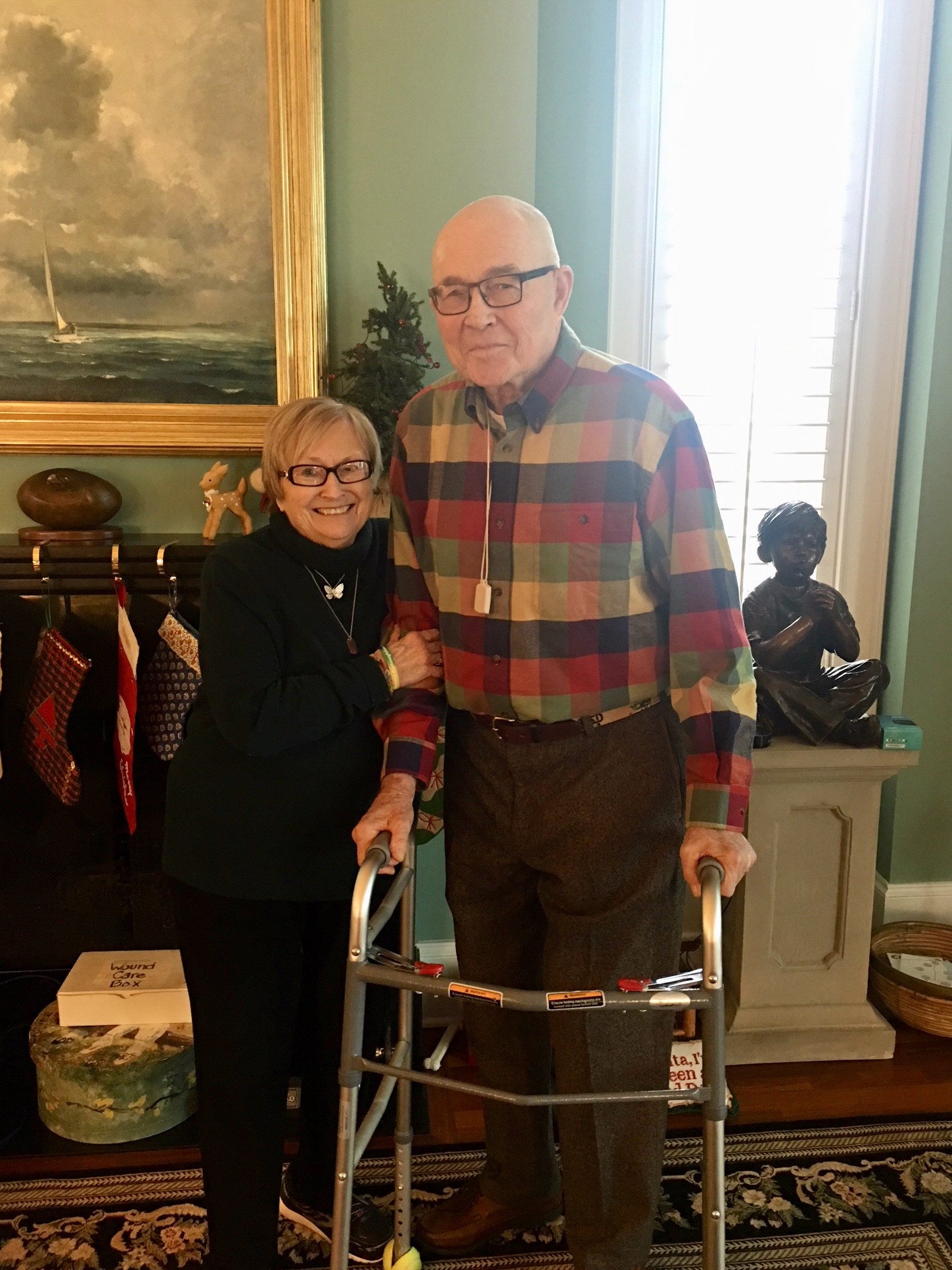 It was the diagnosis of his daughter, Allison, with type 1 in 1983 that led John to take a driving interest in moving T1D research forward.
In addition to being a member of Breakthrough T1D’s Board and founding chairman of the BETA Society, he served on many special committees for both Breakthrough T1D International and Breakthrough T1D’s Illinois Chapter. John and Allison testified before Congress at Breakthrough T1D’s Children’s Congress in Washington, D.C. He received the Person of the Year Award from both the Breakthrough T1D Southern Florida Chapter and the Breakthrough T1D Illinois Chapter. He’s made significant gifts to help fund research for the past 25 years.
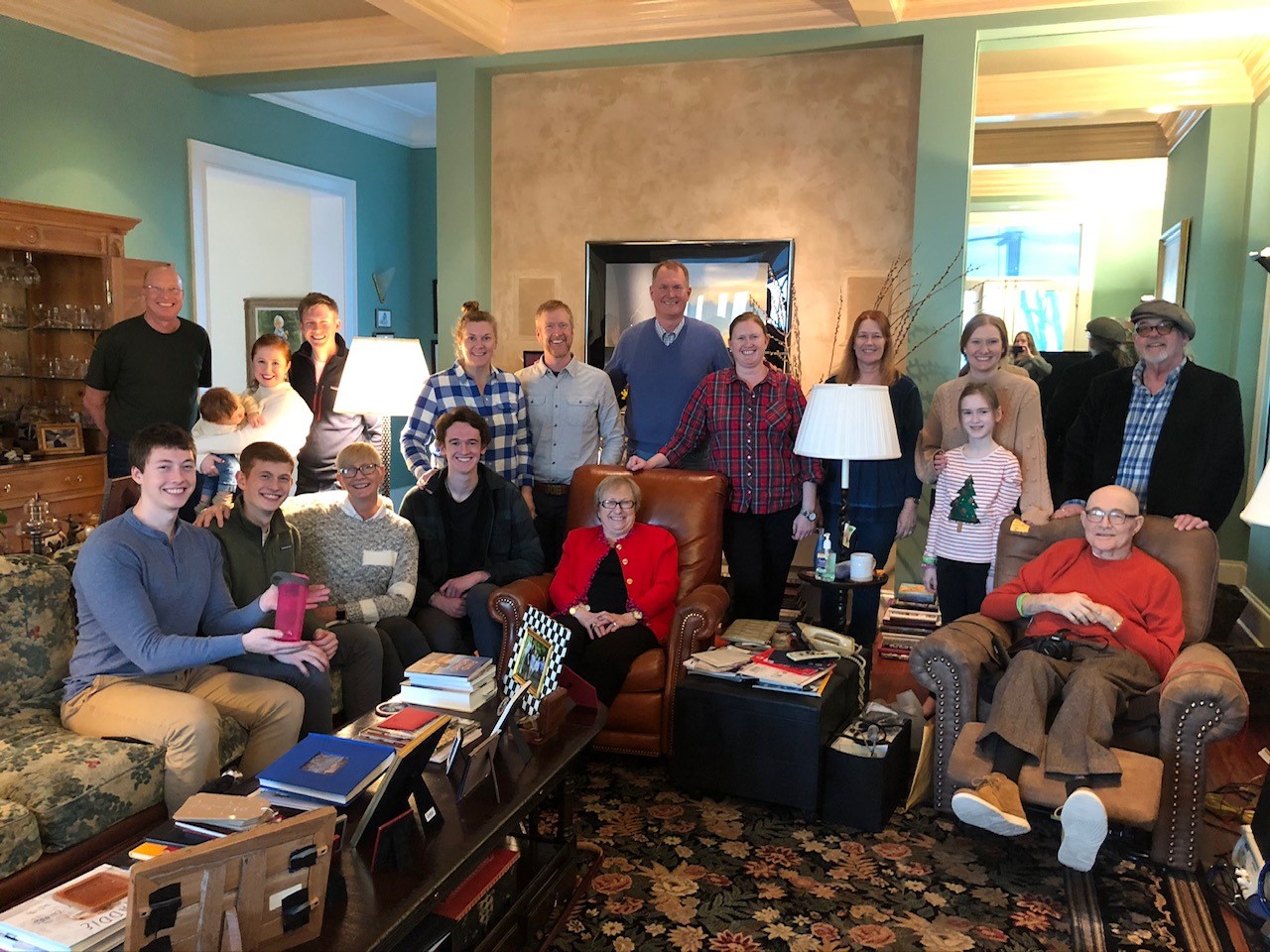 “We are much farther down the path of curing type 1 diabetes because of John’s efforts,” said Joe Lacher, now chairman of the Breakthrough T1D International Board of Directors. “He was incredibly proud of the innovations—like continuous glucose monitors and the artificial pancreas—that benefited John, Allison, and the type 1 diabetes community. It is because of his efforts that people with the disease are living longer and healthier lives and curing type 1 is within reach.”
Love of Life, and Silly Jokes
You know how I said that the remarkable thing about John was his humor? Even in the face of diabetes complications, even in the face of losing his leg, he always had that.
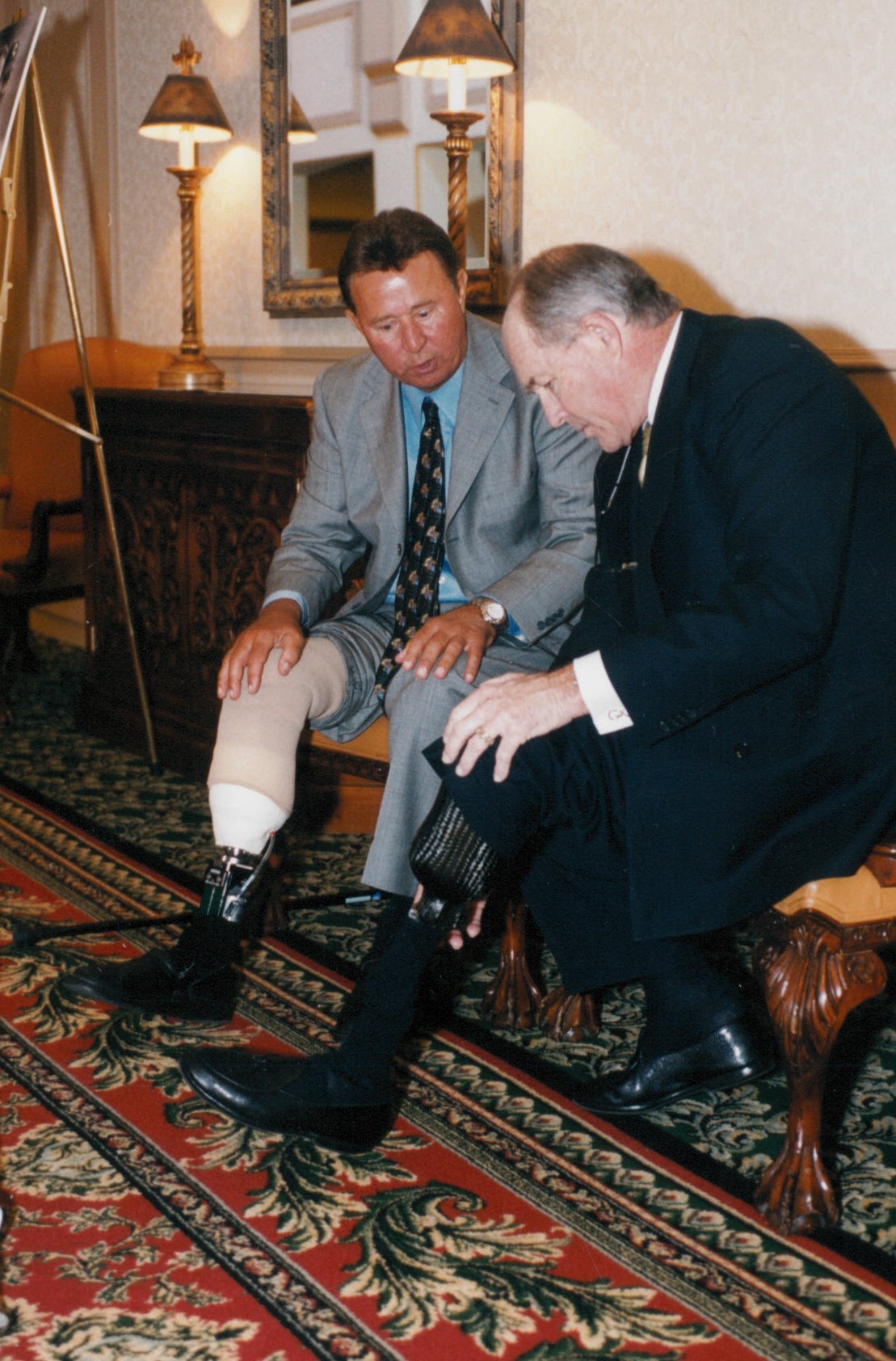
John and Ron Santo, comparing leg prosthetics
“After Dad lost his leg, we went together to get his first prosthetic leg,” recalled Allison. “Sitting in the waiting room, I was very surprised when all this grief welled up inside of me and I just started to weep. There I was, wailing away, and I could tell Dad was very upset because I was so upset. He said, ‘Hon, this amputation is really the best thing that could have happened.’ I just wasn’t in the mood to be spiritually advanced and was about to tell him that I loved his attitude, but I just couldn’t be positive right then. Then he continued, ‘I only worry about athlete’s foot half as much as I used to.’”
“I wasn’t expecting a joke,” said Allison. “I was stunned for a moment, but then we both started laughing through our tears. If others in the waiting room thought we were loons, I didn’t care. Once again, Dad showed his amazing ability to not let his diabetes dampen his spirit.”
Let’s hope that, someday, T1D won’t let anyone dampen one’s spirit again—because we have found cures for the disease. Until that day comes, we will fund research that will get us there.
We also wanted to share a recent video, featuring John, and his amazing spirit. John, you will be missed.
