Sydney Yovic, Breakthrough T1D Chief Strategy Officer and Chief of Staff, dedicated the last 12 years to powering progress and advancing Breakthrough T1D’s mission. Having started as a project manager in the Research department, Sydney has led with inspiring passion and perseverance. Her legacy of meaningful and impactful contributions can be felt around the world.
Thankfully for Breakthrough T1D and the global T1D community, Sydney will continue driving us toward cures as the Chief Executive Officer of JDRF Australia, beginning in August. Before returning to her roots “down under,” Sydney shares what fuels her passion for our mission, the breakthroughs she’s most proud of, and what she looks forward to in her new role. We wish Sydney much success and we look forward to her continued leadership as Breakthrough T1D leads the way to more effective solutions and cures for the global T1D community.
What drives your passion for Breakthrough T1D’s mission?
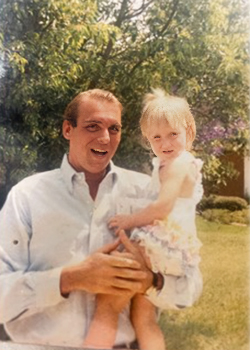
I’m driven by my love for my Uncle Jimmy, who was diagnosed with type 1 diabetes when he was 30. He was a very important part of my young life, but he died from T1D complications at age 35. Losing him was devastating for my whole family. In the last 12 years, my passion has grown because of the thousands of amazing families I have grown to know and love who are impacted by T1D.
What stands out when you think about your career path from a Research project manager to Chief Strategy Officer and Chief of Staff?
I have had the incredible experience of working on many high impact projects over the years with inspiring colleagues and leaders. Thinking back, a few that stand out include:
- In my first role at Breakthrough T1D (then JDRF), I optimized the Research department operating system and data infrastructure, which enabled the department to be nimbler in how we deploy dollars, analyze our portfolio and allowed us to be transparent to our community about where their dollars are going.
- Implementing Breakthrough T1D’s clinical trials connection tool is one of the accomplishments I’m most proud of. Clinical trial participation is one of the single most important things our community can do to accelerate advancements for T1D therapies, including cures. The opportunity to provide our community with a tool that makes participation easier was a true honor.
- Working in the Mission department with Aaron Kowalski, Ph.D., Chief Executive Officer, gave me a chance to step out of the research world and learn more about the diabetes ecosystem. In that role, we formalized partnerships with our peer organizations, including Beyond Type 1, Association of Diabetes Care & Education Specialists (ADCES), Taking Control of Your Diabetes (TCOYD), and The Diabetes Link. I truly believe we’re stronger together.
- Leading our Global Access Team, launching the T1D Index, and partnering with the Helmsley Charitable Trust on enabling access to basic T1D care for the poorest people on the planet was a career highlight and truly life changing. To have a glimpse at the burden of T1D globally was eye opening, and to be able to have just a small part in supporting this work was memorable and meaningful.
- Breakthrough T1D’s most critical asset is our people. As Chief of Staff, the opportunity to support our CEO and Executive Team in leading this great organization has been a privilege.
- Partnering with Aaron Kowalski on developing our future strategic focus was enlightening and unbelievably inspiring. Our role is clear and if we can rally our organization and community around this focus, I truly believe we will accelerate cures for T1D. To have a hand in leading that work was an honor.
What about your Breakthrough T1D experience was most rewarding?
I am passionate about our mission, I have always been intellectually curious, and intrinsically motivated by the need for constant improvement, so I have cherished every opportunity I’ve had to contribute to Breakthrough T1D moving faster toward cures. Traveling to Africa to see how our support is saving lives for the least fortunate people with T1D on the planet was one of my most rewarding experiences. And the people—from the staff who dedicate themselves day in and day out to advancing our mission, to our incredible Board of Directors, to the army of volunteers who will stop at nothing to support us, and our partner organizations and companies who work alongside us to cure T1D. I have had the good fortune of working alongside people who inspire me and have made me better over the years.
What does the future of Breakthrough T1D look like to you?
The future of Breakthrough T1D has never looked brighter. The science is promising, companies are committing billions of dollars on cures for T1D, and Breakthrough T1D is more focused than ever on putting the puzzle pieces together to advance our mission and cure this disease.
What are you most looking forward to in your new role as CEO of JDRF Australia?
I am most looking forward to working with the incredible team down in Australia to drive our collective mission forward. JDRF Australia has been a shining example of accelerating breakthroughs and impact for our community, led by the brilliant Mike Wilson. I look forward to building on the great organization JDRF Australia is today, and using my experience, relationships, and talents to create a velocity of impact for the T1D community both in Australia and around the globe.
JDRF Australia will become Breakthrough T1D Australia later this year.
L-R: Matt Varey, Martin Thibodeau, Royal Bank of Canada Regional President, British Columbia, and Dave Prowten, former Breakthrough T1D Canada President and CEO
Matt Varey, the newly elected Vice Chair of the Breakthrough T1D International Board of Directors (IBOD), brings a global voice as the first Canadian and the first person outside of the U.S. to serve in the role.
Matt, a senior executive at the Royal Bank of Canada (RBC), began volunteering with Breakthrough T1D Canada in 2001. Since then, he has served on Breakthrough T1D’s International Board of Directors and as Chair of the Board of Breakthrough T1D Canada.
He resides with his wife, Dr. Andrea Jack, in Oakville, Ontario, Canada.
Breakthrough T1D sat down with Matt to learn more about his volunteer journey and unique global perspective.
What led you to start volunteering for Breakthrough T1D?
In 2001, I returned to Canada from professional commitments abroad and witnessed colleagues and personal friends whose lives were affected by type 1 diabetes (T1D). I couldn’t just stand by and watch; I had to do anything I could to support them—not just on a personal level but also in a broader capacity. At that time, RBC started a coast-to-coast initiative with Breakthrough T1D Canada, and I recognized I had new ways to make a difference. That started this purposeful journey I have been on with Breakthrough T1D.
What are some of the roles have you had within the organization?
My first involvement with Breakthrough T1D was as a rider in the 2001 Breakthrough T1D Toronto Ride for a Cure. That led to my joining the Toronto Ride cabinet with other business leaders and, later, my becoming Chair of the Breakthrough T1D Ride.
In 2008, I was appointed a Board Member of Breakthrough T1D Canada. From 2014 to 2016, I served as the Chair of Breakthrough T1D Canada. To this date, I remain on the Board of Breakthrough T1D Canada, having taken on different mandates, including Chair of the Audit and Risk Committee and Chair of the Investment Committee.
Since 2016, I have been a Board member of Breakthrough T1D International, serving in various capacities, including member of the Breakthrough T1D International Finance Committee and Chair of the Breakthrough T1D International Audit and Risk Committee.
Do any of your experiences at Breakthrough T1D Canada stand out?
Every moment supporting this meaningful mission is special, and one of the highlights was my role as Chair of Breakthrough T1D Canada from 2014 to 2016. I was directly involved in the purposeful journey of making a difference for over 350,000 Canadians living with T1D, stewarding this cause for Breakthrough T1D Canada as a Canadian. In 2017, in conjunction with the CHIR (Canadian Health Institute Research) and our incredible team under the leadership of former President and CEO of Breakthrough T1D Canada Dave Prowten, we secured a 30-million grant from the Government of Canada to support Breakthrough T1D research and scholastic advancements in Canada.
Do you feel you will offer a unique perspective to IBOD as a person who lives in Canada?
Breakthrough T1D is a global organization on a journey of purpose. I’m excited and grateful to extend the reach of that journey. Canada is world-renowned for diabetes research and breakthroughs—the first genetically engineered human insulin was discovered and manufactured in Canada, after all! It is the responsibility of all Canadians to carry that flame of innovation and discovery, so I feel even more of an obligation as a Canadian on the Breakthrough T1D IBOD to carry that baton forward.
Why are volunteers so essential to our mission?
Grassroots volunteering is empowering and essential to the success of all nonprofit organizations. Breakthrough T1D volunteers keep us close to the cause and the people impacted by the disease—their care, passion, and dedication will help spread our purpose across the globe.
What does the future of T1D look like to you?
We have seen so much progress in recent years, and it will continue at an even faster pace. Cell therapies are an exciting focus area for Breakthrough T1D. I’m eager to see where that research takes us, particularly eliminating the need for immunosuppressant drugs.
Clinical trials show the possibilities for disease-modifying therapies to preserve beta cell function in people newly diagnosed with T1D. Today, we can delay the onset of T1D, and I’m confident tomorrow, we’ll be able to stop it! Scientists are finding ways to make insulin work smarter and work in conjunction with other drugs for better and safer disease management. There are so many ways Breakthrough T1D is improving the lives of people with T1D—treatments and therapies will continue to advance until we reach our ultimate goal: cures.
What does the future of Breakthrough T1D look like to you?
We are purposefully seeking opportunities for Breakthrough T1D to achieve more breakthrough research and facilitate diabetes education and knowledge globally. As an organization with a global reach, it is our responsibility to enable more access to research, education, and awareness in every corner of the world to help everyone understand the disease, navigate it, and support those impacted by it.
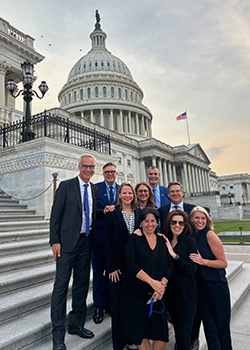
L-R: Neil, Perry, Sydney, Harris, and Lisa Wallack
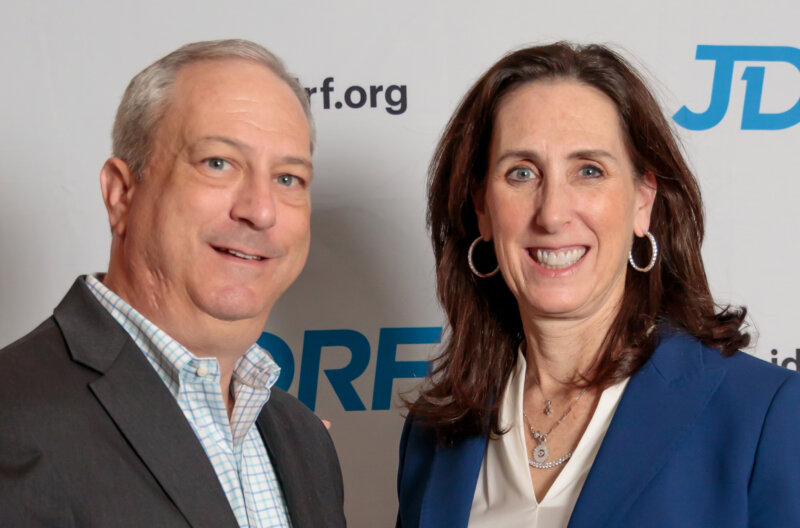
Lisa F. Wallack is the newly elected Chair of the Breakthrough T1D International Board of Directors (IBOD). Her appointment holds distinction: she is the first Chair to have a parent previously serve in the role.
Lisa’s involvement with Breakthrough T1D started in the early 1970s after her younger brother, Scott, was diagnosed with type 1 diabetes (T1D) in 1969 at the age of 18 months. Lisa’s parents, Marilyn and Gerald Fishbone, were among the founders of Breakthrough T1D (then known as “JDF”) in the early 1970s, and her late father served as IBOD Chair from 1983 to 1986. Her passion for T1D advocacy was amplified when her son, Harris, was diagnosed in 2001 at the age of 5.
Lisa is a force at Breakthrough T1D, having served in nearly every volunteer leadership role locally, nationally, and internationally. She was President of the Greater New England Chapter and has been a member of Breakthrough T1D’s IBOD for nine years, helping with governance, strategy, and fundraising. Her leadership efforts were recognized in 2019 with the Jim Tyree Chairman’s Award, and Lisa and her husband, Neil, are being honored at the Breakthrough T1D Greater New England Chapter 2024 Gala for their unwavering dedication to the T1D community.
Breakthrough T1D sat down with Lisa to discuss carrying on her family’s legacy of volunteerism and her hopes for the organization’s future.
Your appointment as the new Breakthrough T1D IBOD Chair must feel like a full-circle moment since your father served in the role more than 30 years ago. How did your parents inspire you to be a leader, and what do you hope to carry on from them?
I grew up watching my parents devote countless hours to building this organization to engage other people impacted by T1D, build a community to support one another, and inspire and enable them to work together to raise awareness and funds to invest in type 1 diabetes cures.
My mom, who founded Breakthrough T1D’s New Haven Chapter and remains an active champion today, has modeled for me how to be an authentic and successful fundraiser driven by our passion to cure our loved ones and the millions of others whose lives have been impacted by T1D.
People say my father always made everyone feel like the most important person in the room. He has inspired me to be a strong but humble leader, to listen to others, and to work to bring out the best in them.
You have extensive experience working with many non-profit boards. What unique perspectives do you hope to bring to the IBOD as a female leader?
Women bring to the table a willingness to listen and collaborate without letting their egos drive the agenda. I want to engage the diverse perspectives of our T1D community and work together to leverage our experiences, insights, and networks to grow Breakthrough T1D’s reach and impact.
What opportunities lie ahead for Breakthrough T1D and the T1D community?
I see Breakthrough T1D being more reflective of the diverse community of those impacted with T1D, engaging people of all ages and stages of life with T1D from different communities around the U.S. and worldwide.
Ninety percent of those living with T1D are adults. We need to show the adult T1D community that we are relevant to them, to demonstrate the role that Breakthrough T1D has played in improving their lives, and to engage them in our quest to conquer the disease for good. We also need to look beyond the United States to strategically engage donors and governments to invest resources in Breakthrough T1D and our mission to accelerate our progress.
You have served in nearly every volunteer role possible at Breakthrough T1D. Do any roles stand out to you?
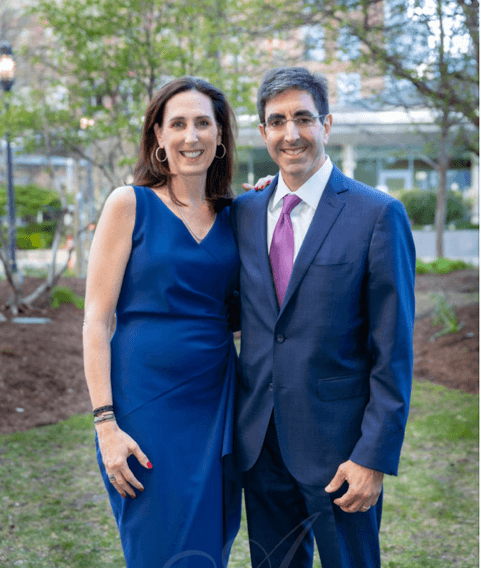
Lisa and her husband Neil, who together have raised over $1.4 million for T1D research
I really enjoy the work I have done at our local Breakthrough T1D chapter, reaching out to newly diagnosed families and introducing them to the Breakthrough T1D community and the progress that we are making.
I’m a passionate fundraiser, asking everyone we know to support Breakthrough T1D each year. My husband Neil’s participation in marathons, Breakthrough T1D Rides, and Ironman competitions inspired many others to support our cause. To date, we have raised over $1.4 million from our efforts!
I enjoyed my many roles on the Breakthrough T1D IBOD, from ensuring our governance structure is as effective and efficient as possible to working with our extraordinary professional leadership team to develop and implement the most impactful strategy to accelerate our mission.
How do you hope to inspire the Breakthrough T1D volunteer community in your new role?
Volunteers are the key to Breakthrough T1D’s success. We are the army that raises the funds needed to achieve our mission goals. We are a community that supports one another, sharing learnings and experiences to help others cope and engage them in our shared fight.
Learning from my parents, I have always valued volunteerism as a way to have an impact and to find fulfillment. Leaning in as a volunteer at Breakthrough T1D has given me a sense of empowerment and the strength, resilience, and hope to know that together we can conquer T1D. Being part of this amazing community and this impactful organization is deeply meaningful and inspiring.
Being involved with Breakthrough T1D for nearly 50 years gives you a unique perspective. How does living with T1D differ from the past to the present? What do you think it will look like in the future?
Lisa and her brother Scott, who has lived with T1D for over 50 years
Breakthrough T1D’s strategic leadership has led to the many advances that have made it safer and easier to live with T1D. When my brother was diagnosed in 1969, there was only urine testing and syringes and no blood sugar testing or insulin pump technology. Today, we have CGMs and closed-loop insulin delivery systems that have reduced the burden of living with T1D for Scott and Harris, as well as for Neil and me as caregivers.
I look forward to the day that Scott, Harris, and everyone with T1D will not need to depend on technology to live. I feel that day is getting ever closer as we drive the development of new disease-modifying and cell therapies that will enable us to prevent and cure T1D.
Lisa Fishbone Wallack, an attorney by training and long-time volunteer leader in the greater New England area, will serve as Breakthrough T1D International Board of Directors (IBOD) Chair, succeeding current Chair Grant Beard. Matt Varey, a senior executive at Royal Bank of Canada (RBC) and dedicated volunteer leader in the greater Toronto, Canada, area, will serve as Breakthrough T1D IBOD Vice Chair, succeeding current Vice Chair Michelle Griffin.
Lisa’s and Matt’s terms as Chair and Vice Chair, respectively, begin Monday, July 1, 2024.
Lisa Fishbone Wallack Continues Family’s Legacy of Championing Breakthrough T1D’s Mission
Lisa is a long-time volunteer leader of Breakthrough T1D’s Greater New England Chapter, first getting involved with Breakthrough T1D when her parents Marilyn and Dr. Gerald Fishbone were among the founders of Breakthrough T1D (then known as “JDF”) after her brother Scott was diagnosed with T1D in 1969 at the age of 18 months, and then increasing her involvement after her son Harris was diagnosed in 2001 at the age of 5.
Locally, Lisa has served as President of the Greater New England Chapter Board and remains active with the chapter. Nationally, she has been a member of the IBOD for nine years and has served as Vice Chair of the IBOD, as Chair of the Talent and Compensation Committee, and as Chair of the Nominating and Governance Committee.
Lisa is an attorney by training and is a volunteer leader at numerous other community organizations, leading annual, capital, and comprehensive campaigns and strategic committees.
Lisa and her husband Neil are proud to be leadership donors to Breakthrough T1D as well as donors to Breakthrough T1D’s T1D Fund. She and her family participate in all Breakthrough T1D programs, including the Walk and Gala, and she supports Neil’s participation in endurance events including the Boston Marathon, the Breakthrough T1D Ride program, and Ironman Triathlons, which collectively have raised more than $1.4 million for Breakthrough T1D.
For their outstanding and continued support of Breakthrough T1D, Lisa and Neil will be honored at the Greater New England Chapter’s Gala on Saturday, April 6.
Lisa graduated with a B.A. in The Biological Basis of Behavior from the University of Pennsylvania and with a J.D., summa cum laude, from the Benjamin N. Cardozo School of Law. In addition to their son Harris, Lisa and Neil have a son Perry and a daughter Sydney. They live in Weston, Massachusetts.
Matt Varey Leads and Engages Breakthrough T1D’s T1D Community
Matt Varey is currently a senior executive at Royal Bank of Canada (RBC)—the largest financial institution in Canada and one of the largest and most trusted in the world.
As Senior Vice President, Matt is responsible for national leadership of more than 4,500 Canada-based employees entrusted with important client life events including personal investments, mortgage financing and group benefits, totaling more than $100 billion of human trust annually. Prior to joining RBC in 1987 and taking on a wide range of senior management and executive positions within RBC, Matt was Vice President and General Manager of RBC Suisse, RBC’s Global Private Banking operations in Geneva, Switzerland.
Matt is an ardent supporter of Breakthrough T1D’s commitment to improving the lives of every person living with T1D and driving breakthroughs to cure the condition. His association and commitment to Breakthrough T1D started in 2001 and he currently serves on the Breakthrough T1D International Board of Directors and Breakthrough T1D Canada Board of Directors. His diverse international leadership experience will be instrumental in continuing Breakthrough T1D’s purposeful global mission and navigating the organization’s path forward in partnership with his Breakthrough T1D Board of Directors colleagues.
His previous Board responsibilities included Chair of the Board of Breakthrough T1D Canada and Board member of the Mutual Fund Dealers Association of Canada.
Matt graduated from McMaster University and currently resides in Oakville, Ontario, Canada, with his wife, Dr. Andrea Jack.
An Era of Unprecedented Breakthroughs
This new leadership coincides with an era of unprecedented T1D breakthroughs championed by Breakthrough T1D.
“We are in a golden age of advanced medicine and continue to see incredible progress in T1D cures research—in both disease-modifying therapies and cell therapies,” said Aaron J. Kowalski, Ph.D., Breakthrough T1D Chief Executive Officer. “As the leaders of our International Board of Directors, Lisa and Matt will ensure we will continue to drive cures and other life-changing breakthroughs forward through scientific advancements and advocacy.”
“We thank Grant and Michelle, who amplified our global efforts to improve lives and accelerate cures. There has never been a more exciting time for our mission as cures are now a matter of when, not a matter of if,” Kowalski said. “The potential for transformation is nothing short of electrifying and we look forward to the progress to come during Lisa’s and Matt’s tenure.”
About the Breakthrough T1D International Board of Directors (IBOD)
IBOD is the governing body for Breakthrough T1D and is tasked with accelerating the organization’s mission progress toward life-changing breakthroughs to cure, prevent, and treat T1D and its complications. Learn more about Breakthrough T1D’s volunteer and staff leadership.
Leading researchers gathered in Florence, Italy, for the annual meeting of the Advanced Technologies & Treatments for Diabetes (ATTD), which took place from March 6 through 9. There were more than 5,000 attendees and featured more than 50 studies presented by Breakthrough T1D-funded researchers, funded now or in the past, working toward preventing, treating, and—one day—curing T1D and its complications.
Here are some of the highlights:
- Consensus Guidance—Pre-Stage 3 T1D: Why is guidance for monitoring people with presymptomatic (early stage) T1D important? As it turns out, there are a bunch of reasons. Chairing the Breakthrough T1D-sponsored session was Anastasia Albanese-O’Neill, Ph.D., APRN, CDCES, director of community screening and clinical trial education, who has been leading the international consensus monitoring guidance when it was announced at ATTD 2023.
Autoantibodies are antibodies against one’s own proteins. In T1D, there are three stages:
– Stage 1: 2+ autoantibodies, blood glucose is normal, no symptoms
– Stage 2: 2+ autoantibodies, blood glucose is abnormal, no symptoms
– Stage 3: 2+ autoantibodies, blood glucose is abnormal, clinical symptoms appear
Led by Breakthrough T1D, more than 70 clinicians have worked together to use an evidence-based approach to determine how often people of different ages and with different numbers of autoantibodies for type 1 should be monitored for changes in blood sugar and autoantibodies. Primary purpose #1: Implementing global screening for early detection of T1D. Primary purpose #2: Preventing diabetic ketoacidosis (DKA), a life-threatening complication due to a shortage of insulin, which a significant percentage of people experience at T1D diagnosis.
They are almost done with the manuscript, and it will be published in the next few months.
- In another, related story, a study showing an artificial intelligence (AI) platform could predict which and when individuals with stage 2 pre-T1D will progress to stage 3 T1D, and design a follow-up plan based on this risk prediction. Wow!
The authors of the paper include Ake Lernmark, D.Med., who received grants from us since 1983 and was a Breakthrough T1D Rumbough Award recipient, and Matthias von Herrath, M.D., who was awarded a postdoctoral fellowship in 1993 and received numerous grants since.
- Adjunctive Therapies: Viral Shah, M.D., presented on adjunct therapies, specifically GLP-1 stimulants, which have the potential to improve blood-sugar control in people with T1D. He highlighted the Breakthrough T1D-funded study, ADJUST-T1D, which is assessing once-weekly semaglutide (Ozempic® / Rybelsus®) in adults with inadequately controlled T1D and obesity using automated insulin delivery (AID), or artificial pancreas, systems. GLP-1 therapies are not approved for people with T1D, but we hope they will be eventually. Read more about our work in bringing these therapies to market.
- T1D Management: Osagie Ebekozien, M.D., of the T1D Exchange, gave an update on T1D management in the United States, presenting data demonstrating a move up in HbA1c outcomes, from 8.8 percent in 2016-2017 to 8.2 percent in 2022-2023. What’s more, HbA1c improvements were seen across all racial groups. This is the first update since 2019, when HbA1c outcomes were worse than they had been since 2010-2012 (7.8 percent in 2010-2012 versus 8.4 percent in 2016-2018). Still, the majority of people with T1D are not meeting their HbA1c targets. Perhaps more people will benefit from continuous glucose monitors (see below) and AID systems.
CGMs have gone from largely clinical use to much broader use among people with T1D. This is undoubtedly attributed to the Breakthrough T1D-funded clinical trial, published in 2008, demonstrating that the use of a CGM helps people with T1D to avoid dangerous blood-sugar highs and lows.
A study by T1D Exchange found that approximately 78% of the 48,000 people in the study used CGMs. This includes individuals who use CGM (45%) and hybrid closed-loop technology (33%), which includes the use of CGM. In the study, the mean HbA1c in 2021–2022 was lower at 8.4%. This compared with the mean HbA1c in 2016–2017 of 8.7% (0.3% improvement; P < 0.01). Over the same period, the percentage of people with diabetes using a CGM, insulin pump, or hybrid closed-loop system increased (45%, 12%, and 33%, respectively).
- Replacement: In a Breakthrough T1D-sponsored session chaired and introduced by Esther Latres, Ph.D., Qizhi Tang, Ph.D., who is part of the Breakthrough T1D Center for Excellence in Northern California, presented on barriers to adoption of cell therapy (lack of renewable cell sources, poor engraftment, and immunosuppression) and the field’s status in addressing those barriers. She drew attention to her own efforts to engineer stem cells that can evade immune rejection and remain alive after transplantation, including using thyroid gland co-transplantation, provision of proteins that help the graft survive, and removing specific immune markers to make the beta cells resistant to rejection.
This year’s Advanced Technologies & Treatments for Diabetes (ATTD) meeting, taking place in Florence, Italy, from March 6 through 9, will have 50 presenters who are or were Breakthrough T1D-funded researchers working toward preventing, treating, and—one day—curing T1D and its complications.
Several members of the Breakthrough T1D research and advocacy teams will be there. Here are select highlights of Breakthrough T1D-funded research that will be featured:
- Replacement: There will be several sessions on stem cell-derived islet transplantation, including:
- Camillo Ricordi, Ph.D., University of Miami, who will be presenting on challenges and potential solutions to stem cell-derived islet therapy as a cure for T1D;
- A Breakthrough T1D-sponsored session chaired and introduced by Esther Latres, Ph.D., who will gather Peter Senior, M.D., Ph.D., University of Alberta, Canada, Qizhi Tang, Ph.D., University of California, San Francisco, and José Oberholzer, M.D., University of Virginia and co-founder of CellTrans, which had the first FDA-approved cell replacement therapy (Lantidra™) in the United States in 2023;
- A plenary Industry Symposium sponsored by Vertex Pharmaceuticals, who will likely provide an update on VX-880, a stem cell-derived islet replacement therapy in T1D for individuals with hypoglycemia unawareness, in combination with immunosuppressive therapy to protect the cells from rejection. As of the last presentation at the European Association for the Study of Diabetes (EASD), parts A and B had been enrolled, and half of the people treated were insulin independent. We’ve heard that Part C, where participants receive a full dose of the therapy, has completed enrollment, so we’re excited to learn more about this treatment.
- Prevention: In another Breakthrough T1D-sponsored session chaired by Anastasia Albanese-O’Neill, Ph.D., APRN, CDCES, Director of Community Screening and Clinical Trial Education, presenters Moshe Phillip, M.D., Schneider Children’s Medical Center and Tel Aviv University, Israel, Linda DiMeglio, M.D., Indiana University, Kirstine Bell, Ph.D., University of Sydney, Australia, and Emanuele Bosi, M.D., Fondazione Centro San Raffaele, Italy, will talk about the international consensus monitoring guidance for presymptomatic (early stage) T1D; the latter will talk about his experience in Italy, which recently approved a law allowing for national pediatric screening for T1D.
- Immune Therapies: Laura Jacobsen, M.D., University of Florida, Jennifer Sherr, M.D., Ph.D., Yale University, and Michael Haller, M.D., University of Florida, will talk about predictors of responders vs. non-responders of immune therapy, Tzield™ (teplizumab-mzwv) in the real-world setting, and the cost-effectiveness of immune therapy, respectively.
- Health Equity: ATTD will have several sessions on health equity in the United States and around the world, with Renza Scibilia, Breakthrough T1D, and Antoinette Moran, M.D., University of Minnesota, talking about the T1D Index, the most accurate and comprehensive data representation of T1D around the world, and the key interventions required to address health disparities experienced by people with type 1 diabetes. Lori Laffel, M.D., Joslin Diabetes Center, and Stuart Weinzimer, M.D., Yale University, will talk about strategies to facilitate technology use among disadvantaged individuals.
Leading researchers gathered in Long Beach, California, for the 16th annual meeting of the Network for Pancreatic Organ Donors with Diabetes (nPOD), which took place from February 19 through 22. nPOD is now the world’s largest tissue bank dedicated to the study of the human pancreas in type 1 diabetes (T1D), and researchers, clinicians, people with T1D, and other leaders in the diabetes space attended—more than 200—to hear results from the latest advances using nPOD samples.
Here are some of the highlights:
- Breakthrough T1D staff Esther Latres, Ph.D., vice president of research at Breakthrough T1D, and Josh Vieth, Ph.D., director of research focusing on disease-modifying therapies, co-chaired a session on the cellular mechanisms in and around T1D:
-
- Breakthrough T1D-funded Tim Tree, Ph.D., presented on islet-specific immune responses, with the goal of developing a tool to measure them in clinical trials. He discovered that islet-specific immune cells have distinct characteristics and pointed to the potential for correlation of immune cell characteristics with (i) age of onset, (ii) clinical progression, and (iii) genetic protection.
-
- Melanie Shapiro, Ph.D., who has a Breakthrough T1D postdoctoral fellowship, identified an immune cell receptor pattern in blood moving throughout the circulatory system (as opposed to blood in a specific organ, like the pancreas) that was augmented in T1D, compared to blood that was non-T1D. This pattern was used to run multiple analyses, and all of the associations showed increased frequency of this pattern and gene mutations for T1D.
-
- Carla Di Dedda, Ph.D., presented on her Breakthrough T1D grant on the glucose transporter GLUT1. Seven to eight percent of pancreas transplant recipients have a recurrence of T1D without rejection of their organ donation, and Dr. Di Dedda focused on GLUT1 as a culprit. She found that in people with T1D, immune cell proliferation was significantly reduced when GLUT1 was blocked, which will be instrumental in future research on the roles of GLUT1 in T1D.
- Miguel Medina-Serpas, who is a graduate student with Todd Brusko, Ph.D.—who received early-career scientist grants from 2008 through 2017 from Breakthrough T1D and three grants since—presented on visual-spatial gene expression on paired pancreas and lymph node slices. He found that it could reliably identify functional compartments of the pancreas. This could help to validate gene targets for therapeutic use.
- Esra Karakose, Ph.D., from the laboratory of Andrew Stewart, Ph.D., at the Icahn School of Medicine at Mount Sinai, focused on the action of beta cell regenerative drugs and which subtypes are responsible for treatment. Her lab found that the most responsive is the cycling alpha cell, which cluster between alpha and beta cells. She explained that cycling alpha cells become “beta-like cells” in response to treatment with the drugs DMSO and harmine, which may restore the beta cells that are lost in people with T1D.
Since being established in 2007 with a $7 million grant from Breakthrough T1D, nPOD has collected and processed more than 50,000 tissue samples from organ donors who had or were at increased risk for T1D. nPOD is conducting more than 250 studies to unlock the mysteries of the human pancreas. For more information on nPOD, you can visit their website here.
You are helping us advance toward preventing, treating, and—one day—curing T1D. Find out more about Breakthrough T1D here.
Leading researchers from around the world will gather for the 16th annual meeting of the Network for Pancreatic Organ Donors with Diabetes (nPOD), taking place from February 19-22 in Long Beach, California. The latest advances—using nPOD samples—will be discussed, including:
- Enhanced T Cell Receptors: There are several presentations on T cell receptors (TCRs)—which recognize a foreign substance and cause the T cell to attack—to restore immune tolerance in T1D. Immunocore, a company with an investment from the Breakthrough T1D T1D Fund, will present on ImmTAAI, a TCR that binds to the beta cell with an antibody that down-regulates the immune system. Also with support from the T1D Fund is Abata Therapeutics, which will present on their TCR that will restore immune tolerance by bringing regulatory T cells to the islet cells and promote immune suppression.
Since it was established in 2007 with a $7 million grant from Breakthrough T1D, nPOD has collected and processed more than 50,000 tissue samples from organ donors who had or were at increased risk for type 1 diabetes, and has provided, without cost, these tissues to researchers around the world.
- Change the Current Staging Model: In a Breakthrough T1D-support-bonanza, going back to 1992 with a postdoctoral fellowship to Alberto Pugliese, M.D.—who is now the co-director of nPOD—we will hear from several investigators who will debate on when T1D begins and whether we should modify the current staging model. The current staging model has three parts: Stage 1 is the presence of 2+ autoantibodies—antibodies against one’s own body—but blood sugar is normal; Stage 2 is 2+ autoantibodies and the blood sugar is abnormal; Stage 3 is the onset of clinical symptoms. We can’t wait to hear the outcome of this discussion!
- Clinical Trials: Breakthrough T1D staff Esther Latres, Ph.D., vice president of research at Breakthrough T1D, and Josh Vieth, Ph.D., director of research focusing on disease-modifying therapies, are co-chairing a session on clinical trials. Breakthrough T1D-funded Tim Tree, Ph.D., will present on a test to determine islet-specific T cells; Melanie Shapiro, Ph.D., who has a Breakthrough T1D postdoctoral fellowship, will discuss immune risk and changes to the TCR repertoire; Carla Di Dedda, Ph.D., will present on her Breakthrough T1D grant on the glucose transporter GLUT1; and Guido Sebastiani, Ph.D., will discuss microRNAs—which play an important role in regulating gene expression—associated with T1D.
Keep up with the latest updates and exciting news from the nPOD annual meeting on Facebook (@BreakthroughT1DHQ), X (formerly Twitter) (@BreakthroughT1D), and LinkedIn.
Editor’s note: Written by guest blogger, Grace Bennett, Social Media Manager at Breakthrough T1D. The opinions expressed by the author are her own and are not necessarily those of JDRF, its leadership, employees, or supporters.
Life with T1D means you don’t only observe your birthday, holidays, and anniversaries. You also usually in some way mark your “Diaversary” or the day your life with T1D began.
I’ve always felt a bit conflicted about my Diaversary. While I feel like I should do something to recognize a day that completely changed my life, it’s obviously not something I necessarily want to celebrate.
Who in their right mind would celebrate being diagnosed with a condition that adds significantly to one’s mental load (and that’s just the tip of the iceberg!)?
I tend to quietly acknowledge my Diaversary with my family and then move on. That changed a few weeks ago, when I realized that life with type 1 diabetes (T1D) has taught me a lot of life lessons that I might not have learned otherwise. So, here are the 19 things I’ve learned over the 19+ years I’ve lived with T1D.
- Pretending something isn’t happening is not going to make it go away. This was my approach to T1D management during my teenage years, 0/10 recommend. Also, sorry mom and dad!
- If you overpack extra supplies, you likely won’t need them. You know when you will? The one time you try to “pack light.”
- Most of the time, people who suggest homeopathic “cures” like cinnamon for your T1D mean well, even though they are misguided. Using these moments as an opportunity to educate instead of getting defensive will feel a lot better than jumping down someone’s throat.
- Just because your illness is largely invisible doesn’t mean it’s easy. You’ll hear a lot of “at least it’s T1D and not *insert scarier illness here*” but the truth is, no one “wins” in a contest of who has it worse. Any illness or health condition is difficult in its own way.
- I really do not care if people see my T1D tech. I promise when you look back on photos from your eighth grade dance, the tubing from your insulin pump being visible won’t be one of things you cringe at.
- Pack the number of low treatments you think you’ll need and then double it. You’ll thank me later.
- Don’t get caught up in comparison to other people living with T1D who seem to be doing better than you are. This is the furthest thing from a “one size fits all” disease.
- Your blood sugar will get low at the MOST inconvenient times.
- Find community, whether it’s in-person or online. JDRF’s CEO, Dr. Aaron Kowalski says frequently that the T1D community is “the best club you never want to be a part of” and he is spot on.
- Don’t beat yourself up if you’re having a bad blood sugar day, especially an inexplicable one.
- Speaking of, don’t forget that more than just carbohydrates and exercise impact blood sugar. Stress, having a cold or the flu, hormonal changes, and any other number of variables can also throw your HbA1c off kilter.
- Don’t be afraid to advocate for yourself and ask questions at your medical appointments. If something doesn’t feel or seem right to you, mention it!
- Don’t fall into the trap of defining your whole life as “good T1D days” and “bad T1D days.” If you tried your best, even if your blood sugar wasn’t exactly where you wanted it to be, remember your best is enough.
- The field of T1D research IS progressing faster than ever before in the most exciting ways. Working at Breakthrough T1D and getting to see not just the big milestones, but also the small pieces of progress being made is something that’s been an eye opener.
- Your friends and family who don’t live with T1D won’t ever fully understand how it feels, but that doesn’t mean they don’t want to. Try your best to keep that in mind.
- It’s in no way, shape, or form your fault that your body doesn’t do something it’s supposed to.
- There really is no such thing as a stupid question when it comes to T1D—if you aren’t sure about something, ask!
- T1D burnout is real and can look different for everyone. If you find yourself struggling, I promise that asking for help will make you feel a massive wave of relief.
- Feel your feelings; resentment, anger, frustration, joy, sadness, etc., are all part of life with T1D. There is no wrong way to feel about life with a chronic illness.
As Breakthrough T1D’s Social Media Manager, I can confidently say that the T1D community has a tremendous amount of wisdom about life with T1D to share beyond the points I’ve listed here. Don’t forget to go check out the comments on our Social Media channels for more advice from this incredible group of folks!
Leading diabetes researchers gathered for the annual conference of the International Society for Pediatric and Adolescent Diabetes (ISPAD), which took place from October 18-21 in Rotterdam, The Netherlands, and had more than 1,600 attendees—its largest-ever audience.
More than 45 studies were presented by Breakthrough T1D researchers, funded now or in the past, working to find cures for type 1 diabetes (T1D) and improve the lives of those living with the condition today. Here are some of the highlights:
- Presented by Kevan Herold, M.D., and published in the New England Journal of Medicine, the phase III PROTECT clinical trial investigated whether Tzield™ (teplizumab-mzwv) can slow the loss of beta cells and preserve beta cell function in newly diagnosed (stage 3 T1D) children and adolescents ages 8-17. Per the study results, it can. Participants treated with Tzield had:
- Significantly greater stimulated C-peptide levels (a measure for insulin secretion) compared with placebo
- Tended to use lower insulin doses to meet glycemic goals
- Experienced higher rates of predefined clinical remission, defined as participants who achieved HbA1c ≤6.5% and insulin daily dose ≤0.25 U/kg/day
- Conclusion: Tzield has the potential to slow the progression of Stage 3 T1D and improve clinical parameters in newly diagnosed individuals.
Dr. Herold has been supported by Breakthrough T1D since the late 1980s. In his research, he showed that he could prevent autoimmune diabetes with an immune-modifying antibody (which, later, became a humanized version, Tzield) and was the lead on the clinical trial that demonstrated that Tzield could delay the onset of T1D in people almost certain to develop the disease. In November 2022, Tzield was approved by the FDA to delay the onset of the disease (Stage 3) in at-risk (Stage 2) individuals ages 8+.
- In a joint ISPAD-Breakthrough T1D symposium about global pediatric diabetes development, we heard from Tom Robinson, who heads the T1D Index. The Index leverages machine learning models to estimate the incidence of T1D around the globe. According to the Index, in access to care and quality of life most significantly affect low- and middle-income countries. Robinson pointed to four key areas of intervention to address the global T1D crisis, which ISPAD and Breakthrough T1D are working to address:
- Manuela Battaglia, Ph.D., discussed impediments in the T1D therapy research and development pipeline and how INNODIA—an international public-private partnership, with Breakthrough T1D and others support—is addressing the problem. Established in 2015, INNODIA was launched to accelerate the development of new disease-modifying therapies for T1D by fostering the creation of centers of excellence and by building a global network of members and experts. INNODIA now has four intervention clinical trials, paving the way for the development of novel treatments to prevent and find cures for T1D.
- In the complications space, Farid Mahmud, M.D., a Breakthrough T1D grantee since 2017, presented on the need for better blood biomarkers to earlier identify diabetic kidney disease. In his Breakthrough T1D-funded ATTEMPT clinical trial, which examines the impact of SGLT2 inhibitors (such as Jardiance®) on adolescents and young adults with T1D, he is investigating whether decreasing how much glucose is absorbed by the kidney is beneficial in diabetes-related complications. The study has already enrolled 98 out of 100 participants and is set to complete in mid-2024.
The next conferences we’ll be covering are the:
- Network for Pancreatic Organ Donors with Diabetes (nPOD), from February 19-22, 2024, in Long Beach, California
- Advanced Technologies & Treatments for Diabetes (ATTD), from March 6-9, 2024, in Florence, Italy (and online)
Stay tuned for a precap and recap of these terrific meetings!
