It’s a rainy day in Philadelphia, but the mood at CRC 2026 could not be sunnier! The attendees are positively buzzing (seriously) with how timely and impactful this meeting is. It’s the right time for a meeting focused exclusively on type 1 diabetes (T1D), and the good news is we won’t have to wait years for the next one!
CRC 2027 will take place from October 15-17 in Washington, D.C., USA. Stay tuned for more information!
Breakthrough T1D’s Clinical & Research Congress
The inaugural Breakthrough T1D Clinical & Research Congress (CRC 2026) is a groundbreaking forum uniting clinicians, researchers, scientists, healthcare professionals, industry leaders, and the T1D community. Attendees will explore cutting-edge advances in T1D science, clinical care, and more. Designed to foster collaboration and spark innovation, CRC 2026 will provide translational insights, interactive learning, and meaningful dialogue, all with one shared goal: improving lives and driving toward a world without T1D.
Islet Cell Therapies vs. Disease-Modifying Therapies: Which is Better?
Spoiler alert: There’s no right answer—there are pros and cons to both!
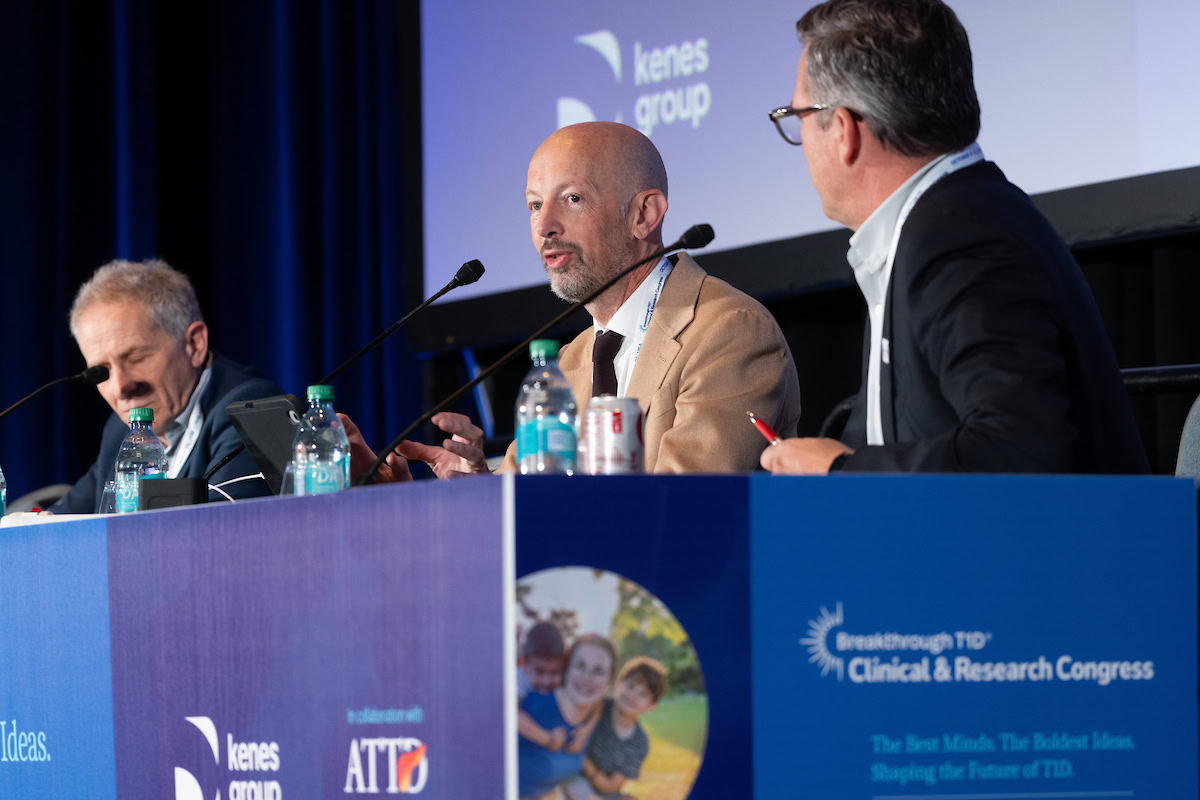
Peter Senior, MBBS, Ph.D. (University of Alberta) and Colin Dayan, MBBS, Ph.D. (University of Birmingham) debated the safety, costs, monitoring, potential long-term outcomes, and considerations for global access of disease-modifying therapies (DMTs) versus islet cell therapies.
Dr. Dayan made the case that islet cell therapies may be effective in the short-term, but in the long-term they might not be scalable, affordable, or deliverable globally. On the flip side, emerging DMTs may allow for a one-and-done treatment—meaning they could be far more affordable and easily accessible, especially in the pediatric population. DMTs also address the root cause of T1D from the start, rather than “putting a patch on it” later.
On the flip side, Dr. Senior argued that there are significantly more people living with established T1D compared to early-stage T1D or even within 100 days of a diagnosis—meaning that islet cell therapies, especially manufactured versions that are scalable, must be the solution since it is too late to preserve beta cells in most people. He also made the point that islet cell therapies can give patients more beta cells than a DMT would—and more beta cells meanings better outcomes, including freedom and flexibility.
Someone in the audience chimed in with an important point: Ideally, DMTs and islet cell therapies can one day be combined to maximize the benefits of each (e.g., restore insulin production and address autoimmunity against beta cells).
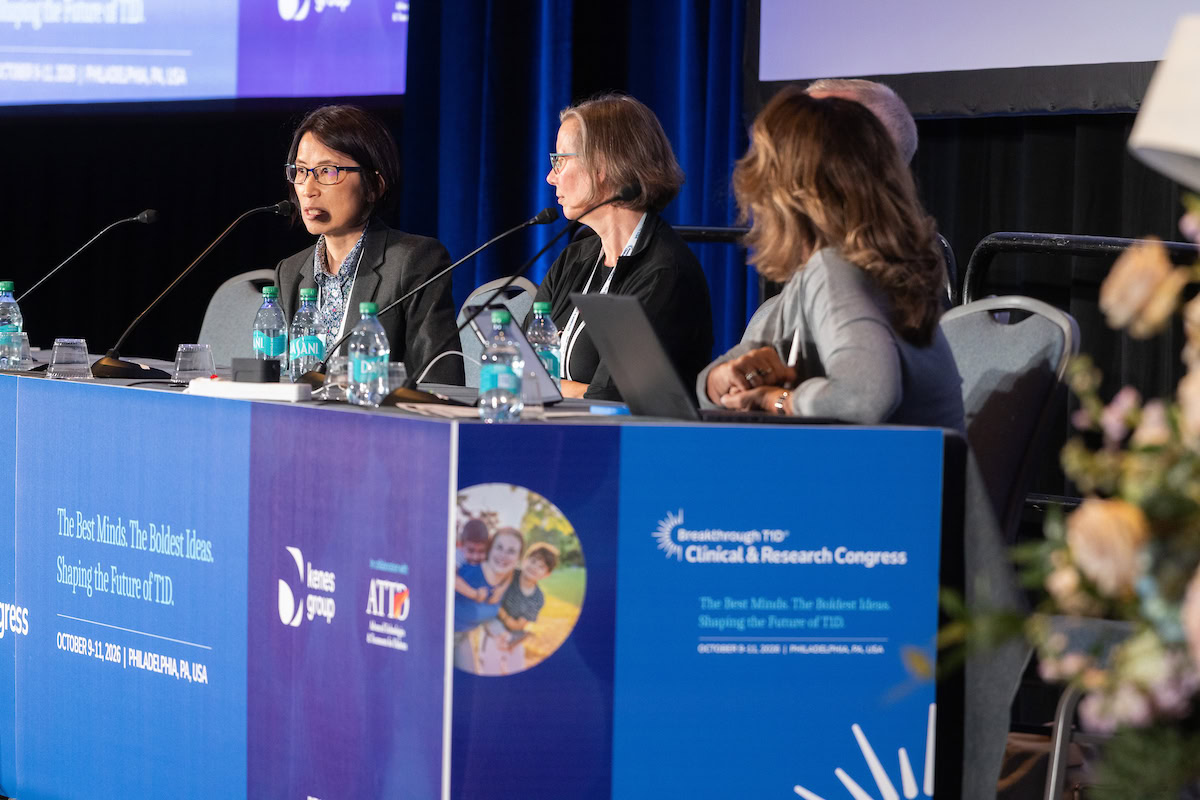
Peter Senior, MBBS, Ph.D. (center), participates in a panel focused on islet cell therapies and disease-modifying therapies with Breakthrough T1D CEO Aaron Kowalski, Ph.D., (right) and Colin Dayan, MBBS, Ph.D. (left).
Key Takeaway
Both DMTs and islet cell therapies have a future in T1D—ideally one day used in combination—and have several benefits for different ages and stages.
Islet Cell Therapies
The Burden of Immunosuppression
Sabarinathan Ramachandran, Ph.D. (University of Minnesota) gave an update on immunosuppression with islet transplants. The key challenge is these transplants work, but over the long term, 50-70% of recipients lose function. He outlined the approaches investigators are taking to reduce the burden of these necessary drugs, like gene-editing, encapsulation, and engineered microenvironments.
Cellular Reprogramming
Hongkui Deng, M.D. (Peking University) presented a talk on cellular reprogramming, which involves treating cells with specific factors that turns them into a different cell type. Dr. Deng and his team developed a new, non-traditional strategy—which he called “chemical reprogramming”—that uses small molecules (instead of proteins) to reprogram cells. This approach is more efficient and easier to accomplish in the lab than traditional cell reprogramming approaches.
Using chemical reprogramming, Dr. Deng’s team turned a person’s fat cells into islet cells. The team then transplanted these islet cells back into the same person under the anterior rectus sheath, a large, easily-accessible, and well-vascularized area (meaning transplanted islets have access to blood vessels carrying nutrients and oxygen).
This person achieved substantial improvements in time in range and blood-sugar management, and no safety issues were identified during continuous monitoring. They were also already on immunosuppressants for a liver transplant. Now, more than one person has received this treatment, and Dr. Deng and his team are monitoring them closely.
Dr. Deng’s lab is also working on artificial intelligence (AI)-based approaches to scale up chemical reprogramming for islet cell therapies in addition to researching new ways to remove the need for immunosuppression.
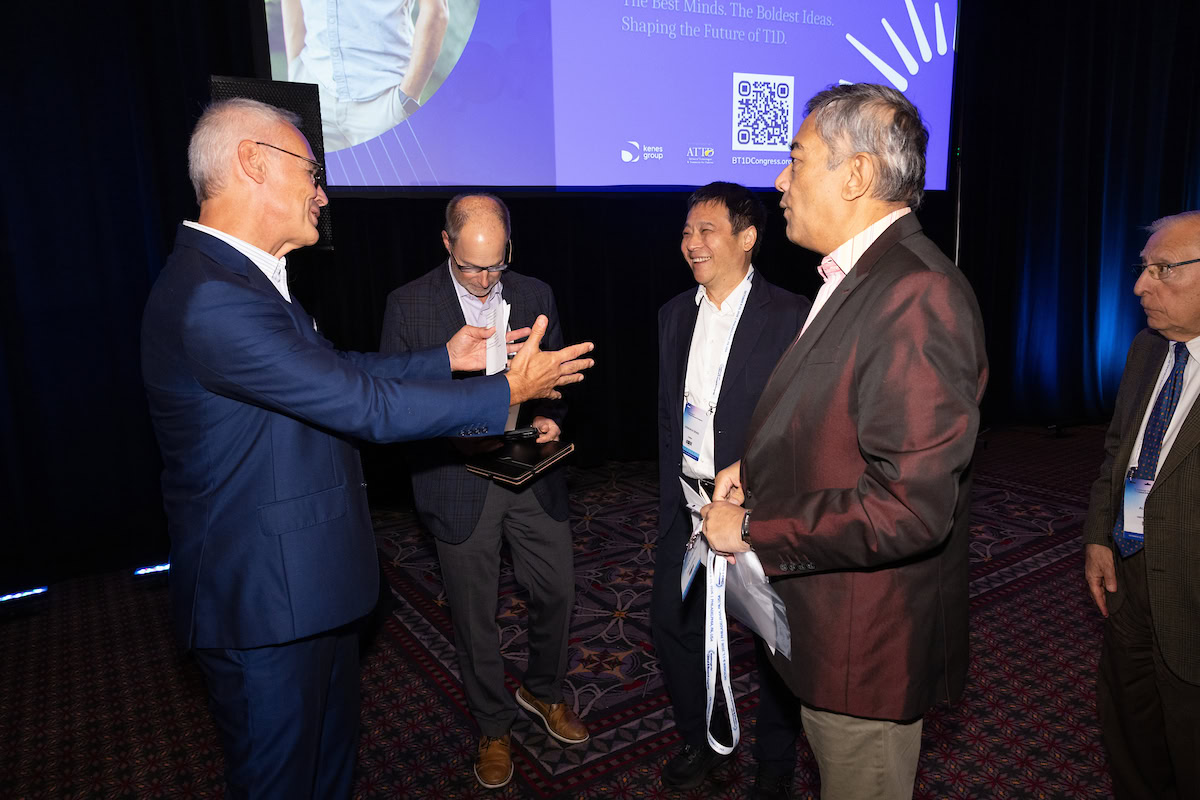
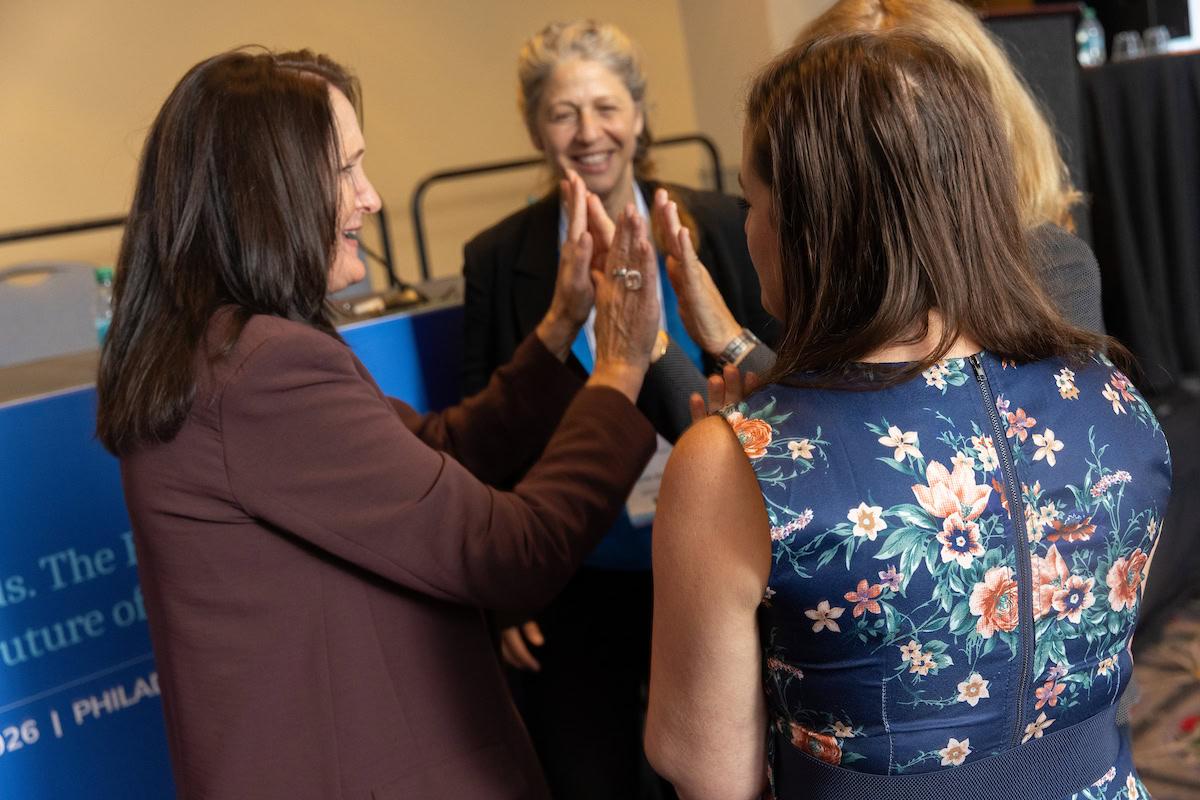
Breakthrough T1D Chief Medical Officer, International Thomas Danne, M.D. (left), Jon Odorico, M.D. (second from left), Hongkui Deng, M.D. (center), and Breakthrough T1D Chief Scientific Officer, Sanjoy Dutta, Ph.D. (right), in between sessions.
Key Takeaways
Reducing the need for immunosuppression is a key focus area for islet cell therapies.
Chemical reprogramming of a person’s own fat cells into islet cells is a new and promising approach to restoring insulin production in people with T1D.
Disease-Modifying Therapies
Clinical Trial Design Post-Teplizumab
Presenter: Jason Gaglia, M.D. (Joslin Diabetes Center, Harvard Medical School)
We know that teplizumab (Tzield) works, but individual responses can be variable and there may be an optimal treatment window.
Now that we have an approved DMT, the question becomes: Do we use teplizumab as a comparator in clinical trials instead of a placebo, so that everyone who participates has a chance to benefit?
If we do, people may not want to participate if they can get teplizumab at their clinic and covered by insurance—or they may not want teplizumab at all because of the 14-day infusion, side effects, or other reasons.
With this in mind, we do not have a clear answer yet about whether teplizumab should be used in place of a placebo in DMT clinical trials.
Disease-Modifying Therapies Highlight: Breakthrough T1D-Funded Work
Peter Gottlieb, M.D. (Barbara Davis Center for Diabetes) presented on the T1D Cures Accelerator, a global effort to develop new biological markers (or biomarkers) that can accelerate DMT clinical trials. This consortium represents a group of experts from academia, industry, the T1D community, regulatory agencies, and healthcare. The team plans to aggregate data from several DMT trials, perform large-scale AI-based analyses on available datasets, and identify and validate new biomarkers.
Carmella Evans-Molina, M.D., Ph.D. (Indiana University School of Medicine) talked about mechanisms driving beta cell stress. Her team showed that activating a protein called SERCA can delay diabetes development in animal models of T1D. She worked together with Neurodon, a company that previously received an Industry Discovery and Development (IDDP) award from Breakthrough T1D, who developed the small molecule targeted to SERCA.
Bruce Verchere, Ph.D. (University of British Columbia) is a member of The Breakthrough T1D Canucks For Kids Fund Centre of Excellence in Canada. He presented his lab’s work on a nanoparticle-based method to target a specific subset of immune cells called antigen-presenting cells (APCs). APCs activate the immune cells that are responsible for destroying beta cells, and this approach reprograms them to stop doing this. In animal models, this prevents T1D.
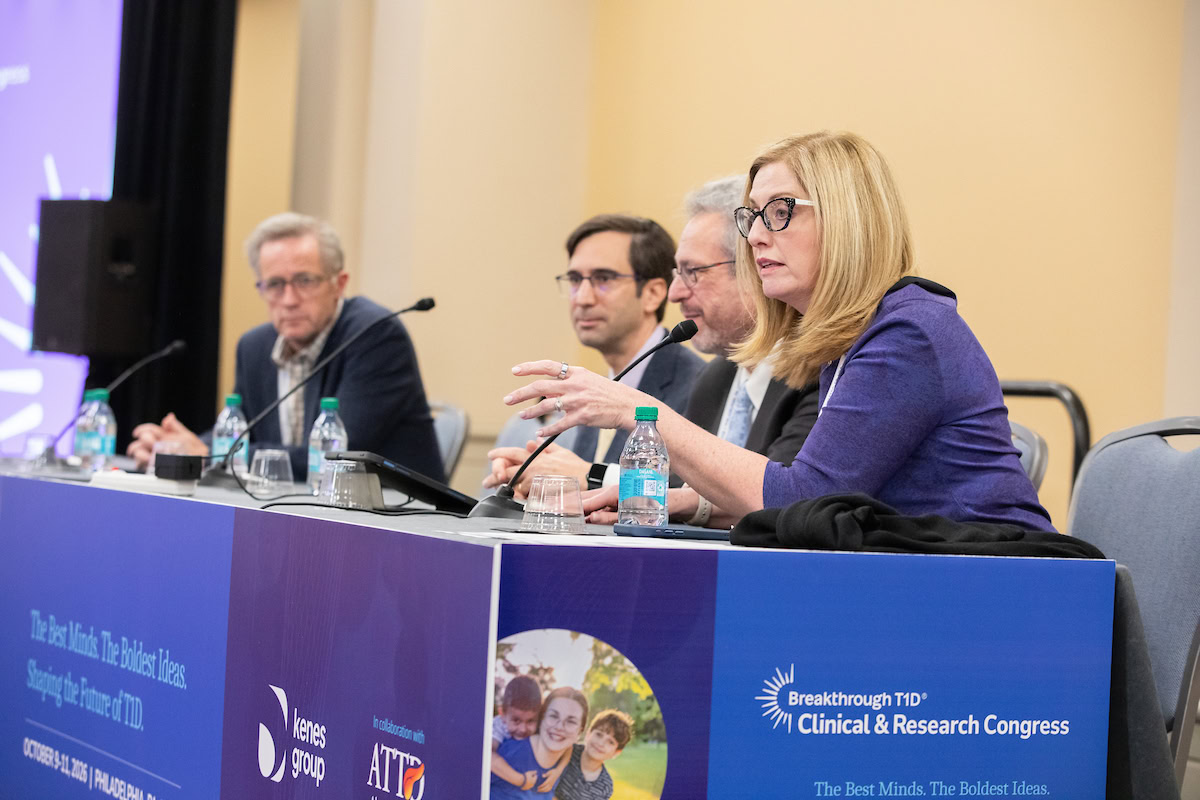
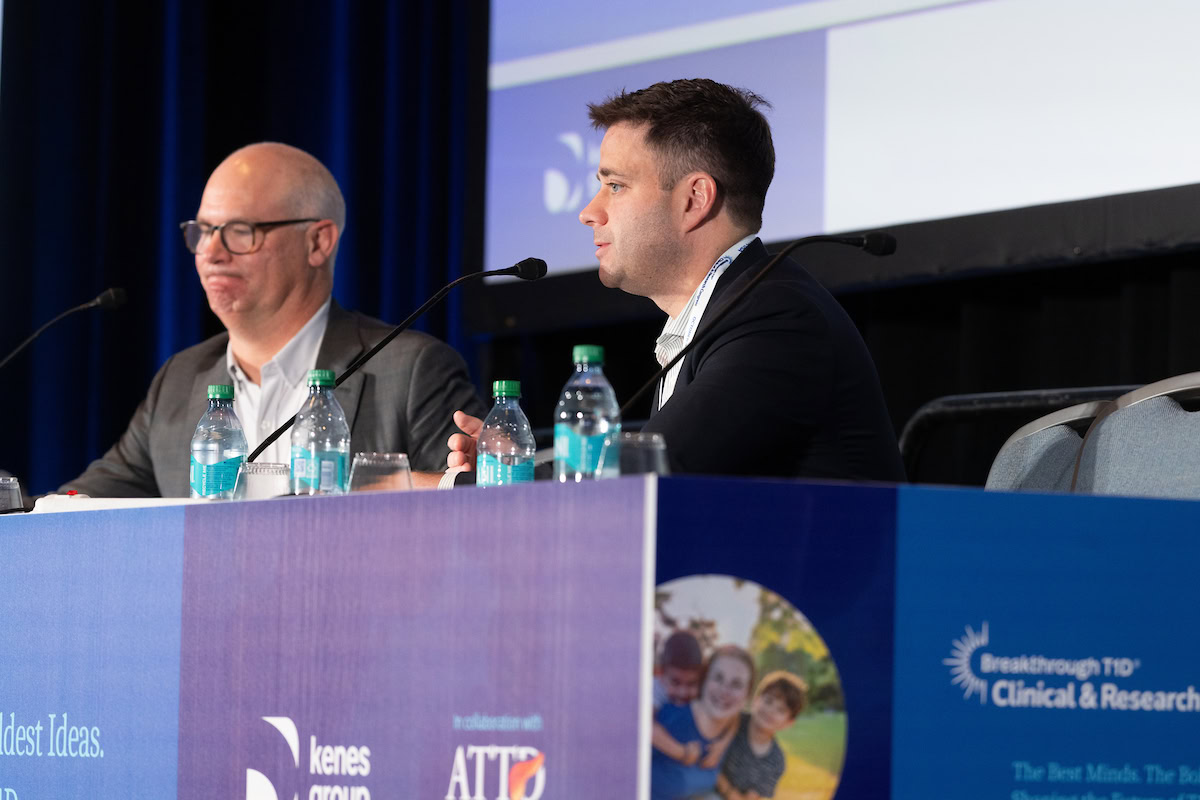
Carmella Evans-Molina, M.D., Ph.D. (right), participates in a panel focused on DMTs with Bruce Verchere, Ph.D. (left),Jason Gaglia, M.D. (second from left), and Peter Gottlieb, M.D. (third from left).
Key Takeaways
Teplizumab could one day be used instead of a placebo in DMT clinical trials, but we need to work out the pros and cons for participants first.
A new global consortium will help accelerate DMT development.
We’re learning more about how beta cells function in the autoimmune environment, and new approaches targeting beta cells or immune cells are showing promise in preclinical studies.
Early Detection
Advanced Screening Technologies
Katsiaryna Prystupa, M.D. (German Diabetes Center) presented a machine learning analysis to sort more than 600 newly diagnosed people with T1D into three groups based on shared features like autoantibodies and insulin resistance. One group is associated with diagnosis earlier in T1D progression, when more beta cells are remaining. This work could help identify who may benefit most from DMTs.
Callie Zaborenko, Ph.D. (Indiana University School of Medicine) analyzed electronic health record (EHR) data and genetic information from adults to see whether a genetic risk score could help identify people at a higher risk of developing T1D. Adults with the highest scores were nearly ten times as likely to be diagnosed with T1D as adults with mid-range scores. This could one day help guide who is offered autoantibody testing, though more research is needed first.
Alice Carr, Ph.D. (University of Alberta) talked about the best way to assess if DMTs are working in early-stage T1D trials. Using data from TrialNet and TEDDY studies, she presented her work showing that oral glucose tolerance tests (OGTT) can estimate insulin secretion as a measure of beta cell responsiveness. This may better capture risk of T1D progression, which can help researchers choose the best participants for DMT clinical trials and understand if DMTs are working.
Kathleen Gillespie, Ph.D. (University of Bristol) and her team screened nearly 20,000 adults for islet autoantibodies and followed those with confirmed autoantibodies in the T1DRA study. The prevalence of adults who had multiple autoantibodies was similar to that in children, which supports screening in adults. The team is developing an approach to group people with a single autoantibody into tiers based on progression risk, which could help tailor individualized monitoring.
Brittany Bruggeman, M.D. (University of Florida) analyzed the TEDDY study to better understand the decline in function in the part of the pancreas that helps digest food (the exocrine pancreas) in children at risk for T1D. In kids who developed islet autoantibodies earlier, a biomarker of exocrine pancreatic function (FE-1) was lower in infancy, before autoimmunity against beta cells. Combined with other tests, this biomarker may one day help researchers better predict T1D progression.
Key Takeaway
We already have screening capabilities to identify people in early-stage T1D, and research into advanced screening technologies will allow us to better predict T1D progression and response to DMTs.
Medical Affairs
Communication and Shared Decision-Making: Old and New Challenges in T1D
The diabetes care team is made up of many disciplines. This session was presented by three psychologists and a physician focusing on the behavioral and educational aspects of T1D.
The first speaker, Ellen O’Donnell, Ph.D. (MassGeneral Brigham and Harvard Medical School) discussed the best communication tactics for children and adults in early-stage T1D. Telling a person, and their family, about an early-stage T1D diagnosis is a life-changing conversation. Thankfully, we know the best ways to communicate this information: using metaphors, graphics, and pictures, and taking into account the full context of the family (e.g., their family structure, experience with T1D, and baseline mental health). Not only do we know the best ways to have these conversations, but there are tools and resources for clinicians and healthcare providers.
Next up, Jane Speight, Ph.D. (Deakin University, Australia) talked about a topic that we need to dedicate more time to: diabetes stigma. T1D is a chronic illness, and living with it is a deeply emotional experience. When HbA1c stops being information and starts being a measure of self-worth, it has negative results. It can cause teens, parents, and adults with T1D to feel dehumanized, which has a direct result on physical and mental health.
Some alarming stats:
4 in 5
adults with T1D report experiencing diabetes stigma
98%
of teens and young adults with T1D report experiencing diabetes stigma
1 in 5
adults with diabetes report discrimination—being treated differently—because of their diabetes
Diabetes stigma is associated with lower well-being and less confidence (self-efficacy) in managing diabetes, in addition to other worse outcomes:
2-3x
the odds of having an HbA1c above 9%
Up to 2x
the likelihood of diabetic ketoacidosis (DKA)
But there is something we can do. A positive, self-fulfilling feedback loop predicated on stigma-free communications can help people do better—and this needs to be considered in every conversation.
The final speaker, Carol Levy, M.D. (Icahn School of Medicine at Mt. Sinai) got into pregnancy and T1D. We know that women with diabetes require much tighter targets to reduce maternal and fetal health risks. These risks are real and difficult to manage for the mother and the physician—and they start pre-conception and continue post-partum. Insulin requirements change dramatically throughout gestation, and there is limited real estate on the body for continuous glucose monitors (CGMs) and insulin pumps. Even with the better tools that we have today, pregnancy outcomes remain suboptimal.
The main point: Flexibility, creativity, and understanding are needed. Pregnant women are thinking about lots of things—not just their T1D management. They don’t all want to wear a pump.
Centers of Reference
Breakthrough T1D Chief Medical Officer International, Thomas Danne, M.D., Ph.D. has a very clear way of describing our challenge for the future. Cures for T1D are planes, in the air. We’re still building the plane, but it’s in the air right now. We must ensure there is a runway so that when the plane is ready to land, it can.
Right now, we’re building that runway through our Centers of Reference program, which is explored in a presentation by James Shaw, M.D. (Newcastle University).
Centers of Reference are expert multidisciplinary T1D care centers that are preparing healthcare professionals (HCPs) around the world to administer manufactured islet cell therapies to people with T1D. The goal is to make sure that expert clinical teams—who are already doing islet cell transplants at low scale—are ready to integrate these therapies into clinical practice at their institutions and train others, once they have regulatory approval.
Breakthrough T1D has created several working groups to help move these therapies forward now so they’re ready when cell therapies are (at scale). These include:
Training and education, including a clinician training program launched with ATTD in Europe and the American College of Diabetology in the US.
Clinical access, including reaching community clinicians, countering myths and fears, and peer review between Centers.
Harmonizing clinical care, including team composition, patient screening, monitoring, and follow-up.
Benchmarking and validation, including quality-assured registries and peer review.
Centers of Reference are a work in progress. They’re going to take time to get off the ground—but all the right people are working on it today.
Key Takeaways
T1D management and care—from communicating with early-stage T1D, to reducing stigma, to working with pregnant women with T1D—requires flexibility, understanding, and care, and the full experience of the person with T1D must be considered.
We are not waiting until cell therapies are ready to prepare the clinical infrastructure for them. That work has begun!
That’s a wrap on CRC 2026! Keep an eye out for one more recap tomorrow with everything you need to know about this inaugural conference.
This article was written by Sandy Vogt, Ph.D. and Brian Herrick.
We are two days into the first ever Breakthrough T1D Clinical & Research Congress! Day 1 was full of optimism and excitement about the meeting—it’s really ALL type 1 diabetes (T1D), which is unique—and the future of treatments and therapies for this community.
Breakthrough T1D’s Clinical & Research Congress
The inaugural Breakthrough T1D Clinical & Research Congress (CRC 2026) is a groundbreaking forum uniting clinicians, researchers, scientists, healthcare professionals, industry leaders, and the T1D community. Attendees will explore cutting-edge advances in T1D science, clinical care, and more. Designed to foster collaboration and spark innovation, CRC 2026 will provide translational insights, interactive learning, and meaningful dialogue, all with one shared goal: improving lives and driving toward a world without T1D.
Peter Senior, MBBS, Ph.D. (University of Alberta), a longtime Breakthrough T1D-funded collaborator, spoke at the beginning of the first session and his comments really set the tone for the day.
“People want to not have diabetes anymore. I think we need to keep that in mind as we move toward solutions.” – Dr. Peter Senior
CRC is 100% Focused on the Lived Experience
A guiding principle of this meeting is that it is centered around the lived experience of people with the disease. To drive this home, all of the parallel sessions were introduced by community members, sharing a story about their lives with T1D.
One video focused on how artificial intelligence (AI) has the potential to transform diabetes technology—fewer calculations means less daily burden. Here’s another perspective from Daniel Newman:
That’s our whole goal: people doing better. And CRC was filled with nearly 1,000 people—all of whom are working toward that shared goal.
With that in mind, let’s hear about the solutions, innovations, and cutting-edge work shared on day 2! As a reminder, every session is not included here—and we encourage you to attend next year to get the full CRC experience!
Check out our video recap of CRC 2026 day 2!
Unmet Needs: Where We Are and What’s Still Needed for People with T1D
The day kicked off with a symposium sponsored by Vertex Pharmaceuticals that explored the unmet needs and emerging treatments in T1D. Vertex is developing a manufactured islet cell therapy for T1D, which is currently in a phase 1/2/3 clinical trial. Jennifer Sherr, M.D., Ph.D. (Yale School of Medicine) and Dr. Peter Senior shared a wealth of data showing that outcomes have been improving for people with T1D year by year with new technology, primarily automated insulin delivery (AID)—but people still aren’t doing well enough. Even with the best technology, a study showed that a significant percentage of people still aren’t achieving ideal glycemic control, and some are still experiencing severe hypoglycemic events.
In summation: Technology has absolutely improved care, but there are still unmet needs to be addressed.
Keynote Lecture: Building Bridges Between Research, Clinical Care, and the Lived Experience in T1D
Michael Haller, M.D. (University of Florida) gave a broad overview of how the T1D screening and care paradigm has evolved—and what the future looks like. There are three key “bridges” we need to finish building: screening as clinical care, therapy options for every age and every stage, and clinical trials built around the lived T1D experience.
Key takeaways:
We have years of data on how to screen, the populations to prioritize, the methods that yield the highest successful screenings, and the benefits.
The priority today is scaling up: building the infrastructure to screen more people thoughtfully while keeping the experiences of the screened families front and center.
The paradigm has already shifted; it was managing the disease, and now it’s modifying the disease.
People with T1D need to be at the center of clinical trial design, and encouraging participation is key to catalyzing more therapy options for all.
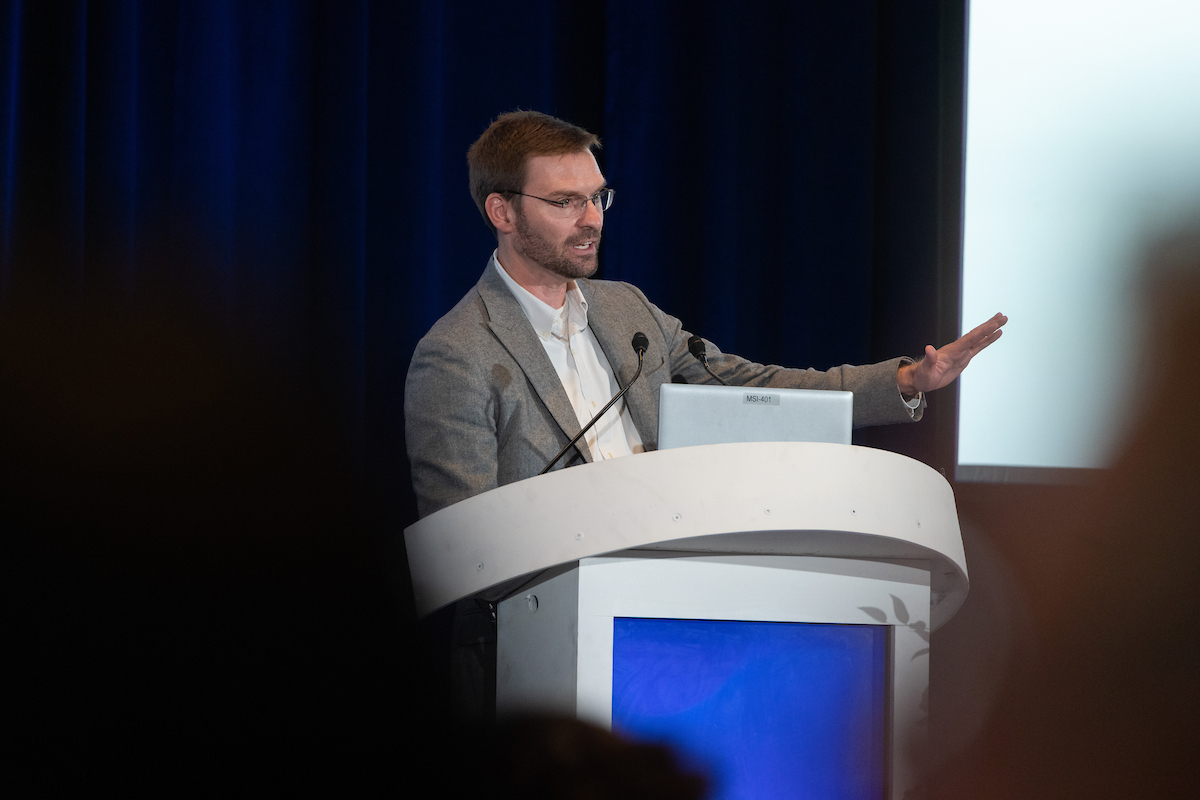
Michael Haller, M.D., presents at Breakthrough T1D’s Clinical & Research Conference 2026.
Islet Cell Therapies
Protecting Transplanted Islets
The first islet cell therapy session of the day, chaired by Valeria Sordi, Ph.D. (IRCCS Ospedale San Raffaele), focused on how we can take manufactured islets and keep them safe from the immune system post-transplant without the need for immunosuppression. Islet cell therapy is a promising treatment for T1D but there are major barriers—one of which is the requirement for immunosuppression. This session tackled tactics for removing that barrier.
Juan Alvarez-Dominguez, Ph.D. (University of Pennsylvania) presented how he and his team developed a method to watch the cells mature by placing electrodes inside the lab-grown islets. They have learned that the cells mature very quickly—like a switch being flipped on—versus gradually.
Audrey Parent, Ph.D. (University of California, San Francisco) and Sonja Schrepfer, M.D., Ph.D. (Cedars-Sinai Medical Center)both tackled gene editing using different approaches. Dr. Parent focused on modifying existing cells to protect them from the autoimmune response while Dr. Schrepfer’s work was centered on making the transplanted cells immune-evasive. These two tactics can potentially be used together in a complementary manner.
Zimislecel: Meaningful Benefits for Participants
Michael Rickels, M.D. (University of Pennsylvania) gave an update on the clinical trial for Vertex’s manufactured islet cell therapy zimislecel. All 12 participants have improved blood-sugar levels and no severe hypoglycemic events, and 10 of 12 people are off external insulin. Participants report significantly less diabetes distress and fear of hypoglycemia, demonstrating that islet cell therapies like this have a real impact on the day-to-day experiences of living with T1D.
Islet Cell Therapies Highlight: Breakthrough T1D Centers of Excellence (CoE)
This session was chaired by Esther Latres, Ph.D. (Senior Vice President of Research at Breakthrough T1D).
The Breakthrough T1D Center of Excellence in Northern California:Qizhi Tang, Ph.D. (University of California, San Francisco) talked about research themes run by 13 investigators at three institutes: mechanisms and models of T1D, rebalancing the immune system (including in the context of islet transplants), and innovating in islet cell therapies.
The Breakthrough T1D Canucks For Kids Fund Centre of Excellence: Megan Levings, Ph.D. (University of British Columbia) presented on this CoE’s work on engineering better islet cells for transplants, protecting remaining and transplanted islet cells, and measuring and reducing beta cell stress.
The Breakthrough T1D Barbara Dewey Cammett Center of Excellence in New England:David Harlan, M.D. (University of Massachusetts Chan Medical School) discussed this Center’s goal—promote beta cell resilience to stressors. They plan to accomplish this by identifying new therapeutic targets, understanding early if these targets can translate to humans, and improving models and assays to help answer their questions.
From Left: Qizhi Tang, Ph.D., Megan Levings, Ph.D., David Harlan, M.D., and Esther Latres, Ph.D., during the Breakthrough T1D Centers of Excellence panel focused on islet cell therapies work being done at the centers.
Key Takeaways
We know more than ever about the maturation of transplanted beta cells, and there are many promising techniques to protect them from the immune system that are working their way through the research pipeline.
Real-life experiences show that islet cell therapies like zimislecel have benefits beyond blood-sugar control, including less daily stress.
Centers of Excellence are Breakthrough T1D-funded research teams uniting expertise and resources to collaborate and share ideas, better understand complex T1D biology, and tackle some of the biggest challenges in islet cell therapies.
Disease-Modifying Therapies
Research Supported by the T1D Fund
William Quinn, Ph.D. (SAB Bio) presented phase 1 clinical data from four people treated with SAB-142 (humanized ATG), a DMT designed to delay or prevent progression of T1D. The therapy targets immune cells responsible for the destruction of insulin-producing beta cells while also preserving those that help balance the immune system. SAB-142 has a favorable safety profile and preserved C-peptide in all participants—while actually enhancing C-peptide in 3 of 4 people. Enrollment is ongoing for the SAFEGUARD clinical trial for people within 100 days of a T1D diagnosis, and next up is the Breakthrough T1D-funded PRISE-ATG study, led by Dr. Haller, which will study SAB-142 in people within two years of a diagnosis.
Taylor Triolo, M.D. (Barbara Davis Center for Diabetes) presented safety data around CNP-103, a DMT in clinical trials developed by COUR Pharmaceuticals. CNP-103 works by restoring balance to the immune system by training it to stop recognizing beta cells as a threat. In a study with 32 participants, early data show favorable safety and tolerability, with no severe adverse events. The trial is expanding and efficacy data is expected in late 2026 or 2027.
Key Takeaway
Data from emerging DMTs in clinical development are demonstrating favorable safety and some early hints of efficacy.
Early Detection
A session chaired by Linda DiMeglio, M.D. (Indiana University School of Medicine) tackled early risk assessment for T1D. How do we find people earlier? How can we ensure they are able to take advantage of the myriad benefits of knowing they have early-stage T1D?
First up, Andrea Steck, M.D. (University of Colorado) talked about using continuous glucose monitoring (CGM) to assess T1D risk in addition to family history and autoantibody results. And there are some specific findings on how these can be used together:
More time above 140 mg/dl is indicative of disease progression.
Individuals who spend more than 15% of the day above 140 had about a 60% chance of progressing to stage 3 T1D within two years, versus about 15% for those below that level.
Combined tools improve prediction validity. A risk score using CGM data, HbA1c, family history, and autoantibody results sorted people into low risk (about 5% chance in two years), medium (13%), and high (48%).
For children in the middle stage, spending over 10% of the time above 140 signals risk of progression, and over 20% means it’s time to evaluate for stage 3 T1D.
Last up was Greg Lipak (HealthShare Exchange), who discussed how we can use AI to find individuals who may be misdiagnosed in electronic health records.
Early Detection Highlight: Breakthrough T1D-Funded Work and Staff Making an Impact
Richard Oram, M.D., Ph.D. (University of Exeter) discussed the use of genetic risk score to identify individuals who merit observation for progression into T1D. This means looking at their DNA to calculate a risk score, which correlates to risk of developing T1D. However, it is just risk. Someone with a high-risk score may not develop T1D, but a person with a low-risk score very well could. It’s another tool we can use to help people understand their status so they can potentially reap the benefits of early detection.
Anastasia Albanese-O’Neill, Ph.D., APRN, CDCES, Senior Vice President of Medical Affairs, took part in a panel discussing screening and early detection. The message remains the same: We’re making progress, but we need to screen more people. Global consensus is building among different aspects of screening, including the recent Breakthrough T1D-led consensus monitoring guidelines. However, we must ensure screening comes with clear, consistent communications with an action plan, so families can also have a plan.
Anastasia Albanese-O’Neill, Ph.D., APRN, CDCES (left) celebrates a successful session during Breakthrough T1D’s Clinical & Research Congress.
Key Takeaways
Early detection is more important than ever—but screening is just the first step. Confirming and monitoring are essential to turn screening results into action.
There are more tools to find individuals at risk and in early-stage T1D than ever.
Improving Lives
Diabetic Ketoacidosis (DKA): Transforming Care with Continuous Ketone Monitoring
Presenters: Richard Bergenstal, M.D. (HealthPartners Institute), Jennifer Sherr, M.D., Ph.D. (Yale School of Medicine), and Medha Munshi, M.D. (Harvard Medical School); supported by Abbott
DKA is still a risk for people of all ages living with T1D because available ketone measurement methods are not widely used—and this drives up healthcare costs.
Dual glucose-ketone monitoring will help guide care in real-time, warning people in advance so they can take action before an emergency happens.
This technology could be particularly transformative for families, young adults transitioning to independence, people taking SGLT inhibitors, and older adults with other conditions or cognitive decline.
In a session chaired by Viral N. Shah, M.D. (Indiana University School of Medicine) that spanned multiple topics, Kalie L. Tommerdahl, M.D. (University of Washington) presented research on obesity and kidney disease in youth with T1D. Her data suggested that obesity and glycemic control affect T1D kidney health independently, which supports the notion that both need to be addressed in people with T1D for the best possible kidney outcomes.
Improving Lives Highlight: Breakthrough T1D and the T1D Fund Making an Impact
Thomas Strack, M.D. (vTv Therapeutics) presented on quantifying the population with clinically meaningful hypoglycemia-related burdens from people using AID. The results: over half of the adult T1D population have clinically meaningful hypoglycemia complications, and new interventions are needed to optimize care.
Breakthrough T1D has been studying the use of GLP-1s in T1D for years—and there are myriad benefits despite the drug still not being approved specifically for T1D. Piaopiao Li, Ph.D. (Emory University) presented data from a paper looking at real world data (not from clinical trials) to investigate how GLP-1s can affect cardiovascular disease and chronic kidney disease in T1D. The results were clear: This class of medications appear to reduce the risk of cardiovascular and renal complications without significant safety concerns. Dr. Li noted that the results should be validated in clinical trials.
Breakthrough T1D Chief Medical Officer International, Thomas Danne, M.D., Ph.D., discussed a new publication led by the Breakthrough T1D Medical Affairs team, titled “Roadmap to Fully Closing the Loop to Optimize Health in Type 1 Diabetes,” published in Diabetes Technology and Therapeutics. This manuscript defines a person-centered framework to evaluate fully closed-loop systems as they continue to evolve, emphasizing the need to simultaneously support people living with T1D in attaining glycemic outcomes while also meaningfully improving quality of life.
Key Takeaways
Dual glucose-ketone monitoring can help people take action when ketones are rising before it becomes an emergency.
Adjunctive therapies, including GLP-1s and SGLT inhibitors, have the potential to safely reduce heart and kidney complications in people living with T1D—but large trials have not been done yet.
We’re getting closer to fully closing the loop in AID systems—and Breakthrough T1D and collaborators published a roadmap to help us get there.
Advocacy
Expanding Global Access to T1D Treatments and Care
Professor Partha Kar (Portsmouth Hospitals NHS University Trust) talked about improvements in access to T1D care in India, ranging from education, to insulin, to glucose testing strips. Renza Scibilia (Senior Director of Global Responsibility) also mentioned the key role of Breakthrough T1D in advocating for better access, psychosocial health, and more.
Carlos Antillón, M.D. (CEDYN, Mexico) presented on how global access and T1D innovations must advance together, and clinicians can help overcome barriers through advocacy, evidence generation, personalized treatment, HCP and patient education, and understanding what patients can realistically afford and sustain.
Princess Padmaja K. Parmar (The Friends of Mewar) gave an inspiring talk on how global access to T1D supplies must be dependable and how lived experiences should guide all future work around T1D. She also highlighted the role of Breakthrough T1D in advancing research and access on a global scale.
David Beran, Ph.D. (University of Geneva) gave a presentation around how barriers to access to T1D therapies and devices persist worldwide due to product shortages or discontinuations, with challenges in low- to middle-income countries largely driven by supply chain issues, technology costs, and more. Global advocacy and policy changes can help overcome these barriers.
“Breakthroughs matter when they reach people. Policy matters when it changes daily life. Partnerships matter when they continue beyond the conference room.” – Princess Padmaja K. Parmar
Key Takeaway
Access to T1D technology and devices is still a challenge around the world, but organizations like Breakthrough T1D are advocating for change and policies so that access can catch up with innovation.
Medical Affairs
Enrolling in Clinical Trials
Kimber Simmons, M.D. (University of Colorado) hit on a key point (and Breakthrough T1D organizational priority): clinical trial recruitment.
It is well established that clinical trials take far too long to enroll. It is also true that a new T1D diagnosis is an incredibly difficult situation for families to navigate. They must weigh placebo, randomization, side effects, and more. Then, the family has to make a decision quickly to successfully enroll within the clinical trial window.
Dr. Simmons and her team in Colorado rolled out a program to educate families about beta cell preservation in their one-week follow-ups. The results were striking. Among interested families, 24% of families enrolled in a clinical trial within 8 weeks.
Healthcare Professionals with T1D: A Unique Perspective on T1D Care
Andrew Welch, M.D. (University of Cincinnati) talked about disruptions in diabetes supplies, including two calls to action: 1) diabetes tech companies should give people the quantity of supplies they actually need, taking into account early failures and 2) we need transparent real-world data about supply interruptions and their consequences.
Sarah Westen, Ph.D. (University of Florida) and Marissa Hitchcock, BSN, RN, CDCES (Children with Diabetes) discussed how language matters when talking to people with T1D, especially when it comes to communicating the risk of complications and reducing diabetes stigma. Dr. Westen also told her own T1D story, including how Breakthrough T1D has supported her personally—and professionally!
Kathryn Nagel, M.D. (Maine Medical Center) presented on how we need more data and better care for women with T1D who are pregnant, especially through psychosocial support and technologies for pregnancy-specific glycemic goals.
Medical Affairs Highlight: Breakthrough T1D-Funded Research
Emma Ospelt, MPH (T1D Exchange) presented her work on how pediatric endocrinology practices talk about clinical trial opportunities with newly diagnosed families, highlighting challenges around timely enrollment within the 100-day post-diagnosis window. The study identified different workflows in various centers, including formal processes that include initiating clinical trial conversations early versus clinics that lack dedicated staff or resources to have these conversations. In both scenarios, successful enrollment of newly diagnosed individuals in clinical trials is still not guaranteed, and clinical centers need additional support and resources to overcome these recruitment challenges.
Key Takeaways
Recruiting for newly diagnosed trials is difficult, but with the right education, it can be done!
Providing people with T1D with the best care possible goes beyond the clinic—it’s ensuring access to diabetes supplies, using person-centered language, and supporting women with T1D who are pregnant.
Look out for another article coming soon covering day 3 of CRC 2026. Keep an eye on our News & Updates webpage!
This article was written by Sandy Vogt, Ph.D., and Brian Herrick.
Hello from Philadelphia, PA! We could not be more thrilled that, after years and years, we have finally kicked off our inaugural Breakthrough T1D Clinical & Research Congress (CRC). This groundbreaking event is focused entirely on type 1 diabetes (T1D), and it’s happening right now!
Breakthrough T1D’s Clinical & Research Congress
The inaugural Breakthrough T1D Clinical & Research Congress (CRC 2026) is a groundbreaking forum uniting clinicians, researchers, scientists, healthcare professionals, industry leaders, and the T1D community. Attendees will explore cutting-edge advances in T1D science, clinical care, and more. Designed to foster collaboration and spark innovation, CRC 2026 will provide translational insights, interactive learning, and meaningful dialogue, all with one shared goal: improving lives and driving toward a world without T1D.
For the next three days, we’ll provide you with everything you need to know about this conference, the top takeaways, and what the path forward looks like so that people with T1D can live better, healthier lives. And in case you missed it, check out our precap on what we plan to cover.
Islet Cell Therapies: Research Supported by Breakthrough T1D or the T1D Fund
Piotr Witkowski, M.D., Ph.D. (University of Chicago) presented on the Breakthrough T1D-funded clinical trial for tegoprubart, an alternative to standard immunosuppressants, developed by T1D Fund company Eledon. Tegoprubart is maintaining its success: All 12 participants who have received an islet cell transplant are off external insulin (7 after one transplant; 5 after two) with stable blood-sugar levels, no side effects, and no toxicity in the kidneys. An upcoming clinical trial will test tegoprubart in people with T1D and chronic kidney disease (CKD)—the first time this population is eligible for an islet cell therapy.
Per-Ola Carlsson, M.D., Ph.D. (Uppsala University) provided an update on the first person treated with a partial dose of immune-evasive islet cells developed by Sana, another T1D Fund company. There were no serious side effects, and the cells continue to survive and make insulin over a year post-transplant.
Leonardo Velazco-Cruz, Ph.D. (Century Therapeutics, a T1D Fund company) presented on a manufactured immune-evasive islet cell therapy that has shown promise in animal models of T1D, advancing towards first-in-human studies and clinical-grade, scalable manufacturing. Unlike other therapies currently in clinical trials, Century’s product is both scalable and does not require immunosuppression.
Key Takeaway
We’re seeing continued progress in islet cell therapies, both in clinical trials and in preclinical development—bringing us closer to scalable solutions in which no immunosuppressants are needed.
Disease-Modifying Therapies
C-peptide
C-peptide is a biomarker of the body’s insulin production, which can be measured easily by a blood test. It’s formed when pro-insulin is cleaved into active insulin and C-peptide.
Based on several datasets, we know that more C-peptide means better glycemic control and fewer short- and long-term complications (especially severe hypoglycemia, diabetic ketoacidosis, and retinopathy).
This relationship is foundational to why we are so focused on C-peptide: it matters!
For years, Breakthrough T1D has advocated for the use of C-peptide as a validated surrogate endpoint, which would make DMT clinical trials smaller, faster, and less expensive—without cutting corners on safety.
Dr. Justin Gregory presenting the first talk at CRC 2026.
Disease-Modifying Therapies Highlight: Work Supported by the T1D Fund
Dan McNamara, Head of Strategy and Engagement at the T1D Fund, sat down with Jason Cole, J.D., CEO of Zag Bio, a T1D Fund portfolio company focused on restoring balance to the immune system. They spoke about how expertise and funding provided by the T1D Fund can lay the groundwork for strategic partnerships that advance early-stage therapies for T1D.
Dan McNamara and Jason Cole having a conversation.
Key Takeaways
There is a positive relationship between C-peptide preservation and improved glycemic outcomes.
T1D Fund investments in early-stage companies can accelerate DMTs (and other therapies and technologies for T1D) through capital, expertise, and support.
Early Detection
The benefits of screening for T1D are well established. Combined with follow-up and monitoring, early detection can reduce the risk of diabetic ketoacidosis (DKA) at diagnosis, connect people to clinical trials and specialists, open the door to FDA-approved therapies that can delay the need for insulin therapy, and give families time to plan and prepare.
The question now is how to increase access to screening, and how to ensure people with early-stage T1D are connected to next steps and options. That was the focus of a panel chaired by Chantal Mathieu, M.D., Ph.D. (KU Leuven, Belgium).
Key Takeaways
The case for early detection is settled. The work now is expanding access and making screening and monitoring easier for the people who take part.
Less painful and more convenient testing, including at home or in community settings like schools, can help more people get tested and stay engaged.
Support should fit the family, especially if there is a family history, and should include clear communication, psychological support, and continuity of care.
Results must be backed up by clear, consistent communication.
Improving Lives
Kerendia (Finerenone): First New Therapy in 30 Years for Kidney Disease and T1D
Presenter: Sergio Chang Figueroa, M.D. (University of Louisville), speaking on behalf of Bayer
The FDA recently approved finerenone (brand name Kerendia), a once-daily pill already approved for type 2 diabetes, for people with T1D and CKD—the first advance in nearly 30 years for this population.
CKD is one of the most common complications of T1D: nearly a third of people with T1D will develop it, increasing their risk of kidney failure and heart complications.
As part of our Improving Lives program, Breakthrough T1D strategically collaborated with Bayer to support the FINE-ONE clinical trial that led to this approval.
People living with T1D may wonder if their insulin is still good to use after temperature changes—and this company is developing a way to fix that.
Studies in animal models of T1D have shown that injecting insulin that has lost some of its potency doesn’t lower blood-sugar levels as well.
This team developed an assay that can be paired with a smartphone to check the potency of insulin in real-time.
New Publication by Breakthrough T1D’s Medical Affairs Team and Collaborators
Brynn Marks, M.D. (Senior Director of Medical Affairs), Thomas Danne, M.D., Ph.D. (Chief Medical Officer International), and several expert collaborators and Breakthrough T1D staff published a manuscript titled “Roadmap to Fully Closing the Loop to Optimize Health in Type 1 Diabetes” in Diabetes Technology and Therapeutics. This publication defines a person-centered framework to evaluate fully closed-loop systems as they continue to evolve, emphasizing the need to simultaneously support people living with T1D in attaining glycemic outcomes while also meaningfully improving quality of life.
Automated Insulin Delivery (AID) in the Era of Artificial Intelligence (AI)
Tadej Battelino, M.D., Ph.D. (University Medical Center Ljubljana) talked through use of AI in continuous glucose monitor (CGM) data, MRIs, and other clinical metrics to predict progression or monitor the impacts of T1D.
Todd Brusko, Ph.D. (University of Florida) highlighted complex data types generated from human samples that can be analyzed with AI to help us learn even more about what causes T1D.
Juan Espinoza, M.D. (Northwestern University) highlighted how to best integrate AI into T1D care in clinical settings.
Boris Kovatchev, Ph.D. (University of Virginia) presented about how digital twins—a computational model for blood-sugar changes—fueled by AI can speed clinical development of next-generation AID systems.
Improving Lives Highlight: Research Supported by Breakthrough T1D
Marcela Moscoso, Ph.D. (University of Virginia), presented a tool that tracks insulin sensitivity and estimates blood-sugar changes after meals—a step toward fully closed-loop automated insulin delivery (AID) systems that wouldn’t require meal announcements. Tested through simulations and real-world clinical trial data, the tool successfully detected expected increases in insulin sensitivity during exercise and distinguished between fast- and slow-digesting meals, laying groundwork for smarter, more automated insulin dosing in the future.
Key Takeaways
Finerenone’s recent approval remains in the spotlight as a major advance for people with CKD and T1D.
New predictive models and algorithms are advancing toward fully closed-loop AID systems for people with T1D, meaning one step closer to no meal announcements.
New technology will one day give people with T1D the option to check that their insulin is still 100% potent in real-time.
Medical Affairs
As early detection, disease-modifying therapies, and islet cell therapies move forward and treatment options expand, Tandy Aye, M.D. (Stanford School of Medicine), Brynn Marks, M.D. (Senior Director of Medical Affairs at Breakthrough T1D), and Katelyn O’Brien, Pharm.D. (Boston Medical Center) participated in a session chaired by Bobby Gabbay, M.D., Ph.D. (Joslin Diabetes Center) about how the medical community needs to effectively adapt to the current and future state of T1D care.
Some high-level takeaways:
The field is moving faster than the care system. The world of T1D is rapidly changing. The paradigm is changing, including the proliferation of screening and early detection and novel disease-modifying therapies and islet cell therapies. Clinical teams must be ready to keep pace with the current and future landscape.
Islet cell therapies are coming—and they depend on workforce as much as science. There are severe limits to the supply of deceased donor islets (for now!) but there also aren’t enough care teams to administer them. Learn more about how we’re trying to solve this problem through Centers of Reference and Breakthrough T1D’s Interventional Diabetology program.
Diabetes care and education specialists are an underused bridge. Fewer than 5% of Medicare beneficiaries and fewer than 7% of privately insured people get education in the first year after diagnosis. These specialists have longer visits, can close technology gaps (CGM, automated insulin delivery), and relay real-world challenges back to clinicians.
The workforce pipeline is a concern. We need more endocrinologists.
Kick-off
Dr. Mathieu closed the Congress’s opening day by describing the future of T1D as “two paths.” One is technology, and one is disease-modifying therapies plus islet cell therapies. These are not two disparate paths—technology has the capability to keep people healthy so that when DMTs and islet cell therapies arrive at scale, people with T1D can make the most of it.
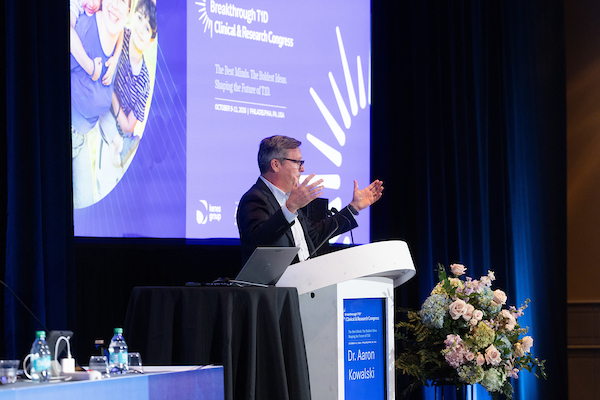
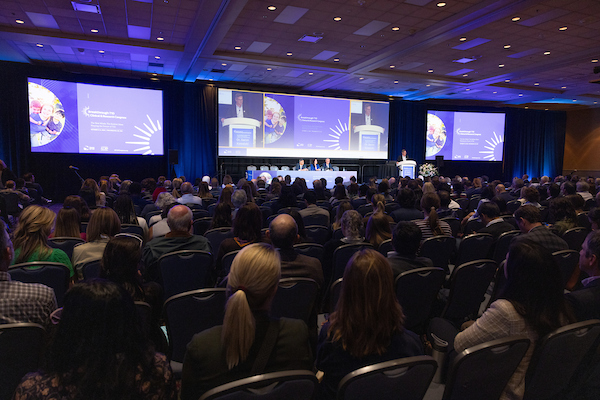
Breakthrough T1D CEO Aaron J. Kowalski, Ph.D., welcoming everyone to CRC 2026.Breakthrough T1D CEO Aaron J. Kowalski, Ph.D., addresses a full house at CRC 2026.
Where we are
Technology works in the real world. Dr. Mathieu presented data from her homeland of Belgium showing HbA1c falling year over year, first with sensors (around 2017) and further with hybrid closed-loop systems. In addition to glycemic improvements, people with T1D are seeing lower risk of complications, including retinopathy and kidney disease.
Disease-modifying therapies are here. Teplizumab, approved in November 2022, is the first therapy to delay the immune attack on beta cells. It has since expanded to children as young as one and to many countries.
Screening is rapidly ramping up. Dr. Mathieu’s European consortium has screened about 140,000 children—and this is only increasing in Europe and across the world.
Our vision for the future
Treat earlier in stages 1 and 2, to delay insulin therapy dependence by months, years, or decades.
Personalize treatment using immune biomarkers that predict who will respond.
Run more trials and build more integrated networks, like TrialNet.
Islet cell therapies are next.
The last thing she said, and a key theme of this meeting, is the need for collaboration. We all need to set our egos aside and work together. The people in this room are responsible for the current state—and the myriad revolutions that have directly led to people with T1D doing better today. The people in the room are going to be the ones that make cures possible—but only if we work together.
Look out for articles coming soon covering days 2 and 3 of CRC 2026. Keep an eye on our News & Updates webpage!
This article was written by Sandy Vogt, Ph.D., and Brian Herrick.
In March 2026, Jaipur, India, hosted something unprecedented: the first global gathering dedicated to ending diabetes stigma and beginning to build solutions.
The inaugural Global Summit to End Diabetes Stigma welcomed 190 participants from 35 countries. More than half were living with diabetes themselves. They came not simply to describe the problem, but to chart a path toward meaningful, lasting change.
Nothing About Us Without Us—in Practice
The Summit was built around a simple but powerful principle: #NothingAboutUsWithoutUs.
That’s not a slogan. It shaped every aspect of the event.
Stephanie Pearson and Renza Scibilia of Breakthrough T1D addressing delegates from 35 countries at the inaugural Global Summit to End Diabetes Stigma, celebrating the power of global collaboration and lived expertise.
The 16-member Steering Committee represented 10 countries, with 11 members bringing lived experience of diabetes. On the Summit’s opening day, participants calculated that the room represented more than 1,300 cumulative years of lived and loved experience with diabetes—a powerful reminder that the people most affected by diabetes stigma are also best equipped to help solve it.
Ensuring diverse voices were present was equally important. Eighty-five delegates attended through full #dedoc° travel scholarships made possible by Breakthrough T1D and several industry sponsors. Nearly nine in ten scholarship recipients had lived experience of diabetes, and more than 60% came from low- and middle-income countries. For many, it was their first international conference. For some, it was their first time traveling internationally.
Guiding conversations throughout the event was Renza Scibilia, Breakthrough T1D’s Senior Director for Global Responsibility and one of the Summit’s emcees. A longtime advocate for the Language Matters movement, she helped facilitate discussions rooted in both lived expertise and real life with T1D.
From Stories to Solutions
“We weren’t talking about people with diabetes—we were talking as people with diabetes.”
-Renza Scibilia
Across two days, participants gave voice to the many ways diabetes stigma shows up in everyday life. They spoke about being blamed for a diagnosis they did not cause. About language that diminishes rather than empowers. About navigating healthcare systems, workplaces, schools, and communities where a medical condition is too often misunderstood as a personal failing.
These experiences are far from isolated. According to research published in The Lancet, four in five people living with diabetes report experiencing stigma, and one in three report discrimination.
What made this Summit different was what happened next. The Summit began with stories. It ended with evidence, commitments, and a shared commitment to creating a roadmap for action.
Together, participants explored opportunities to improve language, strengthen healthcare, influence public awareness campaigns, advance policy, and elevate diabetes stigma within international human rights frameworks.
The Summit concluded with an agreement to turn ideas into commitments, reinforcing that meaningful progress depends not only on conversation, but on sustained action.
A Beginning, Not a Conclusion
The Global Summit represented the next step: from commitment to coordinated action.
No single meeting can end diabetes stigma.
But the Global Summit marked an important turning point.
A global roadmap for action is now being co-designed, informed by the evidence shared in Jaipur and the commitments participants made together. The work will continue across countries, organizations, and communities, building on the momentum created by this first gathering.
For Breakthrough T1D, the Summit reinforced a belief that guides our work around the world: the most meaningful progress on access, equity, and care happens when people with lived experience are not simply represented—they are trusted to lead.
Islet cell therapies for type 1 diabetes (T1D) replace destroyed insulin-producing beta cells with functional cells that allow the body to make insulin again. To ensure there are enough islet cells for everyone with T1D who wants them, Breakthrough T1D is prioritizing manufactured cell therapies, which can be made in large quantities in a laboratory, adhering to high levels of quality control.
These therapies are quickly advancing through the drug development pipeline. How are we making sure the clinical community is prepared for their arrival?
The answer: Centers of Reference.
Centers of Reference
Centers of Reference are expert multidisciplinary T1D care centers that are preparing healthcare professionals (HCPs) around the world to administer manufactured islet cell therapies to people with T1D. The goal is to make sure that expert clinical teams—who are already doing islet cell transplants at low scale—are ready to integrate these therapies into clinical practice at their institutions and train others, once they have regulatory approval.
The second annual Centers of Reference meeting was held at Breakthrough T1D HQ in early May by our Medical Affairs team. Read on to learn more about the attendees, what the meeting covered, and what we can expect next year.
Key Takeaways: Breakthrough T1D’s Second Annual Centers of Reference Meeting
Seven international Centers are established, and four interprofessional working groups meet every month to keep progress moving.
Attendees, which include the leading physicians and islet transplant support teams from the U.S., Canada, UK and Italy, continued the conversation around what kinds of education, training, resources, clinical care, and benchmarking are needed for Centers to be effective.
A manuscript is underway to lay out a clinical implementation roadmap for Centers.
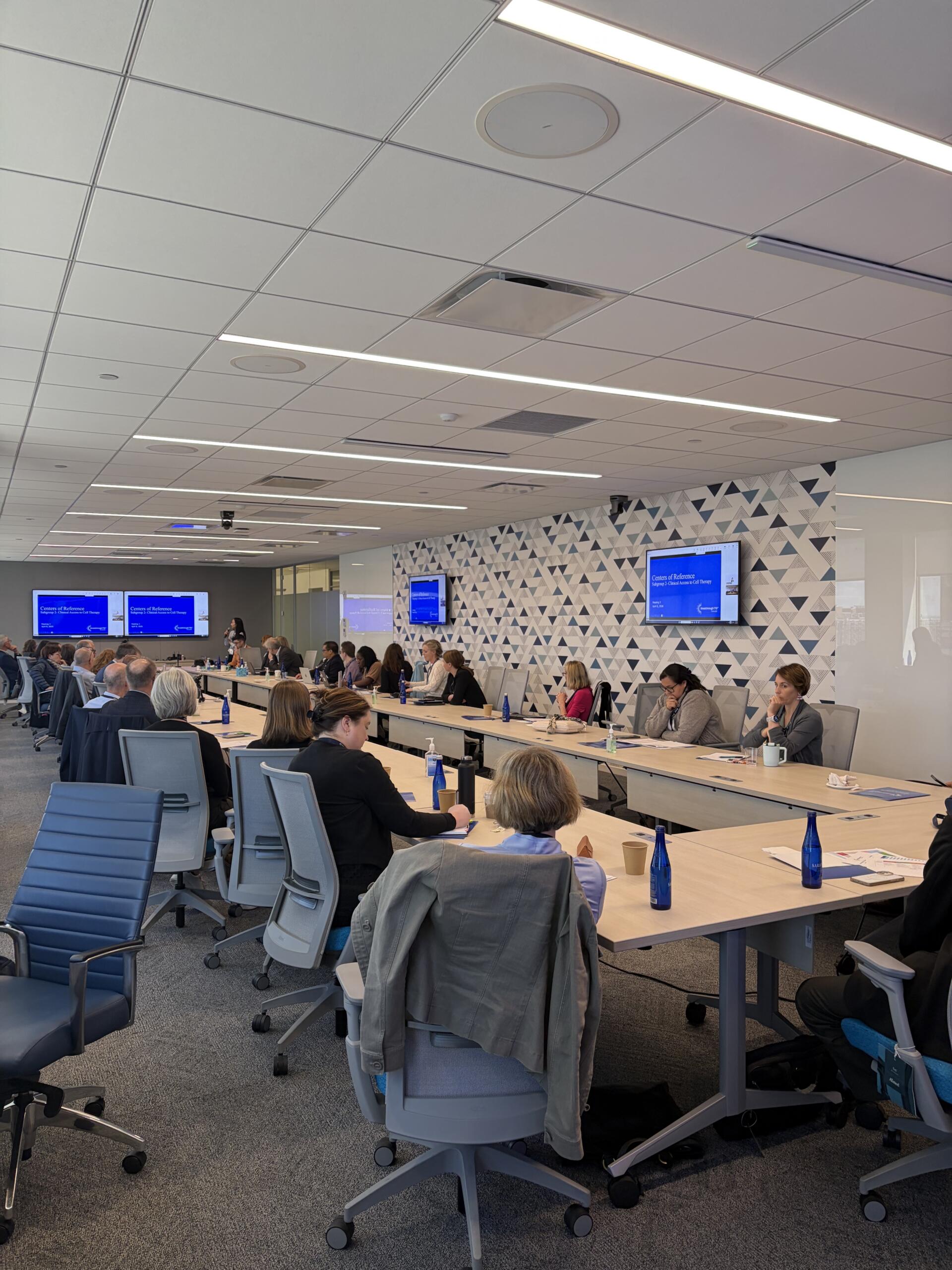
Assembling the team at Breakthrough T1D HQ
This meeting was hosted by Thomas Danne, M.D., Ph.D., Chief Medical Officer International, Brynn Marks, M.D., Senior Director of Medical Affairs, Alessandro Bisio, M.D., International Director of Medical Affairs, and Amara Ogbonnaya-Whittlesey, M.D., U.S. Director of Medical Affairs, who brought together the best and brightest minds who can make Centers of Reference a reality.
Physicians, transplant surgeons, nurses, scientists, and other HCPs from various global medical institutions were in attendance, coming from:
University of Minnesota Medical Center
University of Wisconsin Health Transplant Center
The Penn Rodebaugh Diabetes Center
University of Chicago Medicine
IRCCS Ospedale San Raffaele (Italy)
Institute of Transplantation, Newcastle upon Tyne (UK)
Edmonton, University of Alberta (Canada)
Additional attendees from Breakthrough T1D included CEO Aaron Kowalski, Ph.D., Senior Vice President of Research Esther Latres, Ph.D., multiple members of our Medical Affairs and Advocacy teams, and two members of our Participant Advisory Council who are living with T1D.
What has changed since last year’s meeting?
There are now seven global Centers of Reference: Edmonton, Canada; Newcastle, UK; Milan, Italy; Wisconsin, Chicago (IL), Minnesota, and Pennsylvania in the U.S.
Steady progress has been made toward a clinical roadmap for the Centers of Reference model.
Four interprofessional working groups were established, co-led by Melena Bellin, M.D. (Minnesota) and Jim Shaw, M.D., Ph.D. (Newcastle, UK), that meet virtually every month and in-person annually at Breakthrough T1D HQ.
The four working groups are HCP Training and Education, Clinical Access to Cell Therapy, Harmonizing Clinical Care, and Benchmarking and Registries.
Convening experts with the power to make real change
The objective of this meeting was to build on the progress that the working groups have made over the past year. Each group focuses on a key aspect of the development of Centers of Reference, taking a divide-and-conquer approach to capitalize on experts’ strengths and workshop ideas with the larger team.
We have learned recently that when a first-of-its-kind therapy comes to market, it isn’t magically going to be adopted by physicians and administered to people. There is a significant amount of prep work that has to happen to ensure that every connection is made so that these therapies, and ultimately people with T1D, succeed.
This meeting is that work, led by the leaders in the field.
Working group #1: HCP Training and Education
The group identified which topics around islet cell therapies should be included in educational programs for aspiring T1D medical professionals, including eligibility for islet cell therapies, the transplant procedure itself, post-transplant care, and long-term monitoring. Importantly, the ultimate career path of the trainee should play a factor in which topics require further education versus a brief overview. For example, a psychologist working with the T1D community may not have the same educational needs as a transplant surgeon, but both should understand T1D cell therapy basics.
Working group #2: Clinical Access to Cell Therapies
This group focused on how to best educate HCPs and people with T1D about emerging islet cell therapies. The team found that most people who receive cell therapies self-refer, but misconceptions are a major barrier to pursuing them. Priority areas for increasing awareness in the T1D community are communicating through social media, creating an easy-to-use landing page or website with information and opportunities to connect with medical teams, and connecting people with peers who have received islet cell transplants. In terms of HCPs, the group is focused on creating referral pathways, using artificial intelligence to help establish clinical workflows for islet cell transplants, and utilizing professional organizations to connect with and educate the T1D medical community.
Working group #3: Harmonizing Clinical Care
This group has one of the most challenging tasks: creating a roadmap for the clinical implementation of islet cell therapies. This includes determining eligibility based on defined clinical measures, reaching consensus on the best way to approach care before, during, and immediately after islet cell therapy, and consistent long-term monitoring. To add to the challenge, this roadmap must be applied across diverse clinical settings in different countries. The experts in the room—some of the most prominent T1D physicians and transplant surgeons in the world—made significant progress in defining clinical measures and tools that should be used in islet cell transplants.
Working group #4: Benchmarking and Center Readiness
Centers of Reference will be held to the highest standards to ensure they are providing top-quality clinical care to people receiving islet cell transplants. To make this possible, this group created a framework for assessing Center readiness, collaborating with registries for data-sharing, and benchmarking to evaluate Center effectiveness. This includes development of specific criteria laying out what each Center needs, such as a complete islet cell therapy care team, established processes for quality and safety, research teams, and more.
One theme was clear throughout nearly all of the working groups: incorporating the perspectives of people with T1D is absolutely critical. The groups agreed that clinical decision-making around islet cell therapies is about more than just someone’s blood sugar—the way a person feels, their level of diabetes distress, and their individual circumstances are key factors to integrate into shared decisions between people and their care teams.
Over the next 12 months, each team will follow up on the challenges, solutions, and immediate next steps identified during the meeting to keep progress moving. Thanks to everyone’s hard work over a productive and exciting two days, we are accelerating faster than ever toward the development of expert Centers of Reference.
What the experts are saying
“Cell therapies are getting closer and closer to reality, and our partners in the clinic must be ready to implement them. This is a good problem to have! We know that new therapies will take far too long to reach the people that need them if we don’t have an established clinical infrastructure. We have the best people in the world in the room, working through the problem with us, to ensure that when these therapies do become an approved therapy option, the T1D community can benefit as soon as possible.”
-Thomas Danne, M.D., Ph.D., Chief Medical Officer International at Breakthrough T1D
“Our hope is that Centers of Reference enable preparedness and expedite the delivery of new cell therapies—as they are approved—to become immediately accessible to people with T1D most in need of a novel intervention for the treatment of their diabetes.”
-Michael Rickels, M.D., M.S., Medical Director, Pancreatic Islet Cell Transplant Program, Hospital of the University of Pennsylvania
“Breakthrough T1D is proactively working now to identify and remove current and future barriers to T1D cell therapy coverage. By working with payers and policymakers now, we will accelerate broader access to T1D cell therapies.”
-Aaron Turner-Phifer, Senior Director of Health Policy at Breakthrough T1D
“Centers of Reference can help prepare healthcare systems around the globe for future cell therapies in T1D by building the expertise and standards needed to deliver them safely. They also help share experiences and best practices so more hospitals are ready to adopt these treatments over time.”
-Carmen Hurtado del Pozo, Ph.D., Director of European Research at Breakthrough T1D
Steady progress towards our goal
Manufactured islet cell therapies are coming. It is not a matter of if, but when. We are at a critical moment and need to ensure that HCPs are ready. Teamwork will get these therapies into clinics so people with T1D don’t have to wait years to get them.
This is why Breakthrough T1D is acting now: when the first manufactured islet cell therapy becomes commercially available, multidisciplinary care teams around the world will be prepared. This is essential to our Project ACT initiative, which is accelerating islet cell therapies that do not require immunosuppression for the T1D community.
Our goal is to advance islet cell transplants and establish Centers of Reference around the world, so that people anywhere can access these therapies as they become available. Centers of Reference are leading the way for safe and effective integration of manufactured cell therapies into clinics. These annual meetings provide a platform for international experts to connect and refine these Centers over two days of idea-sharing and collaboration. We’re already looking forward to seeing what the team will have accomplished by this time next year!
What’s happening?
Today, Breakthrough T1D co-hosted an event with leading international diabetes organizations to discuss cardiovascular disease (CVD) and type 1 diabetes (T1D)—where we are, challenges that remain, and how we can work together in Europe and beyond to address this need for the T1D community.
The focus of the event: Doing more for CVD and T1D
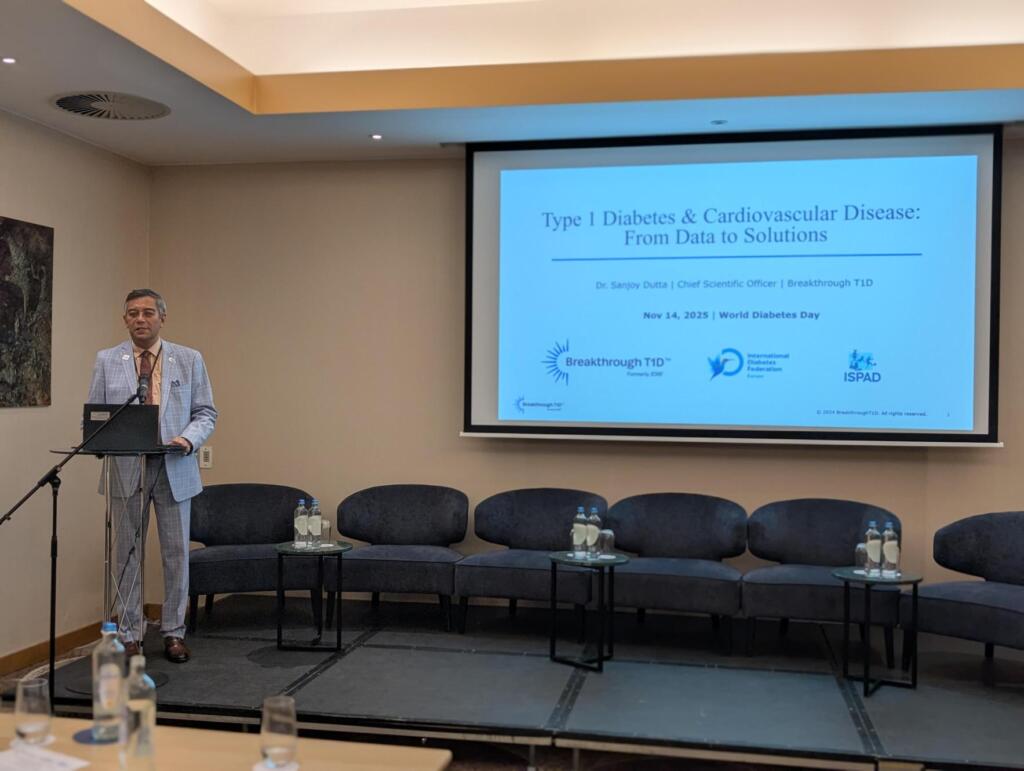
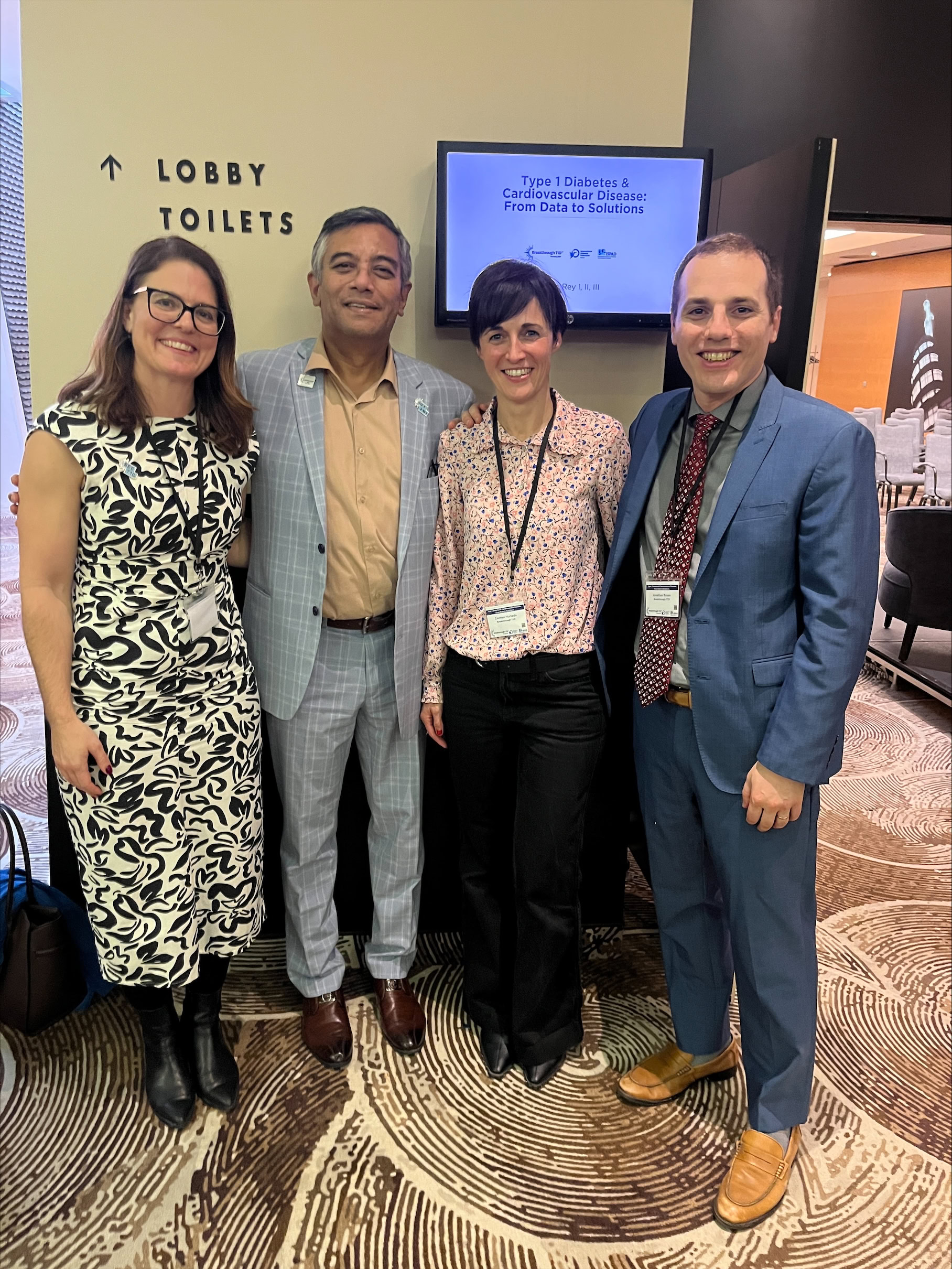
This event, titled “Type 1 Diabetes & Cardiovascular Disease: From Data to Solutions,” took place today on November 14, 2025, in Brussels, Belgium. Breakthrough T1D co-hosted this event in conjunction with the International Diabetes Federation (IDF) Europe and the International Society for Pediatric and Adolescent Diabetes (ISPAD). The goal was to bring together different stakeholders to address a critical concern: the lack of therapies for cardiovascular disease for people living with T1D.
The speakers at the event covered a range of topics. Jonathan Rosen, Ph.D., Director of Research at Breakthrough T1D spoke about the often-overlooked link between CVD and T1D. Others touched upon lessons we can learn from (T2D) diabetes and CVD, the gaps in evidence that still exist, new frontiers in CVD care for people living with autoimmune diseases, and the inclusion of T1D in CVD therapy development.
Attendees
From Breakthrough T1D:
Sanjoy Dutta, Ph.D., Chief Scientific Officer
Jonathan Rosen, Ph.D., Director of Research
Carmen Hurtado del Pozo, Director of European Research
Hilda Ahnstedt, Program Officer of European Research
Alessandro Bisio, M.D., Director of Medical Affairs, International
Other attendees:
Speakers from the European Medicines Agency
Member of the European Parliament: Elena Nevado del Campo (EPP, Spain)
People living with T1D
Researchers
Industry leaders
Why this matters
People living with T1D have a high risk of developing heart complications, despite advances in T1D care. At this time, there are only a few options available to lower this risk. In the United States and Europe, people with T1D have access to blood pressure medications and lipid-lowering medications (for example, statins) that can reduce the risk of developing CVD.
Other therapies, like the SLGT inhibitors empagliflozin or dapagliflozin, are the standard of care in the U.S. to treat heart failure in people without diabetes or with T2D. This class of drugs has revolutionized treatment and significantly reduced the rates of heart failure in these populations. However, people with T1D were excluded from these clinical trials—despite the fact that heart disease remains a critical concern for the T1D community. While not strictly approved, these drugs are occasionally prescribed off-label to reduce the risk of heart failure in people with T1D. Greater accessibility will require regulatory approval, and these options are not currently available for people living in Europe.
Despite the availability of some treatments that can reduce the risk of heart complications, there are no available cardioprotective therapies in the U.S. or Europe that can prevent CVD in people with T1D. More targeted, innovative therapies and treatment strategies are needed to further reduce the risk of—or ideally prevent altogether—cardiovascular complications in the T1D population.
There is a clear unmet need for the T1D community: the risk of CVD is high, and there are not enough options to treat or prevent it. That’s where events like these come in. They are a call to action for collaborative research efforts, better data integration, new and innovative ideas, and global cooperation towards a shared goal of better heart health for people living with T1D. The growing prioritization of CVD is evidenced by the European Commission’s cardiovascular health plan—which includes the Joint Action on Cardiovascular Diseases and Diabetes—showcasing how stakeholders in Europe are taking charge to accelerate breakthroughs for CVD and T1D.
What we’re saying
“Cardiovascular disease remains the leading cause of death for people with type 1 diabetes, yet targeted therapies and guidelines are still lacking. In collaboration with IDF Europe, ISPAD, and aligned with the European Commission’s cardiovascular plan, this event brings together researchers, clinicians, patient advocates, regulators, and industry partners to drive collaborative solutions and accelerate progress toward better prevention and treatment strategies.”
Carmen Hurtado del PozoDirector of European Research at Breakthrough T1D
Addressing the challenge of cardiovascular complications is a cornerstone of our Improving Lives strategy. Breakthrough T1D is actively supporting clinical trials for therapies that can reduce or prevent CVD in people with T1D, and we are working on identifying new projects and researchers to fund to further accelerate these efforts.
We are committed—on a global scale—to making sure people with T1D live the best lives possible, which includes having accessible therapies that reduce the risk of heart complications. Events like these bring together the right people that can make this happen in Europe and beyond.
Breakthrough T1D, in partnership with Friends of Mewar and UNICEF, participated in the Udaipur Type 1 Diabetes Summit: Advancing Access, Equity, and Action, in Udaipur, Rajasthan, India. The event gathered government leaders, health experts, community advocates, and international partners to develop a collaborative roadmap for strengthening type 1 diabetes (T1D) care across India.
Breaking down barriers and stigma
Hosted by Friends of Mewar’s Founder and Breakthrough T1D Global Ambassador Princess Padmaja Kumari Parmar, who has lived with T1D for more than 40 years, the two-day summit was a critical milestone in building partnerships that drive sustainable, system-wide improvements in T1D care and equity.
“Timely healthcare access and accurate information are vital for managing type 1 diabetes and other non-communicable diseases,” said Princess Padmaja. “Collaboration is key to breaking down barriers and stigma, and ensuring that children and youth receive the support they deserve.”
Topics discussed included integrating T1D into national health frameworks, scaling digital and rural care solutions, promoting equity and stigma reduction, and aligning regional action across Southeast Asia. The summit also featured updates on the T1D Basic Care Pilot Program, a partnership between Breakthrough T1D and the William J. Clinton Foundation, showcasing early successes in improving insulin and glucose monitoring availability in public health settings.
The Udaipur Type 1 Diabetes Summit concluded Princess Padmaja’s strong call for sustained innovation, investment, and partnership to address the urgent need for support for youth living with T1D in India and around the world.
Advancing cures while improving lives
The summit aligned with Breakthrough T1D’s mission of advancing cures while improving lives. Affordable insulin, access to T1D technology, early diagnosis to prevent complications at diagnosis, and psychosocial support are all critical to improved health outcomes on the path to cures.
“In India and many other countries, children and young people face significant barriers to care,” said Lynn Starr, Chief Global Advocacy Officer at Breakthrough T1D. “Our commitment is that when cures arrive, they are accessible to everyone, everywhere, regardless of geography or income.”
Driving change for the T1D community
Born in Udaipur, Rajasthan, India, Princess Padmaja was diagnosed with T1D at age 5. At the time of her diagnosis, tools and insulin options for managing T1D were limited—checking blood glucose levels or dosing insulin based on carbohydrate quantities wasn’t even possible.
“Witnessing the progression of T1D breakthroughs over the years has been nothing short of remarkable,” said Princess Padmaja. “When I first started insulin injections, it was a cumbersome routine, requiring multiple injections a day. Today, thanks to advancements in insulin pump technology, managing T1D has become more streamlined and efficient, improving my quality of life.”
As a Breakthrough T1D Global Ambassador, Princess Padmaja is working to combat the stigma of T1D and address the challenges surrounding the condition. She hopes to inspire changes within the government’s policies that could support people with T1D and within India’s healthcare system.
“As a Global Ambassador, my aspirations do extend beyond borders,” she said. “The challenges surrounding T1D are not exclusive to India; they are present globally.”
“By rallying support and implementing these measures, I can help tackle these challenges, ultimately improving the quality of life for those with T1D.”
We’ve made major progress in the development of cell replacement therapies for type 1 diabetes (T1D) over the past few decades. We know that manufactured islets can be safely implanted into people and produce insulin. Yet, there is more work to do to advance cell therapy research and bring these therapies to the larger T1D community. Breakthrough T1D’s Project ACT (Accelerate Cell Therapies) will make manufactured cell replacement therapies that do not require broad immunosuppression a reality, faster.
Project ACT
To accelerate islet replacement therapies faster than ever, Breakthrough T1D launched Project ACT (Accelerate Cell Therapies) to simultaneously advance research, development, regulatory policies, access, and adoption of manufactured islet therapies that do not require broad immunosuppression.
The Breakthrough T1D x Stem Cell Network Partnership
To drive innovation in manufactured islet therapies, Breakthrough T1D, Breakthrough T1D Canada, and the Stem Cell Network (SCN) have partnered to support four new projects led by Canadian researchers. The organizations issued a joint Request for Applications and together will maximize resources to drive high-impact research into manufactured cells. This partnership is a novel and meaningful part of Breakthrough T1D’s global Project ACT effort to power high-impact cell therapies research.
“Accelerating cell therapies is a central focus of Breakthrough T1D’s research strategy to drive toward cures for type 1 diabetes,” said Breakthrough T1D Vice President of Research Esther Latres, Ph.D. “We’re excited to join Stem Cell Network and Breakthrough T1D Canada in funding these outstanding cell therapy researchers and projects that can build on the current momentum to overcome barriers and advance cell therapies that can benefit all those who live with type 1 diabetes.”
These projects will receive support from May 2025 to April 2027. They are a part of a broader SCN investment totaling more than $33 million to support 36 regenerative medicine research projects and clinical trials.
Combining manufactured islets and vasculature for a better islet replacement product
Fueling Biotechnology Partnerships Award
The team
Dr. Tim Kieffer (UBC), Dr. James Shapiro (University of Alberta), Dr. Takanori Takebe (Cincinnati Children’s Hospital), & Lunar Therapeutics (Vancouver, BC)
Current cell therapies for T1D, while often effective, are hampered by reliance upon donor-derived cells and poor cell survival after transplant, necessitating large doses of cells and repeat procedures. This ambitious new project will address both the source of islet cells and the low cell survival rates associated with islet transplantation by accelerating Lunar Therapeutics’ preclinical development of a manufactured islet replacement product. Takebe’s lab describes it as “complex miniature organs” for T1D.
This product will consist not only of insulin-producing cells, but also endothelial cells, which line blood vessels. Endothelial cells will support islet cell survival and engraftment upon transplantation.
Organoid
An organoid is a three-dimensional tissue grown in the lab that resembles an organ.
To accomplish this objective, Lunar Therapeutics will bring together Canadian expertise in manufactured islets and clinical islet transplantation led by Drs. Timothy Kieffer and James Shapiro. The team will also include U.S.-based Dr. Takanori Takebe, who specializes in designing complex organoids composed of various cell types. Using technologies developed across each laboratory, this multidisciplinary team will work to address challenges in islet cell transplantation.
The project
Using naturally-derived gels to optimize cryopreservation (extreme cold storage) of manufactured islets
Impact Award
The team
Dr. Marya Ahmed & Dr. James Shapiro (University of Alberta)
The implantation of manufactured islets into people with T1D can restore insulin production, eliminating the for external insulin and improving quality of life. However, after islet cells are derived from donors or manufactured in the lab, they must be stored before being used to treat a person with T1D. Currently, the storage and transportation of islet cells is difficult, and the only storage method is freezing at low temperatures in the presence of chemical solutions that help with the freezing process. However, these solutions cause cell death during thawing and may also cause allergic reactions in people after transplantation.
This project will address this gap in the field by aiming to develop non-toxic, naturally derived gels to optimize islet freezing and storage. The gel-based products will be evaluated for large-scale commercial production. The success of this project will provide new intellectual property that will be of interest to researchers and companies in regenerative medicine in Canada and across the globe.
The project
Using blood vessels to create a better encapsulation device for islet replacement therapies
Impact Award
The team
Dr. Corinne Hoesli (McGill), Dr. André Bégin-Drolet (Laval), Dr. Richard Leask (McGill), Dr. Andras Nagy (Sinai Health, Toronto), Dr. Steven Paraskevas (McGill)
Manufactured islets offer a potentially unlimited source of islets for transplantation. Since manufactured islets carry unique risks compared to donor-derived islets, containment within a device could allow retrieval if off-target growth ever occurs. However, encapsulation devices that have been tested in clinical trials so far and have shown minimal success, mainly because blood supply to the cells is limited by the device barrier. In this project, the team proposes to develop a device where the manufactured islets are placed around pre-established vessels that can improve islet cell survival and speed of insulin responses via improved blood supply. In this project, they will optimize their device design and conduct advanced preclinical studies.
This project could lead to better survival and function of manufactured islets, so they can keep producing insulin. The project may also pave the way for other engineered human-scale encapsulation devices, also sometimes called bioartificial organs.
The project
Using manufactured cells to create a human T1D immune system model in a petri dish
Impact Award
The team
Dr. Megan Levings, Dr. Bruce Verchere, Dr. Francis Lynn & Dr. Peter Zandstra (UBC)
There are many new treatments on the horizon for T1D, including those that block autoimmunity or replace insulin-producing cells. However, a major barrier to these therapies is the lack of an easy-to-use model in which their effects on human cells can be tested before advancing to human trials. The standard preclinical model is to test therapies in small animal models of T1D, but this has significant limitations since it is nearly impossible to replicate the human immune system. In fact, diabetes has been “cured” hundreds of times in a mouse model, which has not translated to humans.
To overcome this barrier, Dr. Levings and her team will establish a new a model that recreates human T1D autoimmunity in the lab. The model will use manufactured cells to create the three types of cells that are involved in the disease: insulin-producing cells and two different types of immune cells. Using the model, cells can then be combined in different ways to recreate what usually happens during autoimmunity.
A model of human T1D that can be generated in the lab will help test potential treatments and prompt new questions about why T1D develops, and how to prevent it. Thus, this research has the potential to support the further development of innovative therapies that may offer new approaches to prevent or treat people with T1D.
Putting it all together
Curing T1D is the north star of Breakthrough T1D. These partnerships will help us work together toward our shared goal of a world without T1D—through innovation, forward-thinking cell therapy research, and the best and brightest scientists.
Key Takeaways
Breakthrough T1D helped organize a meeting in European Parliament to bring the unmet needs of the type 1 diabetes (T1D) community to the forefront and discuss how we can accelerate cures, especially cell therapies, in the EU.
This meeting was attended by several Breakthrough T1D leadership and staff.
Building long-term partnerships with the European Union (EU) Institutions will allow us to work together toward global T1D cures.
A meeting of the minds
This past week, Breakthrough T1D helped organize an event hosted by Member of European Parliament Tomislav Sokol, Ph.D., titled “Accelerating Breakthroughs to Address Unmet Needs in Type 1 Diabetes.” This meeting, a significant coming-together of Breakthrough T1D and European policymakers, focused on the role of the EU in addressing the needs of the T1D community and accelerating T1D breakthroughs.
The purpose of this meeting was to raise awareness of T1D and the urgent need for the accelerated development and approval of breakthrough therapies in the EU. Conversations between Breakthrough T1D and European policymakers homed in on barriers and opportunities to advancing cures—including cell therapies and disease-modifying therapies—in the EU to get them into the hands of people with T1D, faster. This was an important step in establishing an open dialogue between Breakthrough T1D and the EU Institutions about working together to address T1D globally.
“This event in the EU Parliament allows us to engage with important decision-makers to ensure that the research and policy environments are oriented in a way to accelerate development of T1D breakthrough therapies in the EU as we also do in other countries,” explained Campbell Hutton, Senior Vice President of Global Advocacy at Breakthrough T1D.
Attendees
Several Breakthrough T1D leadership and staff members attended the meeting, including Thomas Danne, M.D., Ph.D., Chief Medical Officer, Global; Sanjoy Dutta, Ph.D., Chief Scientific Officer; Lynn Starr, Chief Global Advocacy Officer, Carmen Hurtado del Pozo, Director, European Research; and Campbell Hutton, Senior Vice President of Global Advocacy.
Several Members of the European Parliament (MEP) in addition to host Tomislav Sokol, Ph.D., were in attendance. Other attendees included people with a lived experience of T1D, health staff from EU Member States, researchers in the EU, and other European diabetes organizations.
Dr. Dutta delivered a talk on the role of breakthrough therapies in transforming T1D. Dr. Danne moderated a panel to provide insight about unlocking the potential of cell therapies breakthroughs in the EU with T1D cell therapy researchers: Professor Lorenzo Piemonti, M.D., Director of the Diabetes Research Institute at Vita-Salute San Raffaele University and Associate Professor Francoise Carlotti, Ph.D., Head of the Islet Research Lab at Leiden University Medical Center. Finally, Lynn Starr closed with remarks about our shared global responsibility to work toward breakthrough T1D therapies.
Breakthrough T1D leadership and staff who attended the meeting.
When and where it took place
The event took place on June 5, 2025, in Brussels, Belgium, at the European Parliament.
Driving toward T1D cures in the EU and beyond
T1D is on the rise around the world, including in Europe. Recent publications by Breakthrough T1D staff and leadership brought attention to the rise in incidence and global T1D burden. We need to act now in conjunction with governments around the world—like the EU—to address the unmet needs of everyone around the world affected by T1D.
T1D cures, including cell therapies, are advancing through the clinical pipeline. Bringing awareness of T1D to the forefront—and educating key people on the progress we’re making toward cures—will be incredibly important for driving T1D research forward in the EU. This represents a critical opportunity for the EU to accelerate cell therapies faster than ever. As a global organization, Breakthrough T1D is collaborating with the EU government to help make this possible.
As the largest global funder of T1D research, Breakthrough T1D has provided funding to researchers across the world in addition to the EU. Right now, Breakthrough T1D is supporting €56 million in European initiatives, including 31 clinical trials—representing 19% of our funded research (including the U.K.). Breakthrough T1D has expert teams in research, medical, regulatory, and advocacy in Europe, meaning we are uniquely positioned to provide guidance on how the EU can strengthen its T1D efforts and collaborate on a global scale to drive T1D breakthroughs, especially in cell therapies.
Type 1 diabetes is a critical disease in Europe, and I was pleased to host an event for the T1D community and my colleagues in the European Parliament to learn about the unmet needs in T1D and how we can work together to accelerate breakthrough therapies in Europe to address those needs.”
Tomislav Sokol, Ph.D.Member of the European Parliament
What Breakthrough T1D leadership is saying
“This meeting is critically important to bringing the unmet needs of the T1D community into the spotlight in the EU. Global advocacy for curative T1D research is essential to achieving Breakthrough T1D’s mission, and continued collaboration with EU policymakers will get us there faster.”
Lynn Starr
Chief Global Advocacy Officer
“International efforts to accelerate global adoption of T1D cures will become increasingly important as newer, emerging cell therapies become available to people with T1D. Conversations like these with EU policymakers is bringing this urgent need to the forefront.”
Thomas Danne, M.D., Ph.D.
Chief Medical Officer, Global
“Cell therapies are accelerating through the clinical pipeline faster than ever. We need to act now on a global scale to ensure that people with T1D around the world can access these transformative therapies. This meeting is a significant step toward that goal.”
Sanjoy Dutta, Ph.D.
Chief Scientific Officer
Accelerating global action is paramount to our mission
Global problems require global solutions. This meeting served as a critical launching point for a continued partnership with the EU to fill gaps and address unmet needs for the T1D community. Building relationships and fostering long-term partnerships is critically important for reaching our common goal of bringing cures to people with T1D as soon as possible.
These important conversations between Breakthrough T1D and the EU government align with our Project ACT (Accelerate Cell Therapies) initiative to accelerate the development of cell therapies that do not require immunosuppression—for everyone with T1D in every country. In addition, through international Centers of Reference, Breakthrough T1D’s Medical Affairs team is developing expert clinical care centers that will be trained and ready to provide cell therapies to people with T1D once they become available. We are at the forefront of global action to prepare the world for curative cell therapies.
Project ACT
Scientific progress takes time, money, and effort. To accelerate islet replacement therapies faster than ever, Breakthrough T1D launched Project ACT (Accelerate Cell Therapies) to simultaneously advance research, development, regulatory policies, access, and adoption of manufactured islet therapies that do not require broad immunosuppression.
We are driving toward a future in which everyone with T1D—no matter where they are—has access to therapies, treatments, and care, bringing us closer to achieving our mission of a world without T1D. The more people we have working toward our mission, the faster we will get there.
Breakthrough T1D strives to accelerate life-changing breakthroughs to cure, prevent, and better treat type 1 diabetes (T1D) and its complications. To accomplish these goals, we use a multi-pronged strategic approach, including conducting scientific studies and educating our community. In line with these goals, Breakthrough T1D recently published two peer-reviewed journal articles. One detailed burdensome unmet needs in the T1D community and identified key steps we can take to meet these needs. The other used real-world data to better understand American T1D demographics and predict changes in the next decade.
Let’s take a deeper dive into each.
Unmet needs of the T1D community: More work is needed
Despite major progress in T1D management, T1D still results in premature death, complications, and very significant daily burden.
Daily insulin use is a persistent challenge that comes with physical, emotional, social, and economic burdens.
New therapies and cures that can reduce or eliminate the challenges of living with T1D are closer than ever.
The entire T1D community (researchers, sponsors, clinicians, advocates, people with T1D, regulators) needs to work together to overcome scientific, drug development, and regulatory challenges to make cures for T1D a reality.
This commentary reviews previously existing data across the T1D care spectrum to help demonstrate the magnitude and significance of the unmet needs faced by people living with T1D. This information is used to emphasize the urgency researchers, sponsors, and regulators must place on developing cures for T1D. The authors provide recommendations and actionable steps to overcome scientific, clinical, and regulatory challenges that will help meet these needs.
Daily life with T1D is still a challenge
To say that the daily routine of people living with T1D is hard would be an understatement.
Insulin injections and dosage calculations. Wearable tech maintenance. Carbohydrate counting. Mealtime and exercise tracking. Doctor’s appointments. Hypoglycemia, hyperglycemia, and diabetic ketoacidosis (DKA) avoidance. It requires constant attention: 24 hours a day, 7 days a week.
The truth of the matter is that T1D management is a burdensome, demanding, and highly intensive task. There are no breaks, vacations, or time off—even overnight, it requires management. These challenges remain, even with today’s advancements in technology and the emergence of novel therapies for T1D. Simply put, we need to do more for the T1D community, and we cannot settle for the status quo.
The bigger picture
The global burden of T1D
11
The average number of years of life lost for people with T1D globally.
21%
The percent decrease in mortality rate for people with T1D in the last 30 years globally, which is not distributed equally among everyone with T1D.
The challenge of day-to-day T1D management compounds into long-term negative outcomes for the T1D population. Despite improvements in mortality rate, the life expectancy of people with T1D is still shorter than those without T1D.
Keeping blood glucose in a normal range is extremely difficult, and people with T1D need to be acutely aware of their insulin doses to prevent highs (hyperglycemia) and lows (hypoglycemia). Prolonged hyperglycemia leads to heart, kidney, and eye damage. Hypoglycemia can be very dangerous and a source of distress and anxiety, especially if it occurs often and eventually without symptoms (termed “hypoglycemia unawareness”).
The impact of hypoglycemia
25-40%
Percent of people with T1D who experience hypoglycemia unawareness.
30%
Percent of adults with T1D who have a fear of hypoglycemia.
Current technologies cannot solve the problem of hypoglycemia or make people with T1D have perfect blood sugar levels. As a whole, these challenges represent a profound emotional and mental burden for people with T1D, often leading to diabetes distress and burnout—which itself can lead to worse glycemic control. People with T1D have a tougher time managing the ins and outs of daily life because of the extreme mental and physical load of having T1D.
A longer life on its own is not the goal: it’s longer lives without ever having to think about T1D.
Breakthrough T1D’s vision for the future…
Breakthrough T1D envisions a world where the burden of T1D no longer exists. A world where people don’t have to manage their diabetes—they don’t take insulin, don’t have blood sugar highs and lows, and don’t develop complications. Curing T1D is our north star.
…and how to make it a reality
To achieve these goals, we need widespread screening, innovative research and therapies, patient-centered clinical approaches, and evolved regulatory pathways. We need to adjust the T1D paradigm and move clinical testing along at a quicker pace.
The regulatory route for new therapies determines whether companies, which have the greatest ability perform research in a quick and efficient manner, will invest their time and money into innovative T1D therapies. They are more encouraged to do so if they see defined and reasonable pathways for new therapies to reach the market—especially if healthcare systems are in place that will allow these therapies to be adopted by healthcare professionals and used by the people who need them most.
It starts with the decision-makers, who weigh the benefits versus risks of a new therapy. These decisions need to have more input from people who have a lived experience with T1D and can better decide if the benefits outweigh the risks, especially given the tremendous daily burden of living it. Clinical testing should broaden to include more populations of people with T1D—not just those who have severe disease—because nearly everyone has the chance to benefit. As the authors state in the commentary:
The magnitude of benefits required to outweigh a product’s risks should be determined by people living with T1D and no one else.
To further optimize T1D clinical trials, Breakthrough T1D and other experts have pushed for the validation of C-peptide, a biomarker for the body’s insulin production, as a clinical trial endpoint. Compared to the currently used endpoints, C-peptide would provide easier assessments and shorter clinical timeframes, thereby making the process of T1D therapy development more streamlined—and bringing these data to decision-makers sooner.
Once better clinical endpoints are validated, more personal experiences are incorporated into clinical trials, and the regulatory path to market is clear, companies will be encouraged to invest in T1D research programs, thereby speeding up research, innovation, and progress along the clinical pipeline—getting life-changing therapies into the hands people with T1D faster than ever.
What comes next?
This publication will be shared broadly with regulators, legislators, payers, and the T1D research community to encourage research, innovation, and funding and advocate for quicker, more efficient clinical testing and regulatory pathways to approval.
I think the misperception that the therapies available today are good enough is one of the most insidious challenges to ushering in the era of T1D cures…Today’s therapies do not offer the freedom from diabetes that people living with the disease want…I believe when we fully appreciate the daily experiences of people living with T1D, and when we use these experiences to guide our research development and regulatory decisions, we will also then have clear pathways for new therapies that meet these needs.”
Stephen Karpen, PharmDSenior Director of Regulatory Affairs at Breakthrough T1D
This is a call to action for everyone working in the T1D space. The overarching purpose is to foster awareness of these unmet needs and the urgency with which we must act as a community to address them—by working together and collaborating across the pipeline of T1D management.
Read on to learn more about the population of people living with T1D with these unmet needs.
Nearly 47% of Americans with T1D are enrolled in commercial health insurance followed by nearly 30% in Medicare, and 15% in Medicaid.
People with T1D who use diabetes devices have lower mortality rates than those who do not.
Most Americans living with T1D today are Non-Hispanic White people.
In the next 10 years, the Hispanic and African American populations with T1D are expected to grow the most, and the average age will increase from 47 to 49 years old.
The purpose of this study was to identify key T1D demographics in the United States and predict how these demographics will change over the next decade. Using healthcare insurance claim datasets, population growth projections, and existing literature, the authors modeled T1D demographic changes between 2024 and 2033.
This study was funded by Breakthrough T1D in collaboration with the T1D Index team so that these data can be incorporated into the Index. (Disclaimer: the T1D index uses multiple datasets and publications to predict the number of people living with T1D, which may explain discrepancies in Index estimates and predictions from this study).
Incidence
The number of new T1D diagnoses in a given time period.
Prevalence
The total number of people with T1D (new and existing diagnoses) in a given time period.
T1D stats: Now
2.07 million
Number of people in the U.S. living with T1D.
47
Average age of people living with T1D.
67%
Percent of people with T1D who are 20–64 years old.
19%
Percent of people with T1D who are over 65 years old.
47%
Percent of people with T1D who have commercial health insurance plans. Other coverage includes Medicare (30%) and Medicaid (15%).
T1D stats: 10 years from now
2.29 million
Number of people in the U.S. living with T1D (due to increase in T1D incidence and improved survival from devices).
49
Average age of people living with T1D.
33%
Percent increase in T1D population that aged 65 and older (mostly due to aging of the current T1D population).
38%
Percent increase in T1D population that is aged 10 and younger.
44%
Percent of people with T1D who have private/commercial health insurance plans. Other coverage includes Medicare (30%) and Medicaid (17.4%).
30%
Percent increase in T1D population who will use Medicaid.
What comes next?
Despite significant advances in T1D technology, therapies, and care management, the T1D population still faces a greater risk of complications and a higher mortality rate. Breakthrough T1D leadership will use key information from this study to inform future strategic research and advocacy efforts.
This data gives us an opportunity to quantify key information about our community to inform decision-makers…With better data specific to those with T1D, we can ensure that we’re advocating for solutions that not only expand access but also promote a better health care system for those with T1D.”
Lynn StarrChief Global Advocacy Officer at Breakthrough T1D
These data will help inform elected officials and payers about how healthcare policies may ultimately affect the T1D community—ensuring that the policies in place are having the greatest impact they can. The next phase of the project will analyze key demographic information in the context of access to cell therapies.
The ultimate goal is to ensure that everyone with T1D has access to the therapies, technology, and care that works best for them. By understanding T1D population demographics, Breakthrough T1D can make the most informed decisions possible as we move toward our goal of a world without T1D. We call on regulators, legislators, payers, and T1D researchers to take urgent action to meet the unmet needs of the T1D community now and in the future.
We value your privacy. When you visit BreakthroughT1D.org (and our family of websites), we use cookies to process your personal data in order to customize content and improve your site experience, provide social media features, analyze our traffic, and personalize advertising. By choosing “I Agree”, you understand and agree to Breakthrough T1D's Privacy Policy