
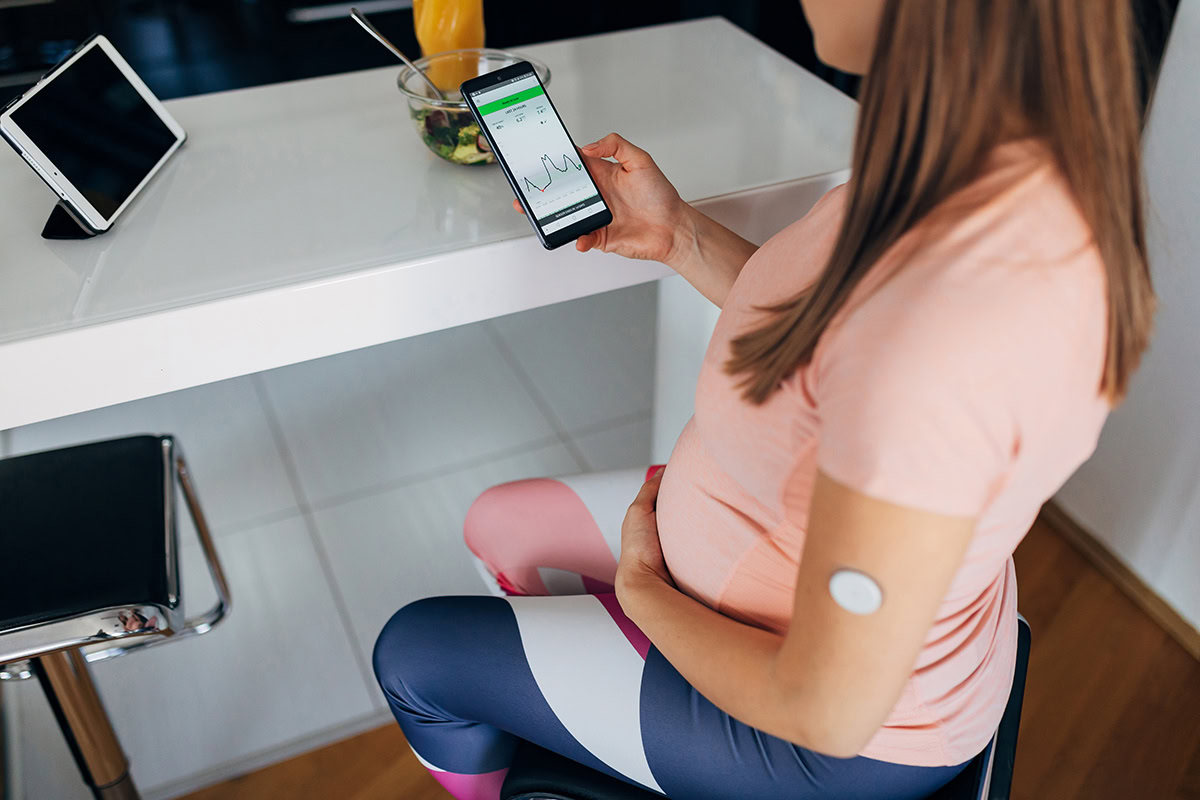
The FDA has approved Tandem’s Control-IQ+ technology for use in pregnancy with type 1 diabetes (T1D). This is the first-ever automated insulin delivery (AID) technology cleared in the U.S. for pregnancy with T1D—a major milestone for the T1D community!
What is an Automated Insulin Delivery (AID) System?
An AID system has three main components: an insulin pump, a continuous glucose monitor (CGM), and an algorithm that lets these components communicate with each other to determine the best insulin dose to help keep blood sugar in range.
Automated insulin delivery systems:
- Are used in place of multiple daily injections (MDI) of insulin
- Continuously measure blood-glucose levels and adjust insulin delivery automatically
- Give less insulin when blood sugar is low and more insulin when blood sugar is high
- Still require user input for meals and snacks and troubleshooting (called hybrid closed-loop)
- Have been shown to improve time-in-range
Tandem’s Control-IQ+ algorithm can be paired with the Tandem Mobi System or t:slim X2 insulin pump and is compatible with Dexcom’s G6/G7 and Abbott’s Freestyle Libre 3 Plus CGMs. Consider speaking with your healthcare provider if you are pregnant or planning to become pregnant to see if these options may be a fit for you.
Using Technology to Manage Type 1 Diabetes During Pregnancy
As your body changes during pregnancy, so does your T1D management. Technologies like automated insulin delivery systems can give you more real-time information about your blood-glucose levels and patterns, help keep you in a tighter range, and reduce the risk of hyperglycemia, hypoglycemia, and long-term complications.
The FDA’s decision to approve Control-IQ+ for pregnancy was based on the results from the CIRCUIT clinical trial. Pregnant women with type 1 diabetes who used Tandem’s Control-IQ+ technology spent around 3 more hours per day in the recommended blood sugar range for pregnancy (63-140 mg/dL) compared to those using a CGM and their usual method of insulin delivery (MDI or insulin pump). Even more, participants using Control-IQ+ had fewer low blood sugar events and less glycemic variability, and they reported better sleep quality.
Right now, less than half of pregnant individuals with T1D achieve 70% or more time in the pregnancy-specific blood sugar range. The approval of Control-IQ+ technology has the potential to change this—meaning healthier pregnancies for both babies and soon-to-be moms.
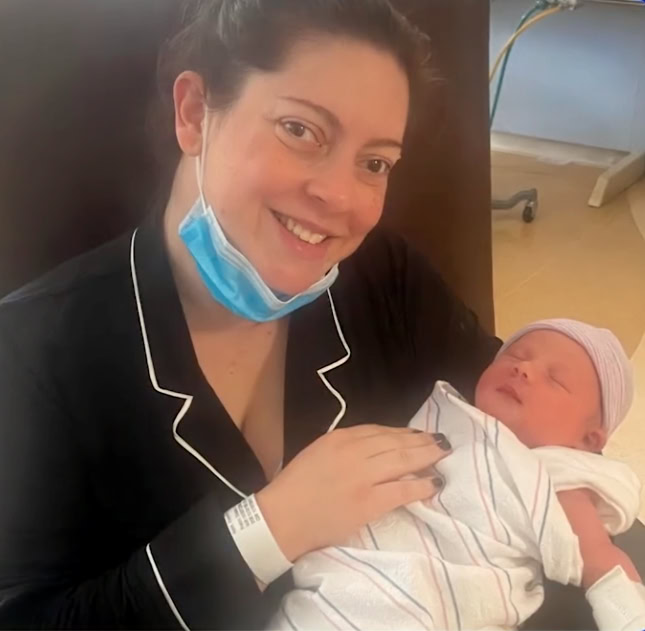
“During pregnancy, Control-IQ+ was a game-changer.
It helped me achieve more time in range, more predictable outcomes, and experience fewer highs and lows. It also reduced much of the mental burden and T1D-related anxiety that comes with having to constantly monitor and make adjustments, which allowed me to focus more on my overall health and my baby’s well-being. I’m grateful for Control-IQ+ helping me feel more confident and in control during my pregnancy and the healthy, safe delivery of my baby boy.”
Liz Walsh, Living with T1D for 35 years
Other Tips for a Healthy Pregnancy with T1D
Maintaining a healthy lifestyle can benefit both you and your baby throughout your pregnancy. There are extra considerations for pregnant individuals with T1D because changing hormone levels and insulin sensitivity throughout different stages of pregnancy can have significant impacts on blood sugar. Your insulin dose will likely increase during pregnancy, and using an AID system can help make this transition easier.
Work together with your healthcare team to track and manage your blood sugar levels and make the necessary lifestyle adjustments to have the safest and healthiest pregnancy possible—both before and during your pregnancy. This includes eating right, staying active, getting good sleep, monitoring for complications, and maintaining good mental health.

T1D Pregnancy Guide
Get guidance and support on all stages of pregnancy, from pre-pregnancy planning to juggling T1D as a new mom.
Accelerating T1D Research for Pregnancy and Beyond
Breakthrough T1D research grants supported the development of the Control-IQ+ algorithm, and our advocacy supported the Special Diabetes Program, which funded its clinical testing.
We continue to support research into fully closed-loop AID systems to remove the need for user input around meals and troubleshooting so blood sugar management can one day be easier than ever. The work doesn’t stop until pregnant individuals with T1D have more options and can choose the best AID system that works for them.
Right now, we’re funding a clinical trial that will adapt and evaluate the Loop algorithm (as part of the twiist AID system) for pregnant women with T1D. Another Breakthrough-T1D funded study is collecting data from pregnant women with T1D to better understand changes in insulin sensitivity throughout pregnancy. This will then be used to help develop AID systems capable of adapting to pregnancy-specific changes in insulin requirements.
By Sandy Vogt, Ph.D., and Kara Sweet
