

To accomplish our mission of a world without type 1 diabetes (T1D), one thing is clear: the more minds we have thinking about T1D, the better. That’s why Breakthrough T1D brings in interns each year, including in our Research department. Training the next generation isn’t just about career development—it’s about fresh eyes, new ideas, diverse expertise, and encouraging interest in our common goal.
Breakthrough T1D’s Research Program
The goal of Breakthrough T1D’s Research program is to advance T1D science by supporting scientists, researchers and clinicians to accelerate life-changing breakthroughs for the T1D community. Our Research team members drive this effort forward through careful consideration of the T1D research landscape—identifying gaps and solutions, establishing long-term relationships with researchers in the field, and ultimately investing in the most promising avenues toward T1D cures and treatments.
Our 2026 interns have come from diverse backgrounds, each bringing a unique perspective to the teams and projects which they contributed to over the summer. From business development, to funding landscapes, to literature reviews and analyses, each intern leveraged their skills while simultaneously learning and growing under the mentorship of our Research team members.
Read on to learn more about each intern and the projects they worked on.

Jihyun Park
Mentor: Racquel Enad, MS, MPH, Senior Manager of Research Partnerships & Alliances
Jihyun is a master’s student in biotechnology at Columbia University. With bachelor’s degrees in both Life Sciences and Statistics, she is passionate about bridging science, data, and business. She has experience in coordinating cross-functional projects and building practical and quantitative tools that improve operational efficiency and business decision-making in the biotech and healthcare sector. In her free time, Jihyun likes to explore new favorite cafes, exercise, and play the electric guitar.
Over the summer, Jihyun worked with the Research Business Development and Partnerships team to strengthen alliance management for the Industry Development and Discovery Partnerships (IDDP) Program. She built a database of IDDP company grantees and their milestones (e.g., financings, partnerships, and clinical progress) since the program began in 2004, developed a tool the team can use to stay current on grantees’ progress after their awards, and created a visualization that maps how IDDP companies connect with one another and the broader T1D industry. Together, these resources help the team measure the program’s long-term impact and identify new opportunities to support grantees.

Sophia Meininger
Mentor: Matt Whipple, Analyst, Research Strategy
Sophia is part of an accelerated program at Binghamton University, completing a dual undergraduate degree in Global Public Health and Africana Studies, and she will begin a Master of Public Health (MPH) program this fall. Her academic work and leadership experiences have shaped a deep passion for health equity, community engagement, and advocacy. Sophia has lived with T1D since she was four years old, so contributing to Breakthrough T1D’s mission was, in her words, a genuine privilege.
This summer, Sophia joined Breakthrough T1D’s program management team to build a global funding landscape for type 1 diabetes research. Over the course of her internship, Sophia researched the foundations, government agencies, and regional funders supporting T1D research with a focus on regions where the T1D research ecosystem is still taking shape. The landscape identified the leading institutions and investigators driving T1D research forward. Sophia presented her findings to the Research department, showing the funding dynamics in these regions and identifying opportunities for collaboration. Her work gave Breakthrough T1D a stronger foundation for continuing to be an international organization to connect researchers, funders, and the T1D community across borders.

Aliaa Elkallini
Mentor: Nicholas Mamrak, Ph.D., Senior Scientist
Aliaa is pursuing Bachelor of Science and M.D. degrees at the Sophie Davis School of Biomedical Education, which is part of the City University of New York (CUNY) School of Medicine. She’s specifically interested in understanding how scientific findings can be translated into meaningful improvements in patient care.
This summer, Aliaa joined Breakthrough T1D’s Cell Therapy team. Her work focused on the characterization of manufactured islets, which can vary significantly and make it difficult to compare data and reproduce findings. To address this gap, she reviewed published studies, identified where characterization practices were consistent or fragmented, and spoke with investigators to understand which information is most useful in practice. From this work, she developed two complementary frameworks: one focused on the minimum information needed to clearly characterize manufactured islets and another that adjusts expectations based on the purpose of the study. Together, these frameworks are meant to give Breakthrough T1D and investigators a more consistent way to evaluate new approaches, understand which information should be available, and compare the strength of the evidence when considering future research support.

Avi Patel
Mentor: Raquel Lopez Diez, Ph.D., Senior Scientist
Avi is an MPH candidate at Long Island University Brooklyn. She previously trained as a dentist in India, and her interests lie in health systems, health services research, and the policy levers that govern access and delivery. Avi brings expertise in epidemiology, biostatistics, health policy, and research methods, plus a clinician’s perspective from the point of care. Outside of work, she loves reading classic literature, cooking, and exploring the city’s art galleries and cafes.
Avi supported Breakthrough T1D’s Early Detection portfolio by conducting a global landscape and gap analysis of T1D screening programs. She designed and led a survey of international screening programs, examining how they are designed and implemented, and identified gaps and opportunities for improvement. To build a complete picture of the field, she drew on organizational records, published literature, and clinical trial registries, then validated the resulting data for accuracy.
Avi compared program methodology against international clinical consensus guidelines to assess how closely the field aligns with evidence-based screening practice, and she synthesized her findings into an executive-level presentation for organizational leadership, translating complex comparative data into clear, actionable recommendations. Her work gives Breakthrough T1D a stronger foundation for understanding the global screening landscape and identifying where to focus future early detection efforts.
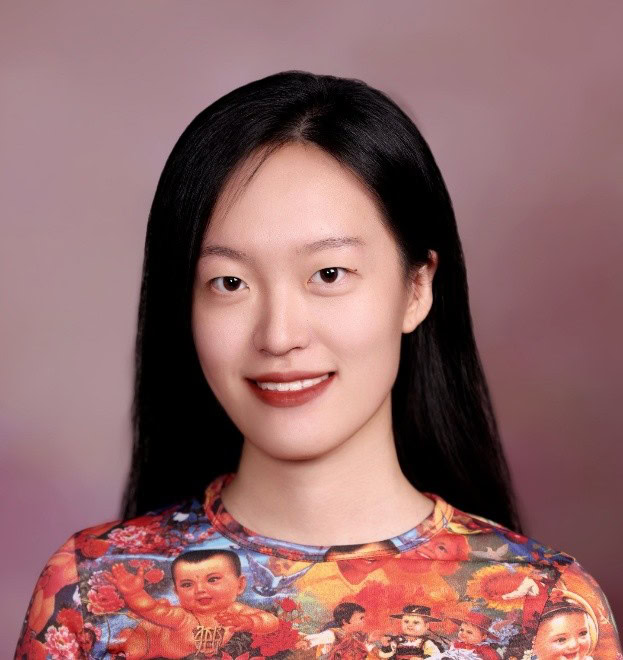
Kenzie Li
Mentor: Gianna Strand, MS, Ph.D., Associate Director, Clinical Research
Kenzie is a master’s student at Weill Cornell Medicine in New York City, where she studies Biostatistics and Data Science. She is passionate about using data to tackle real healthcare challenges and to make clinical trials work better for the people who take part in them. She is also a talented artist across different mediums, including oil painting, marker drawing, and pen-and-ink illustration.
During her internship with the Clinical Research team, Kenzie played a key role in examining the real-world barriers and facilitators that clinical trial participants face. Kenzie worked on the final stages of data analysis, built visualizations, and incorporated information from a comparison study of similar trials in Europe. These results will help inform how Breakthrough T1D supports the design of more accessible, participant-centered trials in the future.
Kenzie also kicked off an ambitious new project: a landscape gap analysis mapping clinical T1D evidence across the globe from 1975 to 2026. Once complete, this map will let Breakthrough T1D pinpoint where research evidence is missing or outdated. This supports the Research team in identifying and focusing future mission-driven projects toward the populations and regions where they are needed most.
By investing time and mentorship in our interns, we’re essentially investing in up-and-coming thought leaders and emboldening them to take part in our mission. They remind us that progress toward a world without T1D depends on the people we bring into this challenge. “The summer interns bring a fresh perspective and creativity to their projects, giving us a better understanding of T1D and how to advance our mission,” explains Matt Whipple, one of this year’s mentors.
They are the next researchers, public health experts, doctors, advocates, and more that will help us accomplish our goal, now and in the future. Our interns advance Breakthrough T1D’s work today by bringing new ideas, questions, and energy that will carry the mission forward to tomorrow.
“Making progress toward our mission requires us to stay innovative, analytical, and open to learning. Training the next generation is important not only because we can help develop future leaders, but because we learn from them too. That exchange of ideas, perspectives, and curiosity helps move us closer to breakthroughs in T1D,” shares Racquel Enad, another mentor.
Thank you to our 2026 interns for their contributions, and we look forward to seeing what they will accomplish next!
